
TL;DR:
- Water readiness, emotional maturity, and supervision are crucial before beginning swim lessons.
- Structured, short sessions focusing on water comfort and foundational skills build confidence and safety.
Every year, thousands of families face the same question: where do you even begin? When a child starts swimming or an adult decides to learn, excitement and uncertainty arrive at the same time. Getting it right from day one means understanding readiness, building real technique, and treating water safety as a non-negotiable priority. This guide covers everything beginners and parents need, from your first session to finding a program that fits.
Table of Contents
- Key takeaways
- 1. When someone starts swimming: readiness first
- 2. Core beginner skills every new swimmer should learn first
- 3. How to structure training sessions for new swimmers
- 4. Water safety essentials every parent needs to know
- 5. Resources and tools that support beginner swimmers
- What I have learned from watching swimmers start from zero
- Ready to take the next step with professional coaching?
- FAQ
Key takeaways
| Point | Details |
|---|---|
| Start with readiness, not age | Physical comfort and emotional maturity matter more than hitting a specific birthday. |
| Build skills in the right order | Water comfort and breathing control come before strokes, floating, and survival skills. |
| Train short and often | Sessions of 20 to 30 minutes, two to three times per week, build technique and consistency fastest. |
| Supervision is never optional | Swim lessons reduce drowning risk significantly but do not replace close adult supervision at all times. |
| Choose certified programs | Look for instructors with recognized credentials, active lifeguards, and clear skill progression tracking. |
1. When someone starts swimming: readiness first
Not every child is ready at the same age, and that is perfectly fine. The American Academy of Pediatrics confirms that swim lessons can begin around age 1, though readiness varies widely among children, and most are developmentally ready for structured lessons by age 4. For adults starting for the first time, there is no age ceiling at all.
What actually determines readiness? It is not just physical ability.
- Physical comfort in water: Can your child tolerate water on their face without panic? Can an adult beginner stand comfortably in a shallow pool?
- Emotional maturity: A child who is extremely fearful or easily overwhelmed may need a few weeks of casual water play before formal lessons begin. Readiness depends on emotional maturity, not just physical coordination.
- Attention and instruction-following: Lessons only work when the swimmer can hear and follow simple directions.
- Supervision needs: Infants and toddlers require touch supervision, meaning a parent or guardian within arm’s reach at all times, regardless of setting.
- Basic gear: A well-fitting swimsuit, goggles, and a swim cap are the basics. U.S. Masters Swimming recommends starting with those three items before adding any training aids.
Pro Tip: Before the first lesson, take your child to a pool for a casual splash session. Letting them play freely in shallow water for 15 to 20 minutes removes the novelty factor and significantly reduces first-lesson anxiety.
Choosing the right learning environment matters just as much as choosing the right timing. Look for warm water (around 84 to 86°F for young children), clear sightlines from the deck, and class sizes small enough for individual attention.
2. Core beginner skills every new swimmer should learn first
There is a specific order that works. Skipping ahead to freestyle or butterfly when a swimmer is not yet comfortable in the water is how bad habits form and confidence collapses. Early swim training should prioritize water comfort and breathing control before any stroke technique is introduced.
Here is the sequence that builds a real foundation:
- Water comfort and breath control: Submerging the face, blowing bubbles, and exhaling underwater. This is the single most important early skill. Without it, every stroke becomes a struggle to keep water out of the mouth and nose.
- Floating and body position: Front floats, back floats, and learning to feel buoyant. Back floating is especially critical because it is a water survival skill that buys time in an emergency.
- Basic kicking: Flutter kick from the hips, not the knees. Most beginners kick from the knee and generate very little forward movement. Learning to kick from the hip changes everything.
- Arm stroke fundamentals: Reaching forward, pulling through the water, and recovering above the surface. Keep it slow and deliberate before adding speed.
- Getting to an exit: Every beginner swimmer should practice swimming to the wall or pool steps and pulling themselves out. This is survival knowledge, not just fitness.
Patience with this progression pays off. Swimmers who spend more time on water comfort and body position almost always develop cleaner, more efficient strokes later. Rushing to full laps before the foundation is solid creates technical problems that take twice as long to fix. Check out the fundamental swim skills list from Swimcamp for a more detailed breakdown of stroke basics and progression.
3. How to structure training sessions for new swimmers
Beginner swimmers do not need marathon sessions. They need consistent, focused, and well-organized short sessions. Sessions of 20 to 30 minutes, two to three times per week give the body and mind time to absorb what they practiced without hitting a fatigue wall.
Here is a simple session structure for new swimmers:
- Warm-up (5 minutes): Light movement in the water, gentle kicking with a kickboard, and breath control drills. Never jump straight into laps.
- Skill focus (10 to 15 minutes): Pick one or two skills from the foundational sequence above. For example, flutter kick practice followed by front float work. Do not try to cover everything in one session.
- Lap swimming or play (5 to 10 minutes): Apply the skill in a more open format. For children, this can look like structured free swim. For adults, it means practicing the skill across one or two pool lengths.
- Cool-down (5 minutes): Gentle movement, back floating, and easy breathing exercises to bring the heart rate down.
Pro Tip: Resist the urge to add distance too fast. Increase total swimming time by no more than 10 percent each week. That single rule prevents most beginner burnout and overuse issues.
Kickboards and pull buoys are genuinely useful tools for beginners because they isolate either the kick or the arms, making it much easier to focus on one thing at a time. Goggles are non-negotiable. Seeing clearly underwater removes fear and makes breathing drills far more productive. For specific guidance on how often to practice, Swimcamp has resources that help beginners set realistic expectations from the start.
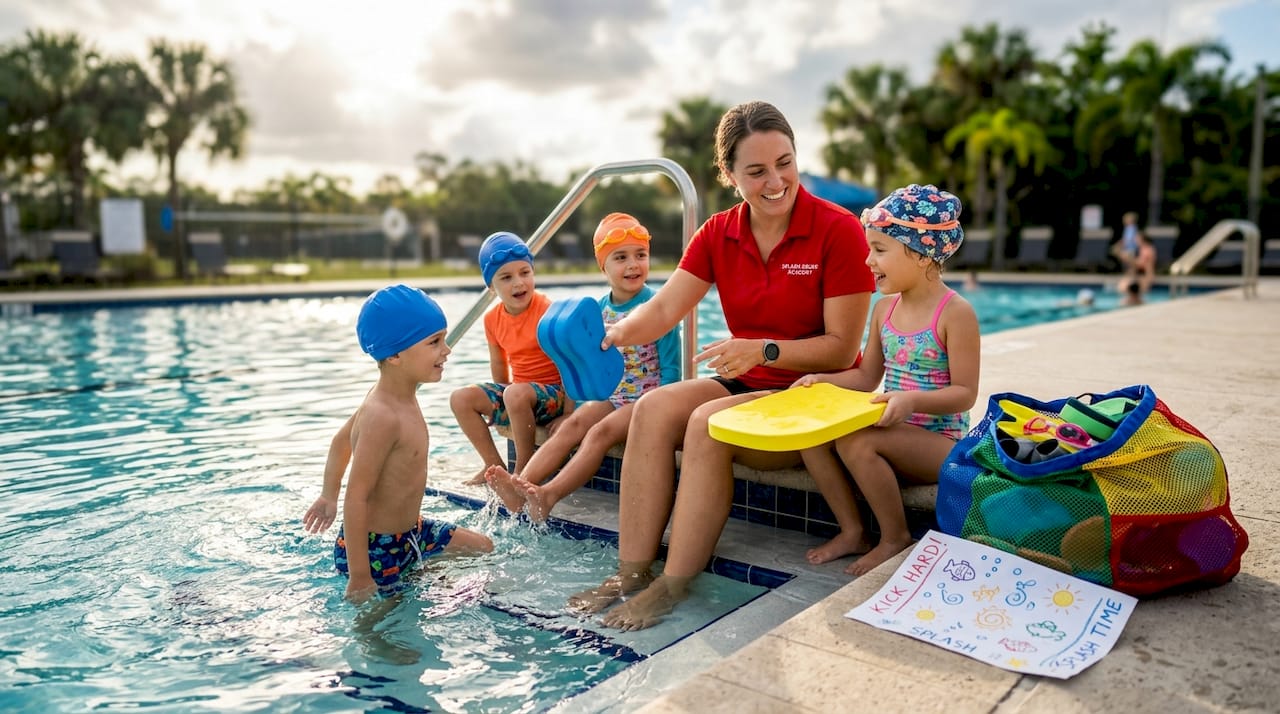
4. Water safety essentials every parent needs to know
Water safety is not a secondary concern. It is the foundation that everything else sits on. Swim skills buy time in emergencies but they do not replace vigilant adult supervision. Not ever.
The layered protection model is what safety organizations recommend. Think of it as concentric rings of protection, where each layer reduces risk but no single layer is enough on its own.
- Swim lessons: Reduce drowning risk, build water confidence, and teach survival skills.
- Supervision: Infants and toddlers need a parent within arm’s reach. Older children need a designated adult watching them, not looking at a phone.
- Barriers: Pool fences, pool covers, and alarm systems reduce access to water when no one is watching.
- Lifeguards: Public pools and swim programs should have certified lifeguards on deck holding CPR and First Aid certification at all times.
“The single biggest misconception I see from parents is believing that once a child has taken swim lessons, they are safe unsupervised. Lessons are powerful. They are not a replacement for you being present and paying attention.”
Parents play a larger role than most realize. Parental involvement during lessons reinforces learning and ensures that practice between classes aligns with what the instructor is teaching. Ask your child’s instructor after every lesson: what should we practice this week? Then do it. For more on your role as a swim parent, Swimcamp’s resource on age group swimming parents covers the expectations and responsibilities clearly.
If maintaining close supervision in a group class is not possible, private lessons provide better safety and more individual attention than a large group setting.
5. Resources and tools that support beginner swimmers
Having the right support makes the difference between a swimmer who progresses steadily and one who stalls out after a few weeks. Here is a quick comparison of the main learning formats available to beginners and families.
| Resource type | Best for | Key benefit |
|---|---|---|
| Group swim lessons | Most children ages 3 and up | Affordable, social, and structured |
| Private lessons | Children with high supervision needs or adults | Individual pacing and direct feedback |
| Parent-child classes | Infants and toddlers (ages 6 months to 3 years) | Builds water comfort with caregiver involvement |
| Swim clubs and Masters groups | Adult beginners wanting structured training | Coached sessions and community accountability |
| Swim camps | Children and teens building serious skills | Intensive, technique-focused instruction |
Online resources are genuinely useful for parents and adult beginners. Technique videos help you see what correct form looks like before you attempt it. Beginners also benefit from reading up on swimming as a full-body workout and understanding why it builds fitness and confidence for all ages.
Local swim clubs often have beginner-friendly lanes or adult “learn to swim” programs that are less intimidating than general lap swimming. If those are not available in your area, structured swim camps offer a focused environment with experienced coaching that accelerates learning considerably.
What I have learned from watching swimmers start from zero
When someone first starts swimming, the most common mistake I see is not a technical one. It is the rush to look competent before they feel comfortable. Adults especially arrive with the idea that they should be making forward progress within the first two or three sessions, and when that does not happen, they get discouraged.
What I have found in my years working with new swimmers is that the ones who make the fastest long-term progress are the ones who spend the most time in the “boring” early phase. Blowing bubbles. Floating on their back. Learning to relax in the water instead of fighting it. That phase looks unimpressive from the outside but it is where real swimmers are made.
Parents often ask me how to tell if a program is good. My answer is always the same: watch whether the instructor slows down for the child rather than pushing the child to speed up. A good swim program meets swimmers where they are. It does not force a progression timeline that ignores individual readiness.
The other thing I believe strongly is that safety and fun are not opposites. The best beginner swimming experiences I have seen are ones where safety habits are practiced so consistently that they feel natural, not restrictive. That is the goal: a swimmer who is safe because they know what to do, not just because someone is watching.
— James
Ready to take the next step with professional coaching?
If you or your child is ready to move beyond the basics, structured coaching makes a measurable difference.
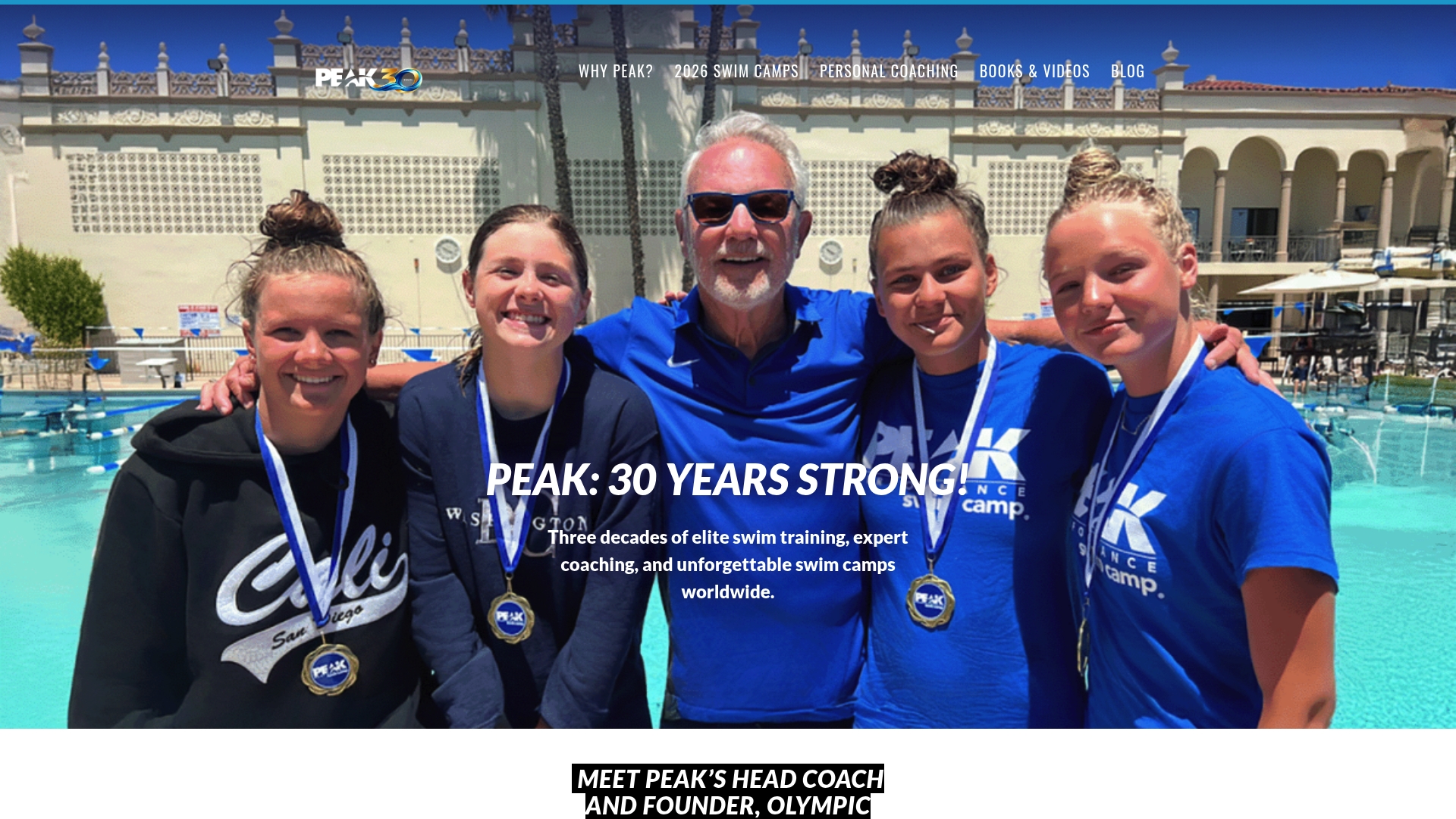
Swimcamp’s swim training camps are designed for swimmers at every level, including those just getting started. Founded by Olympic coach Nick Baker and backed by over 50 years of coaching experience, Swimcamp offers programs across the USA and internationally. The focus is on technique, safety, and real skill development, not just putting in laps. For families looking for flexible formats, the clinic package options offer group and individual training choices that fit different ages, goals, and schedules. Give your swimmer the right start with coaching that knows how to develop beginners into confident athletes.
FAQ
When can a child start swimming lessons?
The American Academy of Pediatrics recommends starting swim lessons around age 1, though most children are ready for structured lessons by age 4. Readiness depends on the child’s emotional maturity and physical comfort in water, not just their age.
What skills should a beginner swimmer learn first?
Start with water comfort and breath control, then move to floating, basic kicking, and simple arm strokes. Learning to back float and reach the pool exit are critical survival skills that beginners should practice early.
How long should beginner swim sessions be?
Beginner sessions of 20 to 30 minutes, held two to three times per week, are the most effective for building technique and consistency without fatigue. Increasing training time gradually by about 10 percent per week keeps progress steady and sustainable.
Do swim lessons make children safe around water?
Swim lessons reduce drowning risk significantly but do not replace adult supervision. Children should never swim alone, and infants and toddlers require a parent or caregiver within arm’s reach at all times, regardless of swimming ability.
What gear does a beginner swimmer need?
A properly fitted swimsuit, goggles, and a swim cap are the core essentials for any new swimmer. A kickboard can be added to support early technique drills, and goggles in particular make underwater breathing practice far less intimidating.
Recommended
- How to prevent swim injuries: proven steps for safer swimming – Peak Performance Swim Camp
- How to warm up for swimming: techniques for peak performance – Peak Performance Swim Camp
- Ten Things Age Group Swimming Parents Should Know – Peak Performance Swim Camp
- How parents enhance youth swimming success: evidence-based guide – Peak Performance Swim Camp