
TL;DR:
- Tactical swim training emphasizes survival skills, efficiency, and mental toughness over mere yardage. It involves specialized techniques like the combat side stroke, breathing control, and endurance drills to build water confidence under stress. Safety protocols, including never swimming alone, are critical for effective, risk-free training applicable to all swimmers.
Most swimmers assume tactical swim training just means swimming harder or logging more yards. It doesn’t. What is tactical swim training, really? It’s a specialized approach built around mission-oriented water skills: efficiency, breath control, survival techniques, and mental toughness under pressure. Originally developed for military and special operations candidates, this training method has proven valuable for competitive swimmers, triathletes, and coaches who want to build a more complete aquatic athlete. This guide breaks down exactly what tactical swim training involves, how it works, and how you can apply its principles regardless of your background.
Table of Contents
- Key takeaways
- What tactical swim training actually is
- Core tactical swimming techniques
- Safety and structured training protocols
- Adapting tactical training for your goals
- My take on what tactical training really teaches
- Take your swimming further with Swimcamp
- FAQ
Key takeaways
| Point | Details |
|---|---|
| More than lap swimming | Tactical swim training prioritizes survival skills, stroke efficiency, and water confidence over raw yardage. |
| Specialized strokes matter | Combat side stroke and elementary side stroke are core techniques trained specifically for efficiency and endurance. |
| Safety is non-negotiable | Always train with a buddy or lifeguard present, especially for underwater and breath-hold drills. |
| Scalable for all swimmers | Non-military athletes, triathletes, and competitive swimmers all benefit from adopting tactical training principles. |
| Mental discipline is central | Breath control and confidence under stress are trained just as deliberately as physical conditioning. |
What tactical swim training actually is
Tactical swim training includes drownproofing, treading water, underwater swimming, knot tying, and lifesaving skills. It was designed for military candidates preparing for dive school, rescue swimmer programs, and special operations selection. But the principles it builds, efficiency, endurance, water confidence, and calm under stress, apply far beyond those contexts.
The biggest misconception is that tactical training is just about swimming more. It’s not. The focus is on practicing specific drills and survival-oriented skills that most lap swimmers never touch. A competitive swimmer might be fast in a pool but completely unprepared to tread water for 20 minutes without using their hands, or to swim underwater without panicking. Tactical training closes those gaps.
Here’s what a tactical swim program typically covers:
- Stroke efficiency: Learning strokes designed for sustained effort, not just speed
- Treading water: Building from short intervals to extended no-hands treading using scissor or eggbeater kicks
- Underwater swimming: Controlled breath-hold work with strict safety protocols
- Breath control: Deliberate training of breathing patterns under physical stress
- Survival skills: Drownproofing techniques, buddy tows, and rescue simulations
- Swim endurance: Building the aerobic base to sustain effort over long distances or time
Pro Tip: If you’re new to tactical swim training, start by adding a 5-minute tread to the end of every pool session. It’s simple, requires no equipment, and builds the survival-oriented mindset that defines this training approach.
The goal is not to make you the fastest swimmer in the lane. It’s to make you a complete, confident, and capable swimmer in any situation.
Core tactical swimming techniques
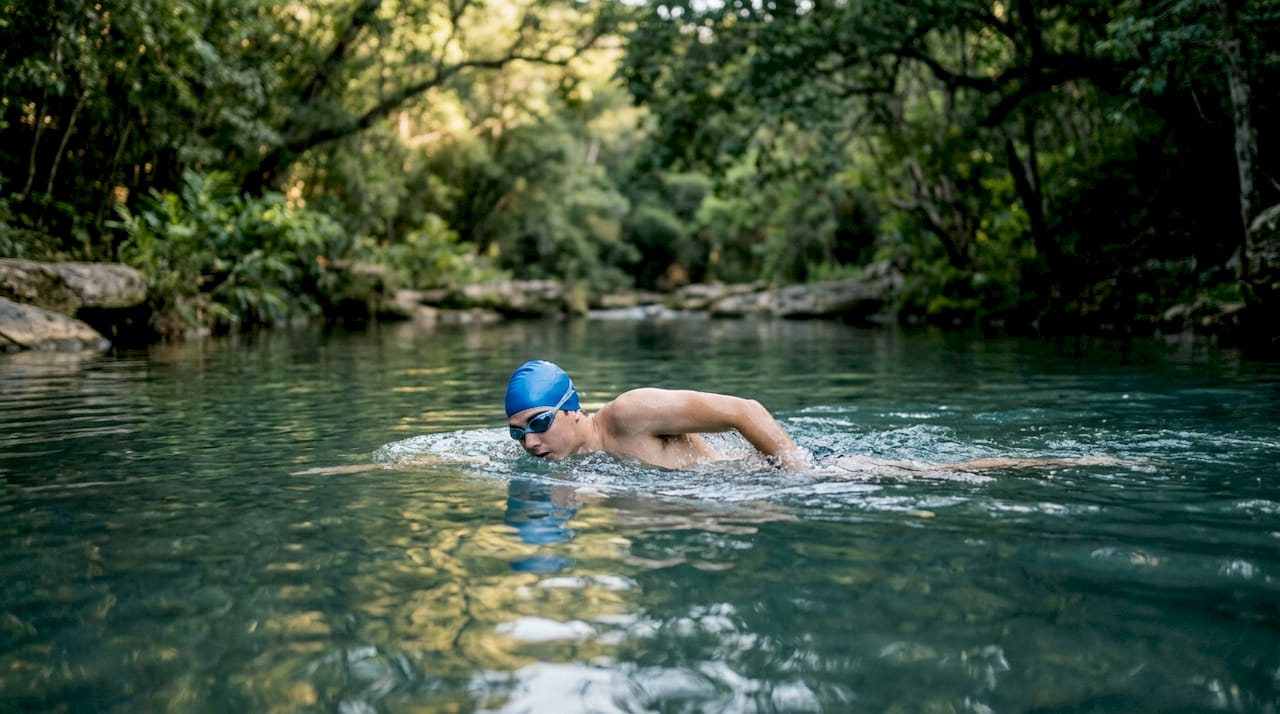
The stroke at the center of most tactical programs is the combat side stroke, or CSS. It’s built for efficiency and low energy expenditure over long distances, not speed. Understanding how it works helps you see why it’s so widely used.
In CSS, the body stays on its side in a streamlined position. The underwater arm pulls through while the top arm stays extended, reducing drag. The kick is a scissors kick timed to the arm pull. Breathing happens naturally during the glide phase, which means you’re not fighting to breathe. That glide is everything. It’s where the energy is conserved.
| Stroke | Primary use | Key advantage |
|---|---|---|
| Combat side stroke (CSS) | Long-distance tactical swims | Low drag, energy-efficient glide |
| Elementary side stroke | Survival and rescue situations | Simple mechanics, easy to sustain |
| Breaststroke variants | Military screening tests | Familiar technique, controlled breathing |
| Freestyle/crawl | Conditioning sets | Speed and aerobic development |
The streamline position is often the most critical skill for improving military spec ops swim speed because water density creates significant drag against any body part out of alignment. A swimmer who can hold a tight streamline off every wall and during every glide phase moves faster with less effort. That’s true whether you’re preparing for a Navy SEAL screening or a triathlon.
Tactical programs also mix conditioning and test strokes within single sessions to prevent a common failure: being physically fit but technically inefficient on the strokes that actually matter during testing or competition. A session might pair 400 meters of freestyle for conditioning with 200 meters of CSS for technique, then repeat.
Pro Tip: Record yourself swimming CSS from above and from the side. Most swimmers are shocked to see how much their hips drop or how short their glide phase actually is. Fixing those two things alone can cut significant time off a 500-meter swim.
Pairing advanced stroke technique work with conditioning sets is one of the most effective ways to accelerate tactical swim development.
Safety and structured training protocols
Tactical swim training involves skills that carry real risk if practiced carelessly. Underwater swimming and breath-hold work are the most obvious examples. The rule is absolute: never swim alone or perform underwater workouts without a buddy or lifeguard present. Shallow water blackout, a loss of consciousness caused by hypoxia during breath-hold swimming, is a genuine danger that has claimed lives even among experienced swimmers.
Structured tactical workouts address this through several specific protocols:
- Buddy system: Every underwater drill requires a partner watching from the surface, ready to respond immediately
- Staged intervals: Underwater and surface swimming are alternated in timed sets, never pushed to failure without supervision
- Lifesaving simulations: Buddy tow drills and rescue scenarios are practiced in controlled conditions before progressing to more demanding versions
- Tread progressions: Treading water starts with 5 to 10 minute intervals and builds toward no-hands treading, which demands significantly more leg strength and body control
The interval structure in tactical swim workouts is designed to replicate real stress and timing challenges. “Over/under” sets, where swimmers alternate between surface and underwater laps, are a common example. The goal is not to push to exhaustion but to build familiarity with physical stress while maintaining technique and safety awareness.
Treading water deserves special attention here. It’s treated as a fundamental competency in tactical training, not just a warm-up or an afterthought. In survival scenarios, the ability to float and tread for extended periods with minimal energy output can be the difference between life and death. Training it progressively, with clear milestones, reflects that seriousness. Reviewing swim injury prevention practices before starting any underwater drill program is a smart step for any swimmer.
Adapting tactical training for your goals
You don’t need to be preparing for dive school to benefit from tactical swim training. The principles translate directly to competitive swimming, open water racing, and general fitness. The key is knowing how to scale the training to your current level and goals.
Here’s a practical framework for building tactical swim training into your weekly schedule:
- Set a baseline. Swim a 500-meter time trial using CSS or your primary stroke. Note your time and how you feel at the finish. This gives you a starting point for measuring progress.
- Add tread intervals. Include 5 to 10 minutes of treading water at the end of two sessions per week. Progress to no-hands treading once you can sustain 10 minutes comfortably.
- Build conditioning and technique together. Military-style tactical sessions accumulate 5 to 6 hours per week across 4 to 5 days. For non-military swimmers, 3 to 4 sessions per week mixing conditioning and stroke work is a practical starting point.
- Add dryland strength work. Core stability and leg strength directly support treading endurance and streamline position. Dryland training two days per week complements pool work without adding recovery burden.
- Train your breath control deliberately. Include one breath control set per session, such as breathing every 5 or 7 strokes during freestyle, to build the lung capacity and calm that tactical swimming demands.
- Practice mental discipline. Mental conditioning is not separate from physical training in tactical programs. Practicing staying calm during uncomfortable sets, like a long tread or a breath-hold drill, builds the mental toughness that separates good swimmers from great ones.
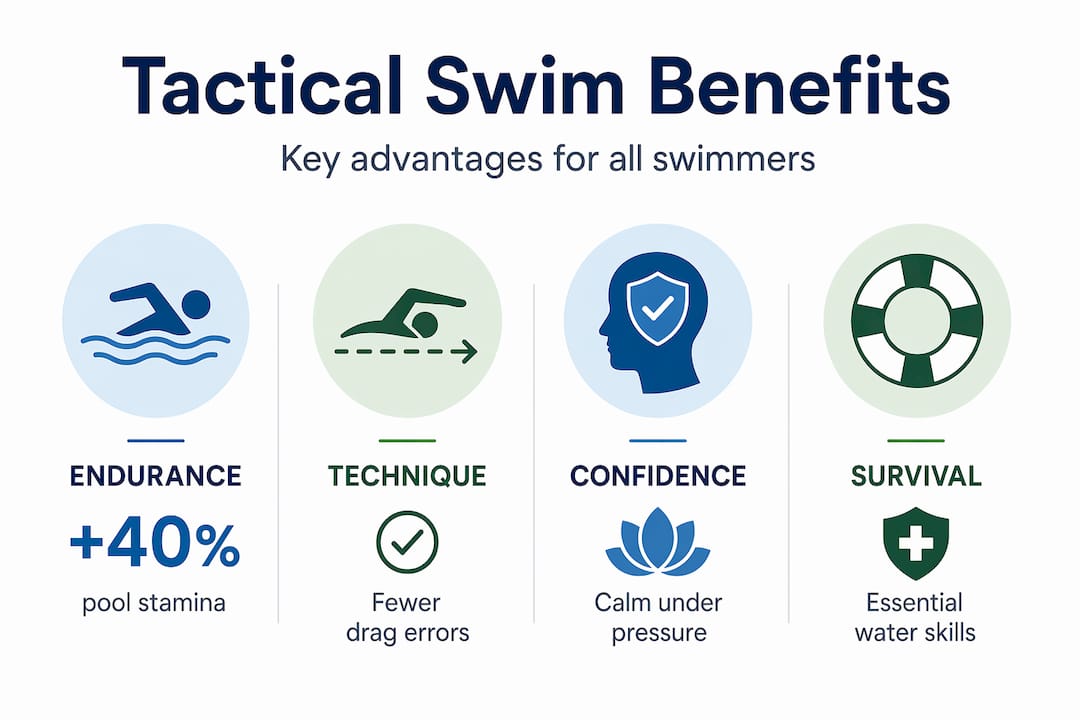
Tactical swim training benefits all swimmers by building endurance, technique, water confidence, and survival skills that improve overall aquatic performance. Triathletes who add CSS practice report feeling more relaxed and controlled in open water. Competitive swimmers who train treading and breath control often show improved race composure in the final 50 meters.
Pro Tip: Combine your interval training sets with deliberate stroke switching. Swim 200 meters freestyle, then 100 meters CSS, and repeat. This forces your body to adapt to different energy demands and keeps technique sharp under fatigue.
My take on what tactical training really teaches
I’ve worked with swimmers at every level, from beginners who are nervous in deep water to competitive athletes chasing national qualifying times. What I’ve found is that tactical swim training exposes a gap that conventional training almost never addresses: the gap between physical fitness and real water competence.
Most swimmers train to go fast. Tactical training asks a different question. Can you stay calm when you’re tired? Can you tread water for 15 minutes without panicking? Can you swim efficiently when your lungs are burning and your technique is breaking down? Those are the skills that matter in real pressure situations, whether that’s a military selection event or the final stretch of an open water race.
The mistake I see most often is swimmers who train hard but never practice discomfort deliberately. They avoid breath-hold sets. They skip the tread. They never work on CSS because it’s slower than freestyle. And then they wonder why they fall apart under pressure.
My honest advice is this: spend one session per week doing something uncomfortable in the water. Tread without your hands. Swim a set where you breathe every 7 strokes. Practice your CSS until the glide feels natural. The physical adaptations will come. But the confidence you build by repeatedly choosing the harder thing is what actually changes you as a swimmer.
— James
Take your swimming further with Swimcamp
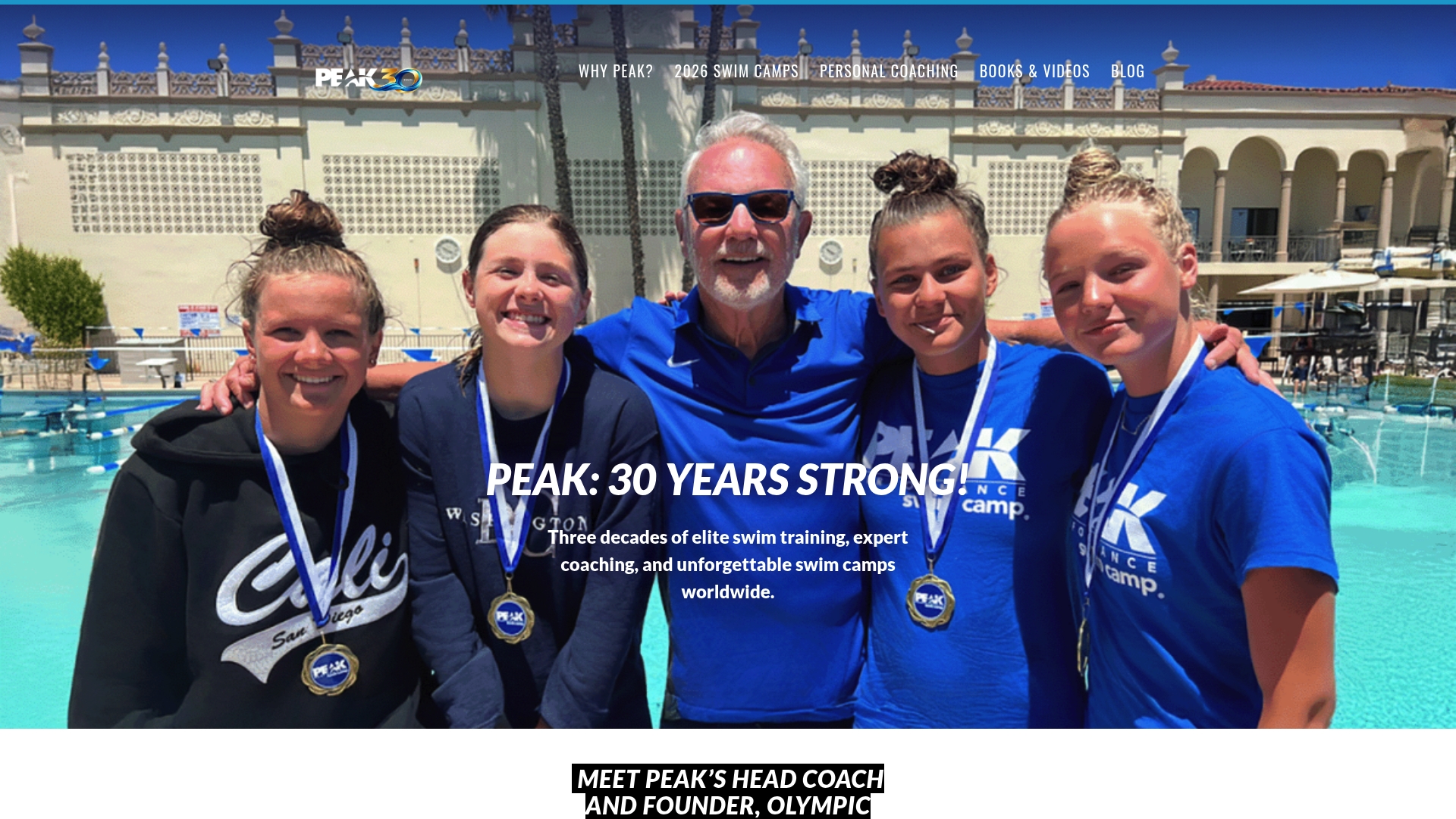
If this guide has you thinking about how to build these skills with expert guidance, Swimcamp is where that development happens at the highest level. Founded 30 years ago by Olympic coach Nick Baker, PEAK Performance Swim Camp has conducted over 1,000 camps across 18 countries, working with swimmers at every level from beginners to elite competitors.
The swim camps at Swimcamp are built around the same principles that define tactical swim training: technique refinement, physical conditioning, and mental preparation working together. Coaches work directly with swimmers on stroke mechanics, including efficiency-focused strokes like CSS, and design sessions that build real water confidence. Whether you’re preparing for a competition, a military screening, or simply want to become a more capable swimmer, the personalized coaching options at Swimcamp give you a direct path to measurable improvement. Explore the available programs and find the format that fits your goals.
FAQ
What is tactical swim training?
Tactical swim training is a specialized approach focused on water survival skills, stroke efficiency, breath control, and endurance, originally developed for military and special operations candidates. It goes beyond lap swimming to build complete water competence under stress.
What strokes are used in tactical swim training?
The combat side stroke is the most commonly trained stroke in tactical programs because of its energy efficiency over long distances. Elementary side stroke, breaststroke variants, and freestyle are also used depending on the program and testing requirements.
Is tactical swim training only for military candidates?
No. Competitive swimmers, triathletes, and fitness swimmers all benefit from tactical training principles. Skills like breath control, treading endurance, and streamline efficiency improve performance and water confidence for any swimmer.
How often should you train for tactical swimming?
Military candidates typically train 4 to 5 days per week, accumulating 5 to 6 hours of pool time. Recreational and competitive swimmers can see meaningful results with 3 to 4 sessions per week that combine conditioning, stroke technique, and survival skill drills.
What safety rules apply to tactical swim training?
Never perform underwater swimming or breath-hold drills alone. Always train with a buddy watching from the surface or a certified lifeguard present. This rule applies regardless of your experience level.
Recommended
- Open water swim training: techniques for race success – Peak Performance Swim Camp
- Olympic swim training: advanced techniques & strategies – Peak Performance Swim Camp
- Year-round swim training: benefits, methods & success – Peak Performance Swim Camp
- Advanced swimming technique tips for peak performance – Peak Performance Swim Camp