
TL;DR:
- Overreaching in swimming is a short-term increase in training load that temporarily decreases performance but can be reversed with proper recovery. Differentiating functional from non-functional overreaching is crucial, as the latter leads to prolonged declines and potential overtraining syndrome if ignored. Preventing overreaching involves structured periodization, monitoring recovery markers, open communication, and implementing appropriate recovery strategies when early signs appear.
Most swimmers and coaches believe that harder training always leads to better results. Push through fatigue, add more yards, shorten rest intervals, and performance will follow. That logic is wrong in a very specific and damaging way. What is overreaching in swimming? It is the point where training load outpaces recovery, causing your body to perform worse instead of better. Understanding this distinction is not just reassuring. It is the first step toward training that actually produces results at race time.
Table of Contents
- Key takeaways
- What is overreaching in swimming
- Recognizing the symptoms of overreaching
- Overreaching vs overtraining in swimming
- How to prevent overreaching in swimming
- Recovery strategies when overreaching occurs
- My take on overreaching after decades in the pool
- Train smarter with Swimcamp’s expert-led programs
- FAQ
Key takeaways
| Point | Details |
|---|---|
| Overreaching is temporary | A short-term performance drop from high training load that reverses with proper recovery. |
| Two types exist | Functional overreaching is planned and beneficial; non-functional overreaching causes lasting decline. |
| Symptoms go beyond soreness | Mood changes, motivation loss, and persistent performance drops signal a problem requiring action. |
| Overtraining is more serious | Overtraining syndrome can take months to resolve and requires medical attention in severe cases. |
| Prevention beats recovery | Periodization, load monitoring, and open communication between swimmers, coaches, and parents reduce risk. |
What is overreaching in swimming
Overreaching is a short-term increase in training load that temporarily reduces performance. When recovery follows, the body adapts and comes back stronger through a process called supercompensation. That is the science behind training blocks, pre-competition tapers, and every well-planned workout cycle.
The concept splits into two distinct categories every swimmer and coach should know.
Functional overreaching is planned and purposeful. You push hard for one to three weeks, performance dips slightly, and then a scheduled recovery period allows the body to adapt beyond its previous baseline. This is what high-level periodization looks like in practice. It works when the recovery piece is honored.
Non-functional overreaching is where things go wrong. Performance decline lasts weeks to months without the expected fitness adaptation after recovery, and mood disturbances are common. The body never receives the recovery signal it needs to bounce back.
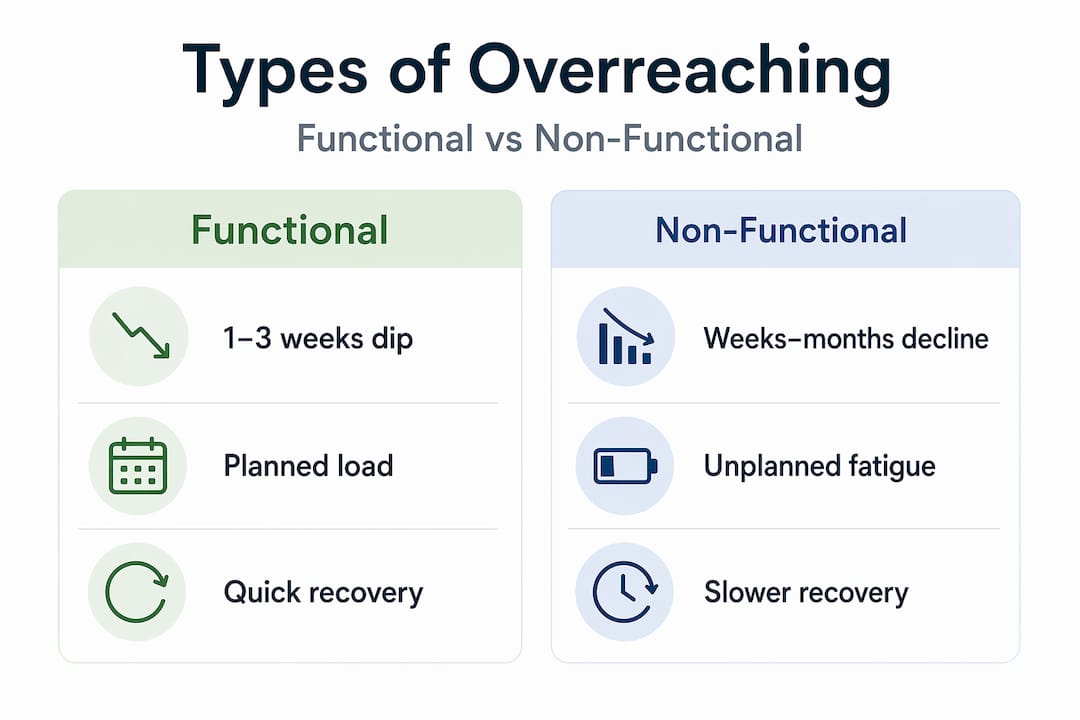
Here is a quick comparison of the two:
| Feature | Functional overreaching | Non-functional overreaching |
|---|---|---|
| Duration of performance drop | Days to 2 weeks | Weeks to months |
| Mood changes | Mild | Significant |
| Recovery needed | Days to 1 week | Weeks |
| Outcome with rest | Performance rebound | Delayed or absent rebound |
| Risk level | Low if managed | High |
The key distinction from full overtraining syndrome comes down to reversibility and duration. Overreaching can be planned and functional, whereas overtraining reflects chronic imbalance leading to stagnation or decline that does not resolve with a week off. Catching the warning signs early is what keeps a swimmer on the right side of that line.
Recognizing the symptoms of overreaching
The tricky part of identifying overreaching is that its early signs look a lot like normal training fatigue. Everyone is tired after a hard week. The difference lies in how the symptoms behave over time.
Common symptoms to watch for include:
- Persistent fatigue that does not resolve after a rest day or an easy session
- Declining performance in timed sets or race simulations despite consistent effort
- Increased muscle soreness that lingers for more than 48 hours
- Loss of motivation or reluctance to get in the water
- Elevated resting heart rate upon waking, often three to five beats above baseline
- Mood changes including irritability, anxiety, or difficulty concentrating
- Disrupted sleep despite physical exhaustion
Non-functional overreaching symptoms persist beyond 24 to 48 hours and include performance decline and increased training intolerance. That window matters. A swimmer who felt thrashed after Monday’s double session but is sharp again by Wednesday is experiencing normal training stress. A swimmer still dragging through Friday with worse split times is showing a red flag.
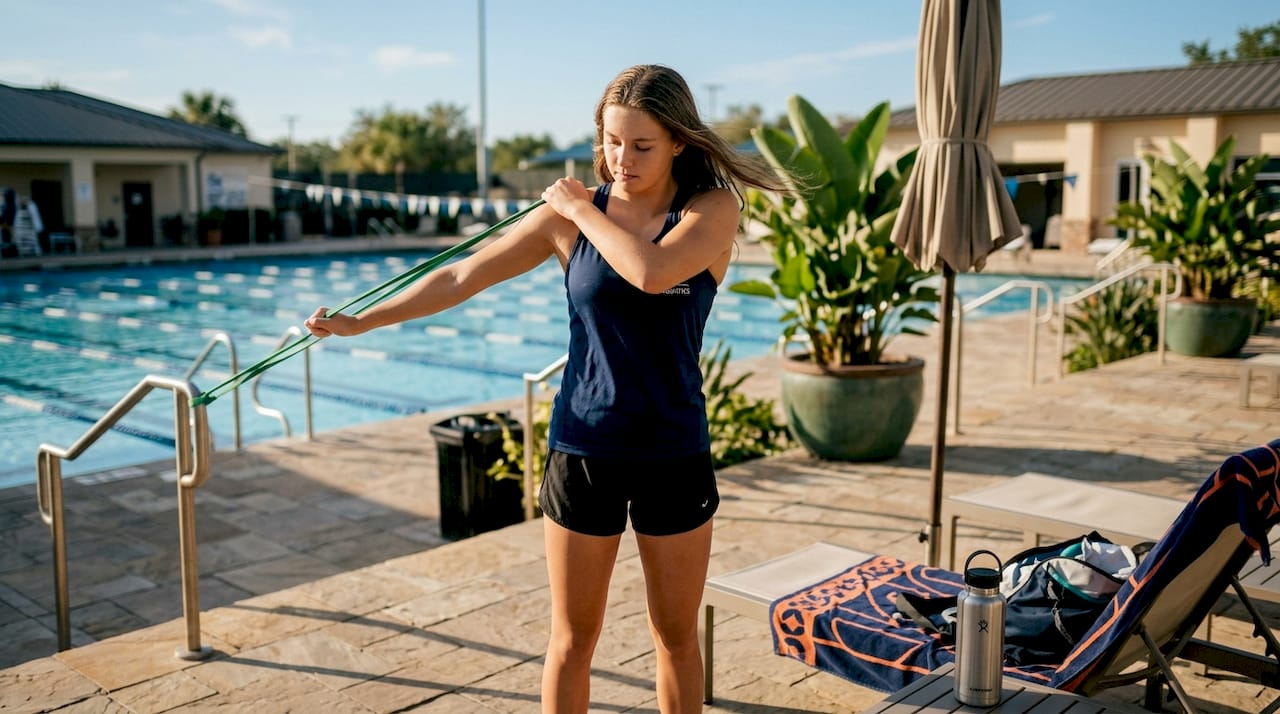
Shoulder health is a specific concern in the pool. High training volumes cause gradual tissue breakdown in swimmers’ shoulders, leading to soreness, reduced power, and slower times. Because water is low impact, swimmers often miss early warning signs that land athletes would catch faster. Subtle shoulder discomfort during catch drills can escalate into tendinitis if training loads are not adjusted.
Pro Tip: Track your resting heart rate every morning before getting out of bed. A consistent spike of five or more beats over several days is one of the clearest early indicators that your body needs more recovery, not more work.
Overuse injuries like tendinitis and stress reactions are often linked to training errors and excessive load without adequate recovery. When you see these symptoms stacking up, do not wait them out. Adjusting training sooner reduces the time spent away from the pool in the long run.
Overreaching vs overtraining in swimming
These two terms get used interchangeably, but they describe very different situations with different consequences. Understanding the gap between them shapes how you respond.
Overreaching, as covered above, is a short-term state. Overtraining syndrome (OTS) is a chronic condition. Psychological and physiological maladaptations occur in OTS, including immune and metabolic system disruptions. A swimmer with OTS is not just tired. Their hormonal regulation, immune response, and mood regulation are all affected. Getting back to full training capacity can take three to six months, sometimes longer.
| Feature | Overreaching | Overtraining syndrome |
|---|---|---|
| Onset | Days to weeks | Weeks to months |
| Reversibility | Days to weeks with rest | Months, sometimes season-ending |
| Medical evaluation needed | Rarely | Often |
| Performance impact | Temporary dip | Chronic stagnation or decline |
| Psychological impact | Mild mood changes | Depression, burnout, anxiety |
One of the most important things to understand is that the key difference lies not in intensity but in whether recovery is sufficient for performance to rebound. A swimmer completing two-a-days before a championship meet is not automatically at risk. A swimmer doing two-a-days for eight consecutive weeks without a recovery week almost certainly is.
When symptoms of overreaching persist for more than two weeks without improvement, professional medical evaluation is appropriate. Persistent pain may signal serious injury including stress fractures, which carry real consequences if ignored. Coaches, parents, and swimmers should treat this threshold as a firm rule, not a suggestion.
How to prevent overreaching in swimming
Prevention is where coaches and parents have the most leverage. Here is a structured approach that works across age groups and competitive levels.
-
Build a periodized training plan. Structure training in blocks that alternate between loading and recovery phases. A three-week build followed by one recovery week is a practical starting point for competitive swimmers. This gives the body time to adapt rather than just accumulate fatigue.
-
Monitor recovery markers daily. Resting heart rate, mood, sleep quality, and energy level before warm-up are all trackable. A simple one-to-ten daily wellness scale logged by the swimmer takes two minutes and gives coaches actionable data over time.
-
Prioritize technique over volume. For youth swimmers especially, emphasizing technique and gradual progression rather than pushing volume reduces injury risk and builds a stronger long-term foundation. A 12-year-old who swims 5,000 meters with excellent mechanics will outperform one grinding through 8,000 with poor form, every single season.
-
Adjust training loads based on responses. A planned workout is a guide, not a contract. If a swimmer arrives to practice with elevated resting heart rate, poor sleep the night before, and flat affect, scaling that session back is smart coaching, not weakness.
-
Create open communication channels. Swimmers, especially adolescents, often do not report fatigue for fear of appearing weak or missing competitive spots. Make it normal and safe to say “I’m not feeling sharp today.” That conversation prevents weeks of lost training.
-
Schedule recovery weeks into the season calendar before the season begins. Recovery should not be reactive. It should be planned. Learn more about structuring those phases with year-round training balance across full competitive seasons.
Pro Tip: Use the Talk Test during aerobic training sets. If a swimmer cannot string together a short sentence during what should be an aerobic effort, the intensity is too high for that session’s purpose. Simple feedback like this catches accumulating fatigue early.
Recovery strategies when overreaching occurs
When a swimmer has moved beyond normal fatigue and into overreaching territory, the approach shifts from prevention to active management. Here is how to handle it effectively.
- Reduce training load immediately. Drop volume by 40 to 60 percent for at least five to seven days. This is not optional. The body cannot adapt while still under stress.
- Prioritize sleep above all other recovery tools. Eight to ten hours for competitive adolescent swimmers and seven to nine hours for adults gives the nervous system the repair time it needs.
- Refuel with carbohydrates and protein. Muscle glycogen depletion accelerates fatigue. Consistent meals with quality carbohydrates and adequate protein support tissue repair. Learn more about structuring those meals in recovery nutrition for swimmers.
- Address the mental side. Overreaching affects motivation and confidence. Coaches and parents should check in on how the swimmer is feeling about training, not just how the times look. Short mindfulness practices or simply reducing pressure during this window can accelerate mental recovery.
- Do not rush the return to full load. The most common mistake after an overreaching period is returning to full training too quickly. Add volume back in increments of 10 to 15 percent per week once symptoms resolve.
- Watch for signs it is becoming overtraining. If performance does not improve after two weeks of reduced load, if mood remains consistently low, or if the swimmer is showing physical symptoms like persistent illness, seek medical evaluation. At that point, a coach alone is not enough.
Understanding the value of recovery for peak performance is not a soft concept. It is the physiological mechanism that turns training stress into actual improvement.
My take on overreaching after decades in the pool
I have worked with swimmers at every level, from age groupers doing their first competition to elite athletes preparing for international meets. The pattern I see most often is this: the swimmers and coaches most at risk of overreaching are not the lazy ones. They are the most dedicated.
That dedication is genuinely admirable. But I have learned, sometimes the hard way, that a swimmer’s willingness to suffer through workouts does not tell you whether the training plan is working. Times tell you. Mood tells you. Sleep tells you.
What I have found is that coaches often spot the physical symptoms late because the early signals are behavioral. A swimmer who used to joke around in warm-up goes quiet. A kid who could not wait to race starts dragging her feet at meets. Those behavioral shifts happen before split times drop. When I started watching for those signals as seriously as I watch stroke mechanics, my athletes stayed healthier and got faster.
Parents play a role that is genuinely undervalued here. You see your child at home, at dinner, in the morning before school. You are in a position to notice fatigue, mood shifts, and appetite changes before any coach sees them. If something feels off, say so. A good coach will listen, and a great one will be grateful for the information.
The athletes who thrive long-term are the ones whose teams, coaches, parents, and swimmers, communicate honestly and adjust proactively. Not reactively.
— James
Train smarter with Swimcamp’s expert-led programs
If you are serious about optimizing training balance and keeping overreaching from derailing your season, the structure and expertise of a professionally run program makes a real difference.

At Swimcamp, every program run by PEAK Performance Swim Camp is built around the same principle: deliberate training with deliberate recovery. Olympic coach Nick Baker and the PEAK coaching staff have refined these methods across more than 1,000 camps in 18 countries. Swimmers work on technique, mental preparation, and physical conditioning in a monitored environment that takes load management seriously. Whether you are looking for an intensive summer experience or a targeted clinic, explore the swim camps and programs available across the USA and internationally. Tailored options are also available through clinic package options designed to fit different seasons and goals.
FAQ
What is overreaching in swimming?
Overreaching in swimming is a short-term state where training load exceeds recovery capacity, causing temporary performance decline. With proper rest, the body adapts and performance rebounds, a process called supercompensation.
How do you know if you are overreaching vs just tired?
Normal fatigue resolves within 24 to 48 hours after a hard session. Overreaching symptoms, including persistent soreness, motivation loss, and declining performance, last longer and do not improve with a single rest day.
How long does recovery from overreaching take?
Functional overreaching typically resolves within one to two weeks of reduced training load. Non-functional overreaching may take several weeks to months, depending on how long the imbalance was allowed to continue.
Can young swimmers develop overreaching?
Yes. Youth swimmers are particularly vulnerable because growing bodies need more recovery time. Prioritizing technique and gradual volume progression over high yardage reduces overreaching risk significantly in developing athletes.
When does overreaching become overtraining syndrome?
When symptoms persist beyond two weeks of reduced training, include chronic mood disturbances, and do not respond to rest alone, overtraining syndrome may be developing and medical evaluation is recommended.
Recommended
- How to prevent swim injuries: proven steps for safer swimming – Peak Performance Swim Camp
- How to recover after swim practice: proven steps – Peak Performance Swim Camp
- Team building in swimming: 5 strategies that work – Peak Performance Swim Camp
- Unlock swimming performance: The critical role of flexibility – Peak Performance Swim Camp