
TL;DR:
- Cross-training supports swimmers by addressing physical gaps and reducing overuse injuries through targeted activities like dryland strength and cycling. It enhances strength, mobility, and recovery when integrated thoughtfully into low-intensity or recovery days. Proper planning and moderation are essential to optimize performance and avoid overtraining or burnout at any age.
Most swimmers think cross-training just means doing push-ups on a rest day. That misunderstanding costs real performance. What is cross-training for swimmers is actually a strategic question with a specific answer: it’s the deliberate use of non-swimming activities to build fitness, close physical capacity gaps, and reduce the repetitive stress that pool training alone creates. Done right, it makes you faster, more durable, and harder to injure. This guide breaks down the definition, the science, the best modalities, and how to fit it all into a real training schedule.
Table of Contents
- Key takeaways
- What cross-training for swimmers actually means
- Benefits of cross-training for swimmers
- Cross-training exercises and modalities
- Integrating cross-training into your schedule
- Age-specific cross-training considerations
- My take on where swimmers get cross-training wrong
- Take your training further with Swimcamp
- FAQ
Key takeaways
| Point | Details |
|---|---|
| Cross-training is not extra work | It’s a targeted method to fill capacity gaps and protect swimmers from overuse injuries. |
| Injury prevention is the top benefit | Distributing training stress across different movement patterns reduces repetitive strain on shoulders and hips. |
| Modality selection matters | Choose cross-training activities that match what swimming demands but doesn’t fully develop. |
| Recovery must be planned | Stacking hard cross-training on top of hard swim sessions without recovery leads to breakdown, not adaptation. |
| Youth swimmers need variety | Children benefit most from two to three different physical activities per year to build broad motor skills. |
What cross-training for swimmers actually means
Cross-training is not a random collection of gym exercises thrown between swim sessions. It refers specifically to non-identical training modes that support swimming goals by increasing physical capacity and reducing overuse injury risk. Think dryland strength work, cycling, rowing, and mobility training. Each of these builds fitness while distributing training stress differently than the pool does.
The key distinction is this: cross-training is a complement, not a substitute. You are not replacing yardage with a bike ride. You are filling the physical gaps that swimming alone cannot address. Swimmers develop tremendous shoulder endurance and cardiovascular fitness, but they often lack hip stability, rotational core strength, and posterior chain power. Cross-training targets those gaps directly.
Here is what that looks like in practice:
- Dryland strength training builds shoulder stability and core control that translates directly to stroke mechanics
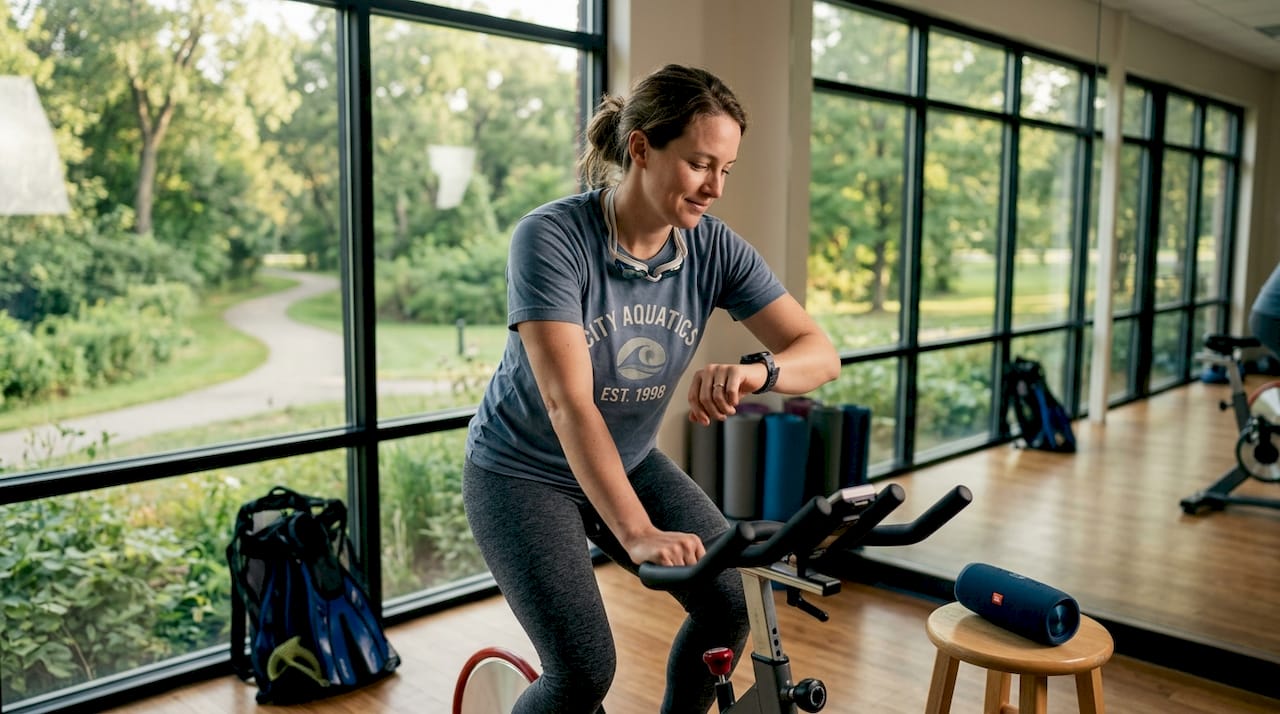
- Cycling and rowing develop cardiovascular capacity and leg drive without adding shoulder stress
- Mobility and flexibility work addresses the hip flexor tightness and thoracic restriction that chronic pool training creates
- Pool running and elliptical provide low-impact aerobic conditioning on recovery days
Sports medicine describes cross-training’s dual role as both load management through low-impact conditioning and capacity building through targeted strength and mobility work. Both functions matter equally.
Pro Tip: Before adding any cross-training to your program, identify the specific physical weaknesses holding your swimming back. A targeted hip stability program will do more for your kick than a generic cardio session.
Benefits of cross-training for swimmers
The most underrated reason why cross-training benefits swimmers is injury prevention. Shoulder injuries account for a significant portion of all competitive swimming injuries, and they almost always result from repetitive overhead loading without adequate supporting strength. Cross-training prevents overuse injury by keeping repetitive stress from accumulating to a breaking point. When you distribute training load across different movement patterns, no single tissue absorbs all the damage.
Beyond injury prevention, the performance benefits are concrete:
- Improved endurance through aerobic cross-training that builds cardiovascular capacity without adding pool volume
- Greater strength in muscles that swimming underloads, particularly the posterior chain and hip stabilizers
- Better flexibility and mobility through dedicated stretching and movement work that pool sessions rarely include
- Faster recovery when low-impact modalities like cycling or walking replace complete rest on easy days
Youth swimmers gain a distinct advantage from cross-training that goes beyond physical fitness. Children who participate in two to three different physical activities per year develop broader physical literacy and avoid the burnout and overuse patterns that come with early specialization. A young swimmer who also plays soccer, takes gymnastics, or practices martial arts builds a more resilient athletic foundation than one who only swims year-round from age eight.
For competitive swimmers at every level, cross-training also extends career longevity. Athletes who manage training load intelligently stay healthy longer, which means more years of quality training and competition.
Cross-training exercises and modalities
Not all cross-training exercises for swimmers are equal. The right choice depends on what your swimming demands and what your body currently lacks. Here is a practical comparison of the most common modalities:
| Modality | Primary benefit | Best use case |
|---|---|---|
| Dryland strength training | Shoulder, core, and hip stability | Year-round, 2-3 sessions per week |
| Cycling | Aerobic capacity, leg power | Recovery days, early season volume |
| Rowing | Full-body endurance, posterior chain | Off-season conditioning |
| Pool running | Cardiovascular fitness, zero impact | Injury rehabilitation, active recovery |
| Elliptical | Low-impact aerobic base | Recovery days, injury prevention |
| Yoga and mobility work | Flexibility, joint health | Any day, especially after hard sessions |
Dryland strength training deserves special attention because it offers the most direct transfer to swim performance. Exercises targeting the rotator cuff, scapular stabilizers, and deep core muscles protect the shoulder complex and improve stroke efficiency. Effective dryland workouts for swimmers focus on these areas specifically rather than general gym programming.
Respiratory muscle training is worth mentioning separately because it is often misunderstood. A systematic review and meta-analysis found that RMT improves respiratory muscle strength but shows limited influence on sprint and middle-distance swimming performance in events from 50 to 200 meters. That does not mean it is useless. For distance swimmers and those with breathing mechanics issues, it can play a supporting role. Just do not expect it to shave time off your 100 freestyle.
For young swimmers, combining swimming with activities like aerial arts or gymnastics develops complementary muscle strength and spatial awareness that pure swim training cannot replicate. The body control and proprioception gained from gymnastics, for example, translates directly into better underwater dolphin kick mechanics.
Pro Tip: Treat cross-training like seasoning in a recipe. A little of the right thing transforms the dish. Too much of the wrong thing ruins it. Select modalities that address your specific physical gaps, not just whatever sounds interesting.
Integrating cross-training into your schedule
Knowing what cross-training is only gets you halfway there. The real skill is fitting it into a training schedule without undermining swim progress or digging a recovery hole you cannot climb out of.
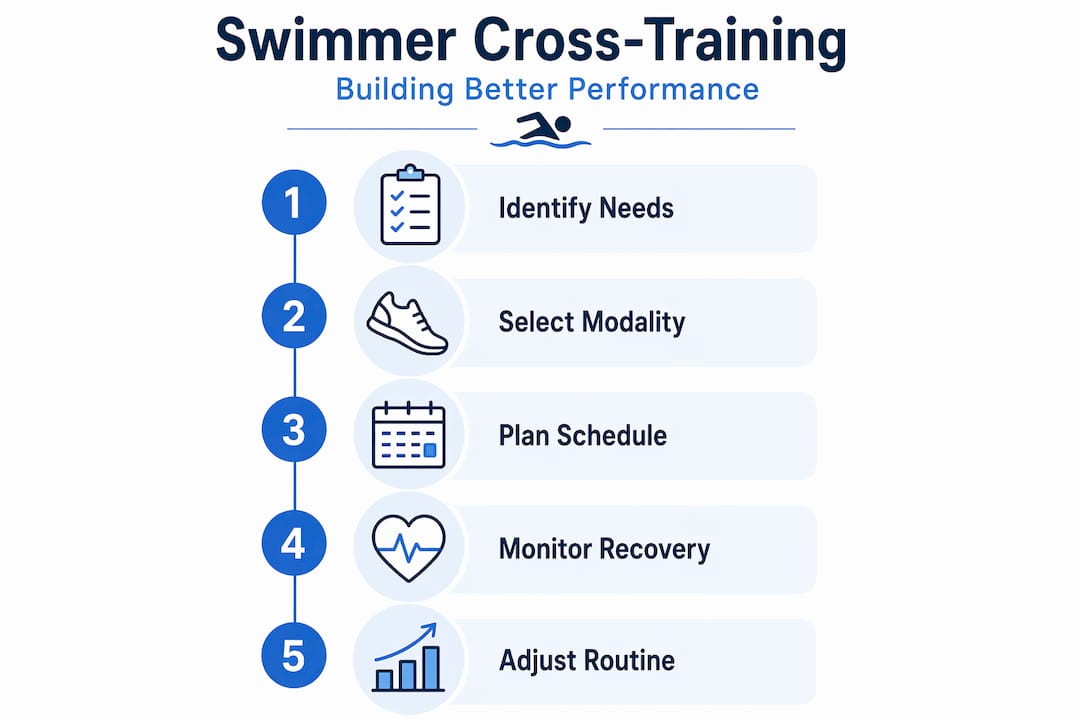
Follow this approach when building cross-training into your program:
- Audit your current training load. Before adding anything, map out your weekly swim volume, intensity distribution, and where your hard days fall. Cross-training should slot into the gaps, not stack on top of your heaviest sessions.
- Place cross-training on low-intensity days. Cross-training works best in early season to increase volume safely without overuse. Use it on recovery days when swim intensity is low.
- Limit session duration on recovery days. A 30 to 45 minute easy bike ride supports recovery. A 90 minute hard cycling session on a recovery day defeats the purpose entirely.
- Monitor fatigue signals weekly. Resting heart rate, sleep quality, and mood are reliable early indicators of accumulated fatigue. If these trend negatively, reduce cross-training volume before reducing swim volume.
- Support adaptation with nutrition. Cross-training sessions still deplete glycogen and create muscle damage. Post-session protein and carbohydrate intake is just as important after a dryland session as after a hard swim practice.
- Build in planned deload weeks. Every three to four weeks, reduce both swim and cross-training volume by 20 to 30 percent to allow full adaptation and tissue repair.
Recovery biology is the key limiter to how much cross-training you can absorb. Programming that ignores recovery rhythms can silently degrade adaptation quality and increase injury risk, even when apparent fitness is improving. More is not always better. Smarter always is.
Pro Tip: Use a simple 1-to-10 perceived exertion log for both swim and cross-training sessions. If your weekly average stays above 7 for more than two consecutive weeks, pull back. Fatigue accumulates faster than most swimmers realize.
Age-specific cross-training considerations
For young swimmers
Youth swimmers are not small adults. Their developing musculoskeletal systems respond differently to training stress, and early specialization carries documented risks. The goal for young swimmers is to build broad physical literacy through multiple physical activities rather than maximizing swim-specific volume.
Practical cross-training options for youth include:
- Team sports like soccer or basketball for agility and coordination
- Gymnastics or aerial arts for body control and core strength
- Martial arts for discipline, balance, and rotational power
- Dance for rhythm, flexibility, and spatial awareness
Parents and coaches should resist the pressure to specialize before age 12 to 14. The physical and psychological costs of early overspecialization consistently outweigh any short-term competitive gains.
For masters swimmers
Masters swimmers face a different challenge. Recovery slows with age, joint load accumulates over decades of training, and the margin for programming error shrinks. Cross-training for masters swimmers should prioritize joint-friendly modalities like cycling, swimming with fins, and yoga.
Recovery protocols also matter more at this level. Sauna sessions two to three times per week on lower-intensity days, combined with proper post-session nutrition, support the tissue repair that masters athletes need to sustain training quality. Thermal recovery is not a luxury for older swimmers. It is a practical tool that extends training capacity.
For masters swimmers, individualized swim plans that account for recovery capacity and life stress outside the pool are far more effective than generic high-volume programs.
My take on where swimmers get cross-training wrong
I’ve watched swimmers and coaches approach cross-training as filler. Something to do when the pool is closed, or when a coach wants to feel like they’re covering all the bases. That attitude produces mediocre results at best and overuse injuries at worst.
What I’ve learned from working with swimmers across age groups and ability levels is that cross-training is most effective when it directly targets the physical gaps that swimming creates. Shoulder internal rotation dominance, weak hip abductors, tight hip flexors, underdeveloped posterior chain. These are not abstract problems. They show up as shoulder pain, a weak kick, and a collapsing core at race pace.
The second mistake I see constantly is ignoring recovery when adding cross-training. Coaches add dryland three days a week on top of a full swim schedule and then wonder why their athletes are exhausted and getting slower. Recovery is not a reward for hard training. It is the mechanism through which hard training actually works.
My honest advice: start with one well-designed dryland session per week targeting your specific weaknesses. Do it consistently for eight weeks. Measure the results. Then build from there. That approach beats three random cross-training sessions that nobody is really committed to.
— James
Take your training further with Swimcamp

At Swimcamp, PEAK Performance Swim Camp integrates dryland training and cross-training education directly into its coaching programs. Founded by Olympic coach Nick Baker with over 50 years of coaching experience, PEAK has run more than 1,000 camps across 18 countries. Every camp combines stroke technique, physical conditioning, and mental preparation into a single, structured program. If you want to see how professional cross-training fits into a complete swim development plan, explore the swim camps available across the USA and internationally. For swimmers focused on specific technical skills alongside conditioning, the start and stroke clinics offer targeted coaching that complements any cross-training program. Early registration fills spots fast, so plan ahead for the upcoming season.
FAQ
What is cross-training for swimmers?
Cross-training for swimmers means using non-swimming activities like dryland strength work, cycling, and rowing to build physical capacity, reduce overuse injury risk, and complement pool-based training.
What are the main benefits of cross-training for swimmers?
The primary benefits include injury prevention through distributed training load, improved strength and mobility in muscles swimming underloads, and enhanced recovery through low-impact conditioning on easy days.
What types of cross-training are most effective for swimmers?
Dryland strength training targeting shoulder and core stability, cycling for aerobic capacity, and mobility work for flexibility are consistently the most effective cross-training modalities for swimmers.
How often should swimmers cross-train?
Most swimmers benefit from two to three cross-training sessions per week placed on low-intensity or recovery days, with session length kept to 30 to 60 minutes to avoid compromising swim adaptation.
Is cross-training different for youth swimmers versus adults?
Yes. Youth swimmers should focus on broad physical activities like gymnastics or team sports to build motor skills and avoid early specialization, while adult and masters swimmers prioritize targeted strength work and recovery-focused modalities.
Recommended
- Physical conditioning for swimmers: unlock peak performance – Peak Performance Swim Camp
- Year-round swim training: benefits, methods & success – Peak Performance Swim Camp
- Master swimming conditioning: step-by-step guide to peak performance – Peak Performance Swim Camp
- Interval swim training: Boost endurance and performance – Peak Performance Swim Camp