
TL;DR:
- Effective swimmers videos feature expert instruction, evidence-based techniques, and measurable progress.
- Modern videos highlight technique evolution, emphasizing streamlined body position, high elbow catch, and efficient breathing.
- Continuous self-review with targeted corrections and technology enhances performance beyond generic swim content.
Finding the right swimmers videos online can feel like searching for a needle in a haystack. There are thousands of options, from casual pool recordings to professionally produced breakdowns, and not all of them deliver real results. The difference between a video that helps you shave seconds off your time and one that simply reinforces bad habits often comes down to a few key criteria: expert instruction, evidence-based technique, and measurable feedback. This article cuts through the noise and gives you a clear framework for identifying the videos that actually move the needle on your performance.
Table of Contents
- What makes a swimmers video essential for improvement?
- Technique breakdown: Freestyle and butterfly evolution
- Smart Paddle data: Backstroke analysis and technology
- Sprint vs. distance: What video analytics reveal
- Outcome measurement: Iterative technique improvement via video
- Why most swimmers videos miss the real performance gains
- Next steps: Turn video learning into peak performance
- Frequently asked questions
Key Takeaways
| Point | Details |
|---|---|
| Evidence-driven selection | Choosing swimmers videos based on expert analysis and data leads to faster improvement and avoids wasted practice. |
| Technique evolution matters | Modern videos highlighting stroke evolution provide clear, actionable steps for minimizing drag and increasing speed. |
| Iterative progress | Tracking and updating technique with video-based measurement yields measurable performance gains. |
| Tech-enhanced analysis | Smart Paddle and video analytics reveal individualized flaws and optimize training for competitive swimmers. |
| Combine video with coaching | Swimmers get the best results when pairing self-review with expert-led camps or clinics. |
What makes a swimmers video essential for improvement?
Not every video of someone swimming is a teaching tool. The best swimmers videos share a set of qualities that separate genuine learning resources from background noise. Before you spend hours watching content, it helps to know exactly what to look for.
Key criteria for evaluating swimmers videos:
- Clear, high-quality footage with slow-motion replay for detailed analysis
- Expert instruction from credentialed coaches or elite athletes
- Focus on modern, evidence-based technique rather than outdated methods
- Measurable improvement goals tied to specific technique changes
- Contrast between correct and incorrect movement patterns
One of the most effective formats is the comparison video, where older and newer technique styles are placed side by side.
U.S. Masters Swimming technique videos do exactly this, contrasting old versus modern freestyle and butterfly strokes with a focus on efficient kicking, breathing, body rotation, and hand paths that reduce drag and accelerate recovery. Seeing the difference in real time makes the lesson stick far better than a written description ever could.
Research is also starting to validate technology-driven approaches. VR training results suggest that immersive video environments can accelerate skill acquisition by giving swimmers a first-person view of elite movement patterns, which is something traditional poolside coaching alone cannot replicate.
“The best swimmers videos don’t just show you what elite swimming looks like. They show you exactly why it works, and what happens when it doesn’t.”
For swimmers working on stroke technique tips or coaches building a foundation with younger athletes, video content that grounds every drill in a clear mechanical reason is far more valuable than generic “swim faster” advice. Understanding the why behind each movement is what allows swimmers to self-correct during practice, not just during a coached session. Coaches looking to build on these ideas with younger groups will also find strong guidance in youth coaching strategies that pair well with video-based instruction.
Now that you know what to look for, let’s dive into specific video resources and what they offer.
Technique breakdown: Freestyle and butterfly evolution
The way elite swimmers move through the water has changed significantly over the past few decades. What was once considered correct technique, like a flat body position or a wide arm pull, is now understood to create unnecessary drag and slow recovery. Swimmers videos that document this evolution are among the most educational resources available.
What modern technique videos emphasize:
- High elbow catch to maximize early propulsion
- Body rotation that drives power from the core, not just the arms
- Efficient breathing patterns that minimize head movement and disruption
- Compact kick cycles that maintain momentum without burning energy
- Hand paths that stay close to the body’s centerline to reduce lateral drag
The U.S. Masters Swimming channel provides an excellent example of this kind of content. Their freestyle and butterfly breakdowns use slow-motion footage to highlight how modern swimmers generate speed with less effort by refining each phase of the stroke. The contrast between older, drag-heavy techniques and today’s streamlined approach is immediately visible and actionable.
| Technique element | Older approach | Modern approach |
|---|---|---|
| Body position | Flat, minimal rotation | Active rotation, core-driven |
| Arm pull | Wide, sweeping path | High elbow, close to centerline |
| Kick pattern | Deep, wide kick | Compact, efficient kick |
| Breathing | Head lifts high | Minimal head movement, quick breath |
| Recovery | Slow, low arm swing | Fast, relaxed high recovery |
Pro Tip: When watching technique comparison videos, pause at the catch phase and the finish phase of each stroke. These two moments are where most swimmers lose the most speed, and they are also the easiest to correct once you can see them clearly.
For swimmers who want to connect these video lessons to their in-water practice, reviewing swim strategy fundamentals alongside visual content creates a much stronger learning loop. Watching a video and then immediately applying one specific change during practice is far more effective than trying to overhaul your entire stroke at once. Focus on one element per session, confirm the change with another video review, and build from there.
Smart Paddle data: Backstroke analysis and technology
Beyond classic technique videos, technology-enabled video analysis offers next-level insights.
One of the most revealing swimmers videos available today comes from The Race Club, which uses Smart Paddle technology to analyze elite backstroke technique in ways that the naked eye simply cannot detect. Smart Paddles are sensor-equipped training tools that measure force, velocity, and hand orientation throughout each stroke cycle, generating data that can be overlaid onto video footage for a complete picture of what is actually happening underwater.
How to use technology-driven video analysis:
- Watch the full video once for a general impression of the swimmer’s movement
- On the second viewing, focus specifically on the data overlays and what they reveal about force production
- Identify the moments where velocity drops, as these indicate drag or propulsion loss
- Compare the flagged technique errors to the corrected version shown in the same video
- Apply one specific correction to your own stroke and record yourself to check the change
The Race Club’s
backstroke analysis video examines Maggie MacNeil’s backstroke using Smart Paddle data and finds that wrist hyperextension adds 12 to 13% drag to her stroke, while a straight-arm pull creates a wide hand path that leads to measurable propulsion loss. The video then contrasts this with an elbow-bend technique that maintains steady velocity throughout the pull phase. The numbers make the lesson undeniable.
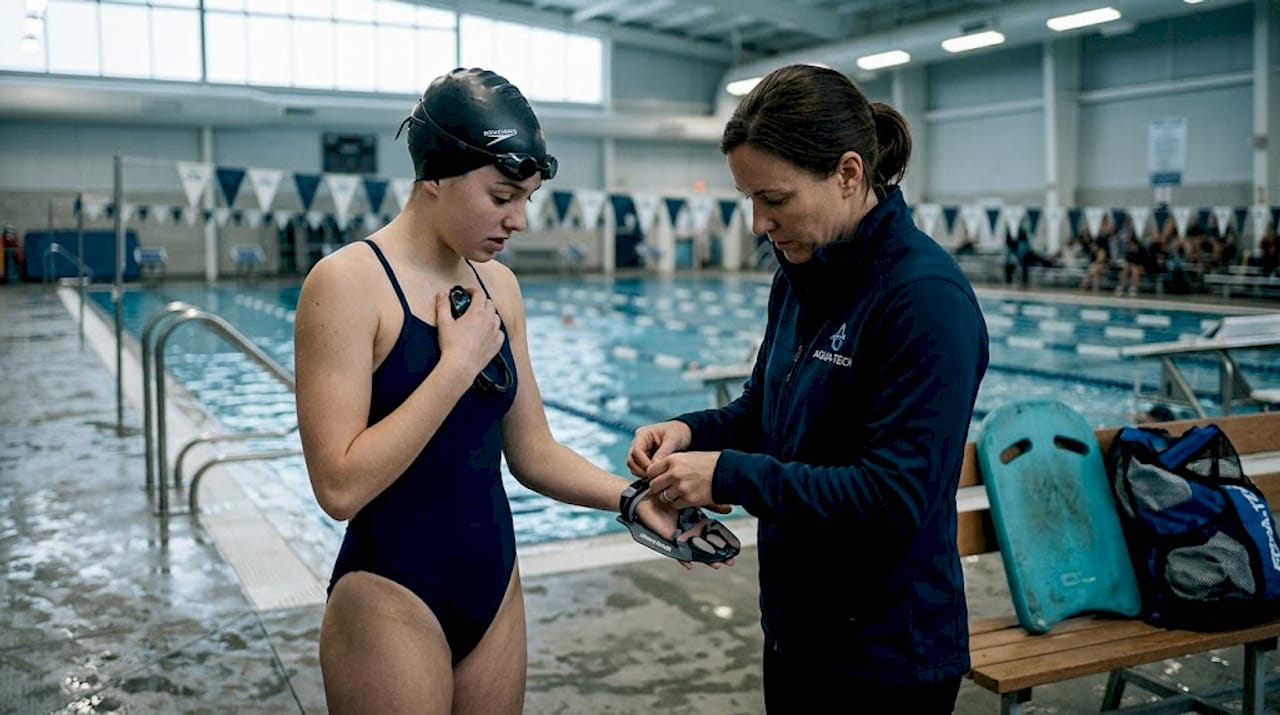
| Technique flaw | Measured impact | Corrected approach |
|---|---|---|
| Wrist hyperextension | 12 to 13% added drag | Neutral wrist alignment |
| Straight-arm pull | Wide path, propulsion loss | Bent elbow, close pull |
| Inconsistent hand angle | Velocity drops mid-stroke | Consistent pitch throughout |
Pro Tip: Even without access to Smart Paddles yourself, you can use underwater video to spot the same flaws. Look for moments where your hand appears to push water sideways rather than backward. That lateral force is wasted energy.
Swimmers who want personalized feedback on their own backstroke can explore private coaching insights that combine video analysis with expert review. For those who want a structured approach to applying these findings, custom swim plans can translate video-based discoveries into a training program built around your specific needs.
Sprint vs. distance: What video analytics reveal
Comparing sprint and distance performances in swimmers videos uncovers unique insights for both athletes and coaches.
One of the most valuable things video analytics can do is reveal the specific performance factors that separate elite sprinters from elite distance swimmers. These are not just differences in conditioning. They are differences in technique, pacing strategy, and biomechanical efficiency that show up clearly when you analyze race footage frame by frame.
Research published in Nature Scientific Reports confirms that elite 100m freestyle performance correlates strongly with clean swim velocity, with first-lap correlation coefficients of r=0.806 for males and r=0.850 for females. Starts and turns also matter significantly, with robust correlations around r=0.5 and r=0.59 respectively. The study analyzed 59 elite swimmers and also identified meaningful sex-based differences in underwater speed and breakout distance, which has direct implications for how coaches design event-specific training.
For stroke mechanics specifically, sprint performance in the 50m freestyle correlates more strongly with stroke length (SL, with coefficients between 0.50 and 0.57) than with stroke rate. As distance increases to 800m and 1500m, stroke rate becomes more important, with correlations shifting to between 0.37 and 0.45. Elite medallists manage to use a high stroke rate without sacrificing stroke length, which is a sign of superior technique efficiency rather than simply greater fitness.
What video analysis reveals across sprint and distance events:
- Sprint swimmers show higher peak velocity off the start and through the first 15 meters
- Distance swimmers maintain more consistent velocity variability across the full race
- Turns and breakouts account for a larger percentage of total race time in shorter events
- Breathing patterns differ significantly, with sprinters often taking fewer breaths per length
- Elite distance swimmers show superior hip rotation consistency across all laps, not just early ones
Video review of race footage is one of the most underused tools in competitive swimming. Most swimmers watch their races once and move on. The athletes who improve fastest are the ones who study their footage the way a chess player studies a game replay, looking for patterns, missed opportunities, and small adjustments that compound over time. Connecting this kind of analysis to stroke efficiency and speed principles gives you a practical framework for turning observations into action.
Outcome measurement: Iterative technique improvement via video
Once you’ve learned from top swimmers videos, continuous improvement is all about measurement and iteration.
The most powerful use of swimmers videos is not watching them once and hoping the lessons stick. It is building a feedback loop where you record yourself, compare your footage to a reference, make one targeted change, and then record again to confirm the improvement. This iterative process is what separates swimmers who plateau from those who keep getting faster.
How to build an effective video review cycle:
- Record your stroke from multiple angles, including underwater if possible
- Compare specific phases of your stroke to a reference video of elite technique
- Identify the single biggest deviation from ideal technique
- Make one focused change during your next practice session
- Record again and compare to confirm the adjustment was made correctly
- Repeat the cycle every two to four weeks
The
Effortless Swimming channel provides a compelling case study in what this process can achieve. Their video discusses how power meters reveal propulsion losses caused by hand rotation that creates lateral forces rather than backward drive. In one documented case, a swimmer who corrected this single technique flaw reduced their time by 19 seconds through consistent, measured iteration. That is not a small gain. It is the kind of result that changes race outcomes.
Signs your video review process is working:
- Your technique in recent recordings looks noticeably closer to your reference videos
- Your times are dropping even when your training volume stays the same
- You can identify your own errors during a swim, not just when watching footage afterward
- Coaches and training partners notice changes in how your stroke looks and feels
Pro Tip: Keep a simple log alongside your video library. For each recording, note the date, the specific technique focus, and one observation about what improved and what still needs work. Over several months, this log becomes one of the most motivating and informative training tools you have.
The encouragement to keep going through plateaus and frustrating stretches is something every swimmer needs. Coaches like Nick Baker have seen firsthand how the swimmers who commit to consistent self-review and honest assessment are the ones who break through when others stall. Video is the mirror that makes honest assessment possible.
Why most swimmers videos miss the real performance gains
Here is something we have observed after decades of coaching and reviewing thousands of hours of swimming footage: most swimmers videos, even good ones, focus on what elite swimmers look like rather than why they move the way they do. That distinction matters more than most people realize.
Generic technique drills are useful for beginners. But for competitive swimmers who already have a functional stroke, the real gains come from identifying the specific inefficiencies in your movement, not from copying a generalized ideal. A video showing you that elite freestyle swimmers rotate 45 degrees is helpful context. A video analyzing your own footage and showing you that you rotate only 20 degrees, or 65 degrees, is what actually changes your times.
The most effective swimmers videos we have seen combine three things: clear mechanical explanation, individualized application, and a way to measure whether the change worked. Technology is accelerating this. Smart Paddles, underwater cameras, and even VR tools are making it possible to get feedback that was once only available to national team athletes. But the technology only works when it is applied to the individual swimmer’s actual movement patterns, not to a hypothetical average.
Private swim video analysis bridges this gap by combining the power of video with the judgment of an experienced coach who can tell you not just what you are doing, but what to fix first and how to confirm the fix worked. That combination is what turns video watching into genuine performance improvement.
Next steps: Turn video learning into peak performance
Ready to turn video insights into real performance? Here’s where you can take the next step.
Watching swimmers videos is a powerful starting point, but the biggest gains come when you pair that learning with expert guidance and structured practice. Video gives you the map. Coaching and camp experience give you the vehicle to get there.
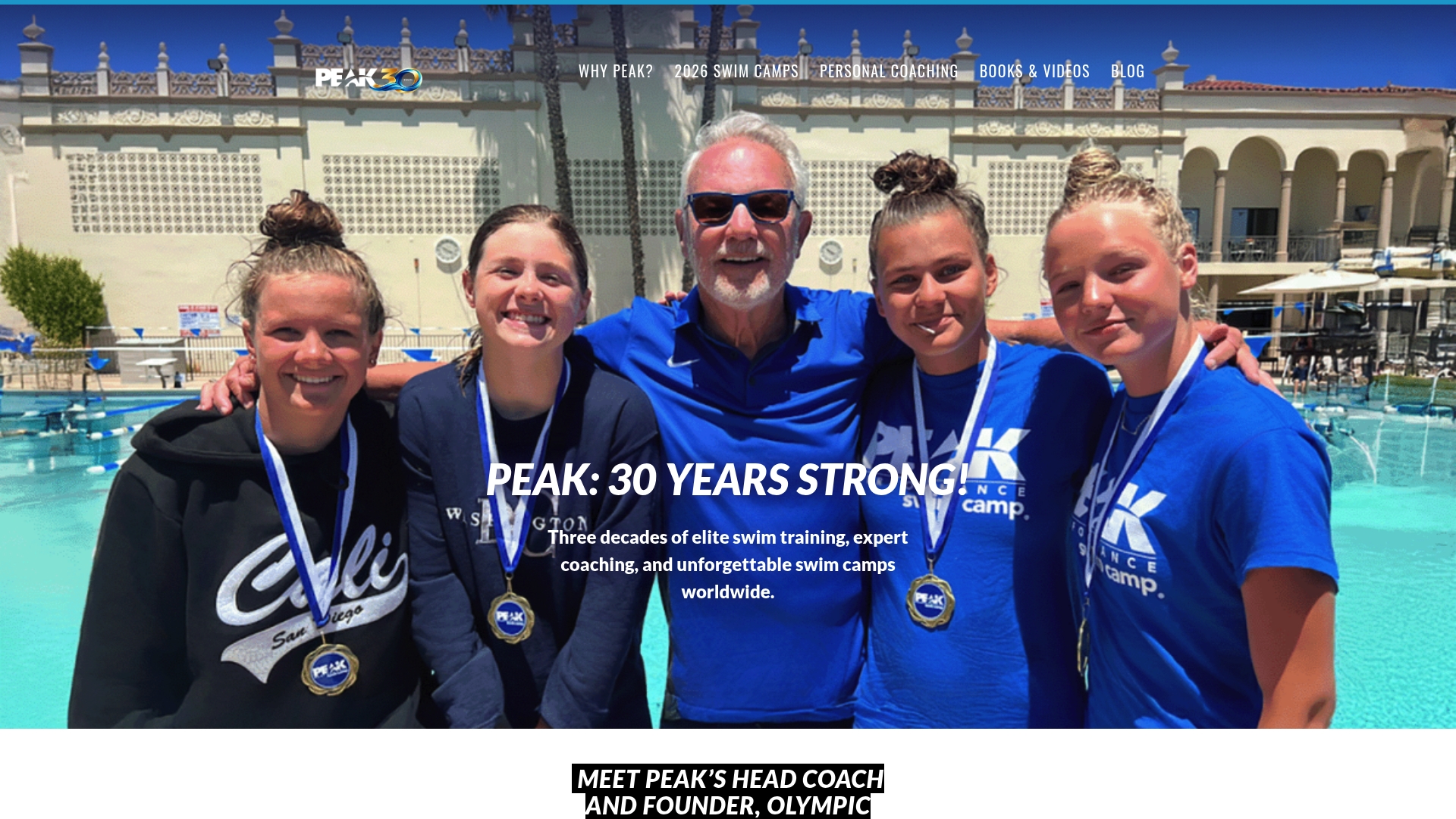
At PEAK Performance Swim Camp, we combine the kind of evidence-based technique instruction you have seen in the best swimmers videos with hands-on coaching, personalized feedback, and a training environment designed to accelerate real improvement. Whether you are a developing age-grouper or an experienced competitive swimmer, our swim camp programs are built to take what you have learned from video and translate it into faster, more efficient swimming in the water. For swimmers who want a more focused experience, our clinic options offer targeted technique work with expert coaches who understand exactly what the data and the footage are telling you.
Frequently asked questions
How do I know if a swimmers video is suitable for my skill level?
Look for videos that clearly define their target audience and provide measurable improvement goals, ideally with evidence-based technique explanations. If the video does not specify who it is for or what outcome to expect, it is likely too generic to be useful.
What should swimmers focus on in technique videos to see the fastest gains?
The biggest gains come from mastering fundamentals like efficient kicking, body rotation, and proper hand paths, which reduce drag and improve recovery. U.S. Masters Swimming videos demonstrate exactly how these elements differ between outdated and modern technique, making the corrections easy to visualize and apply.
How does technology like Smart Paddles and video analysis improve swimming?
Tech tools identify hidden flaws, quantify drag and efficiency, and enable swimmers to refine their technique based on personalized feedback. As shown in The Race Club’s analysis of Maggie MacNeil’s backstroke, wrist hyperextension alone can add 12 to 13% drag, a flaw that is nearly impossible to detect without sensor data.
What’s the best way to use swimmers videos for self-improvement?
Record your own stroke regularly, compare it to elite swimmers videos, and make small, targeted adjustments one at a time. The Effortless Swimming case study shows that this iterative approach can produce dramatic results, including a 19-second time reduction from a single corrected technique flaw.
Are there swimmers videos that cater specifically to youth or novice athletes?
Yes, youth-oriented technique videos often focus on clear demonstrations of fundamentals and use slow-motion breakdowns for easier learning. Look for content that prioritizes body position and basic kick mechanics before introducing more advanced concepts like stroke rate optimization.
Recommended
- Best swim technique videos for faster, efficient swimming – Peak Performance Swim Camp
- Advanced swimming technique tips for peak performance – Peak Performance Swim Camp
- Top coaching strategies for youth swimmers: skill & performance gains – Peak Performance Swim Camp
- Why swimming fundamentals unlock competitive success – Peak Performance Swim Camp