
Every parent of a competitive swimmer knows the feeling: you want to help your child improve, but you’re not sure which coaching approaches actually work and which ones risk burning them out. The good news is that research and decades of elite coaching experience point to a clear set of strategies that build speed, sharpen technique, and keep young swimmers motivated for the long haul. This article breaks down the most effective, evidence-backed methods coaches use today, so you can make smarter decisions about your child’s training.
Table of Contents
- Key criteria for effective youth swimming coaching
- Emphasizing core strength for speed and technique
- Delaying stroke specialization to promote growth
- Leveraging video feedback for rapid skill improvement
- Motivation, mindset, and setting goals in youth swimming
- Side-by-side: Comparing top coaching strategies
- Help your youth swimmer excel with proven coaching support
- Frequently asked questions
Key Takeaways
| Point | Details |
|---|---|
| Core training boosts speed | Two to three weekly core sessions can significantly improve sprint and backstroke performance in youth swimmers. |
| Delay specialization | Mixing strokes and events until age 14 helps avoid injury and builds all-around swimming abilities. |
| Use video feedback | Simple video analysis accelerates skill learning and lets swimmers see their own improvements. |
| Foster motivation and growth | Positive encouragement, goal-setting, and building resilience are as important as physical training. |
| Strategy blend works best | Combining physical, technical, and motivational strategies produces the strongest results for young swimmers. |
Key criteria for effective youth swimming coaching
Before choosing any coaching strategy, it helps to know what “effective” actually means for a young swimmer. It’s not just about faster times. The best approaches deliver across several areas at once.
A strong coaching strategy should produce:
- Measurable performance gains: improved split times, cleaner turns, stronger finishes
- Injury prevention: age-appropriate loads that protect growing bodies
- Motor skill development: coordination, balance, and body awareness built over time
- Long-term love for the sport: keeping swimmers engaged through the teen years and beyond
- Personal growth: goal-setting, teamwork, resilience, and self-confidence
One of the biggest risks parents and coaches face is pushing too hard, too early. Early specialization significantly raises the risk of burnout and overuse injury in young athletes. Delayed event focus is widely preferred by sports scientists and elite coaches alike. The tips for swimming parents at PEAK Performance Swim Camp reinforce this: the goal at young ages is broad development, not narrow specialization.
Pro Tip: When evaluating a coach or program, ask how they balance competition goals with long-term athlete health. A coach who only talks about winning times may be missing the bigger picture.
Emphasizing core strength for speed and technique
If there is one physical training tool that consistently delivers results for youth swimmers, it’s core stability work. The core, meaning the muscles of the abdomen, lower back, hips, and pelvis, acts as the engine that transfers power from the arms to the legs in the water. A weak core means wasted energy and poor body position.
A recent meta-analysis covering 16 controlled trials found that core stability training produces a standardized mean difference (SMD) of 0.71 across youth swimming performance outcomes. In plain terms, that’s a significant, consistent improvement in speed and stroke efficiency. Sprint events and backstroke showed the strongest gains.
| Training variable | Recommended range | Notes |
|---|---|---|
| Sessions per week | 2 to 3 | Spread across training days |
| Session length | 30 to 60 minutes | Shorter for younger swimmers |
| Program duration | 8 weeks minimum | Gains compound over time |
| Exercise type | Swim-specific + general | Planks, bridges, rotational work |
The most effective programs combine general core exercises like planks and dead bugs with swim-specific movements that mimic stroke mechanics. Both boys and girls benefit, though the research shows slightly larger gains for boys. That said, every swimmer improves with consistent core work.
Pro Tip: You don’t need a gym. A 20-minute dry-land routine at home using a mat and bodyweight exercises, done three times a week, can produce real results within two months. Check out the importance of core strength in swimming for specific exercises, and explore technique drills for young swimmers to pair with your child’s in-water practice.
Delaying stroke specialization to promote growth
Here’s something that surprises many parents: the swimmers who go on to compete at the highest levels are rarely the ones who specialized earliest. In fact, the opposite is often true.
The American Academy of Pediatrics and USA Swimming both recommend that youth swimmers under 14 avoid locking into a single stroke or event. Multi-stroke development builds a broader athletic base, reduces repetitive stress injuries, and keeps training fresh and engaging.
“This year’s backstroker is next year’s freestyler. Let the swimmer’s body and enthusiasm guide event selection, not adult ambition.” This idea, explored in depth at Swimming Gold, reflects what coaches see again and again at the elite level.
Here’s a practical approach by age group:
- Ages 8 to 11: Focus on learning all four strokes. Enter 25s and 50s of every stroke at meets.
- Ages 12 to 13: Add the 100 IM and 200 IM. Relays are excellent for team development.
- Ages 14 to 15: Begin identifying stronger strokes, but keep variety in training.
- Ages 16 and up: Gradual shift toward specialty events is appropriate.
The year-round swimming advantages of this approach are clear: swimmers who develop across all strokes have more options as they mature, and they’re far less likely to plateau or burn out before reaching their potential.
| Approach | Ages 8 to 13 | Ages 14 and up |
|---|---|---|
| Multi-stroke training | Strongly recommended | Continue as base |
| Event specialization | Not recommended | Gradual introduction |
| Injury risk | Low with variety | Increases with early focus |
| Long-term potential | Higher | Depends on foundation |
Leveraging video feedback for rapid skill improvement
Technique errors are often invisible to the swimmer in the moment. A dropped elbow, a scissor kick, a late breath, these are things a swimmer simply cannot feel without external feedback. Video changes that completely.
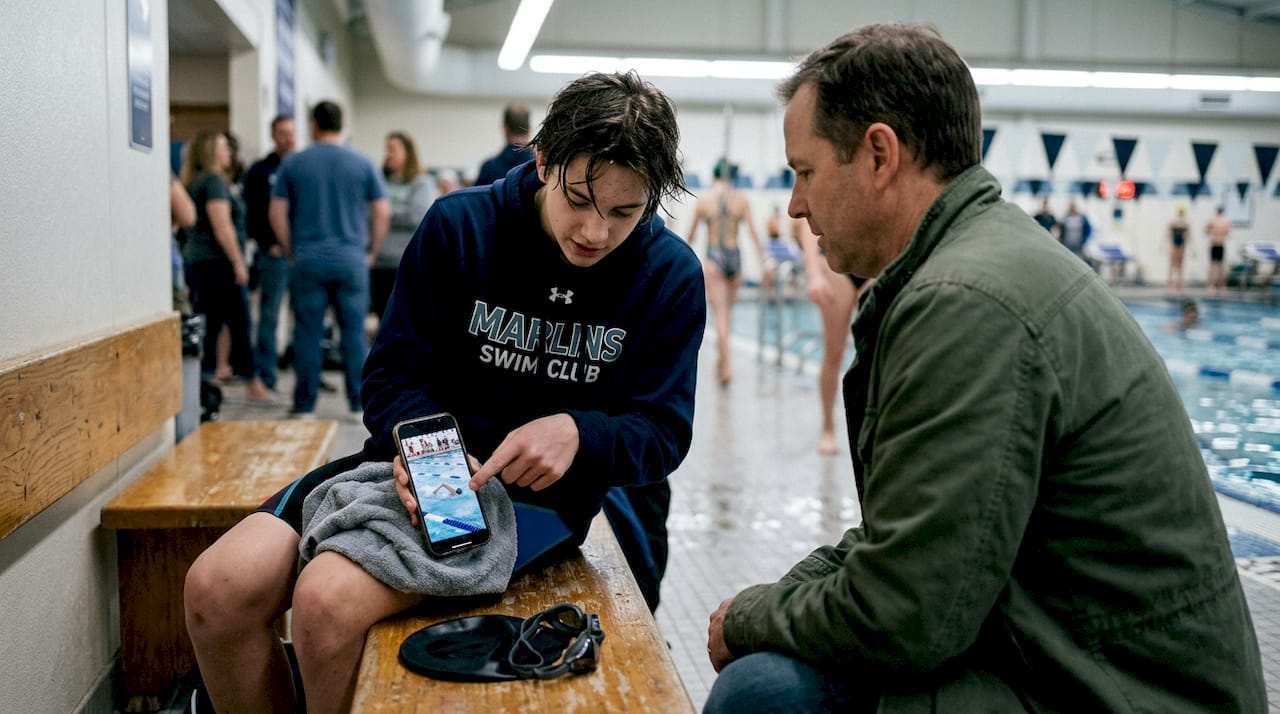
A scoping review of video-based instruction for youth swimmers found that 87% of studies reported positive effects on skill acquisition in children ages 5 to 12. Both traditional video review and newer app-based tools produced improvements. The barrier to entry is now almost zero: a waterproof phone mount and a free slow-motion app are all you need.
Here’s a simple workflow you can use at practice or at home:
- Record: Film from the side and from underwater if possible. Capture at least three full lengths.
- Review together: Watch the footage with your swimmer immediately after. Keep it conversational.
- Identify one focus: Pick a single correction. Too many at once overwhelms young athletes.
- Practice with intent: Do a focused set targeting that one correction.
- Re-record: Film again after the correction work to show progress visually.
The key is keeping feedback positive and specific. “Your elbow is dropping here, let’s fix that” works far better than general criticism. Pair this with custom coaching for swimmers to get expert eyes on the footage and targeted correction plans.
Motivation, mindset, and setting goals in youth swimming
All the physical training in the world won’t stick if a swimmer loses motivation. The mental side of coaching is just as important as the technical side, and it’s often where parents can have the biggest positive impact.
Personal growth outcomes, including motivation, goal-setting, and resilience, are critical markers of success in youth swimming. A swimmer who learns to set goals and push through hard practices carries those skills far beyond the pool.
Here are practical motivational tools parents can use:
- Celebrate effort, not just results: Praise the hard practice, not just the fast time.
- Set process goals: “I want to improve my flip turn” beats “I want to win.”
- Track personal bests: Help your swimmer see their own progress over time.
- Normalize setbacks: A bad race is data, not failure.
- Stay curious: Encourage your swimmer to ask their coach questions and stay engaged.
“Every great swimmer had a race they thought was their worst. What made them great was showing up the next day anyway. Persistence is the skill that outlasts talent.” This is the kind of message that sticks with young athletes.
For structured goal-setting for swimmers, PEAK coaches recommend setting one short-term goal (this week’s practice), one medium-term goal (this season’s meet), and one long-term goal (next year’s target time). This three-tier system keeps swimmers focused without feeling overwhelmed. You can also find motivational support for young swimmers directly from Coach Nick Baker.
Pro Tip: Ask your swimmer after every meet, “What’s one thing you did well today?” before anything else. Starting with a positive builds confidence and opens the door to honest reflection.
Side-by-side: Comparing top coaching strategies
With all four strategies on the table, here’s how they stack up across key development areas.
| Strategy | Speed gains | Technique | Injury prevention | Motivation | Best age to start |
|---|---|---|---|---|---|
| Core strength training | High | High | Moderate | Moderate | 9 and up |
| Delayed specialization | Moderate | High | Very high | High | All ages |
| Video feedback | Moderate | Very high | Moderate | High | 6 and up |
| Mindset and goal-setting | Moderate | Moderate | High | Very high | All ages |
No single strategy wins across every category. That’s the point. The most effective coaching programs blend all four, adjusting the emphasis based on the swimmer’s age, stage, and goals.
Here’s a quick guide to prioritizing by stage:
- Ages 6 to 10: Prioritize multi-stroke exposure, video feedback for fun skill-building, and positive reinforcement.
- Ages 11 to 13: Add structured core training and introduce goal-setting frameworks.
- Ages 14 and up: Begin gradual specialization while maintaining core work, video analysis, and mindset coaching.
The best results come when parents, coaches, and swimmers are aligned on these priorities and communicate openly about what’s working.
Help your youth swimmer excel with proven coaching support
Understanding these strategies is a strong first step. Putting them into practice with expert guidance is where real breakthroughs happen. At PEAK Performance Swim Camp, every session is built around the same principles covered in this article: core conditioning, multi-stroke development, video-based technique feedback, and mental skills coaching.

Our coaches tailor every session to the swimmer’s age, ability, and goals, whether your child is just getting competitive or pushing toward a national qualifying time. You can explore swim camps for youth for immersive training experiences, browse clinic coaching options for focused skill sessions, or get started with virtual swim coaching from anywhere in the world. With over 1,000 camps conducted across 18 countries, PEAK has the experience to help your swimmer reach their next level.
Frequently asked questions
At what age should young swimmers specialize in a stroke?
Most experts recommend delaying specialization until age 14 to 16 to reduce the risk of burnout and overuse injury. Multi-stroke training before that age builds a stronger long-term foundation.
How many core training sessions per week benefit youth swimmers?
Research supports 2 to 3 sessions of 30 to 60 minutes per week over at least 8 weeks for meaningful improvements in speed and technique. Consistency matters more than intensity at younger ages.
Is video analysis effective for young swimmers’ skill development?
Yes. 87% of studies on video instruction for youth swimmers ages 5 to 12 found positive effects on skill acquisition. Even simple phone-based video review produces real results.
What events are best for young swimmers up to age 14?
Multi-stroke events like 50s of all four strokes, the 200 IM, and relays are ideal. They build balanced skills and keep young swimmers engaged across different training demands.
How can parents motivate youth swimmers effectively?
Consistent encouragement, age-appropriate goal-setting, and celebrating personal progress are the most effective tools. Focus on effort and improvement rather than outcomes and placements.
Recommended
- Personalized swim coaching: boost skills with tailored training – Peak Performance Swim Camp
- Advanced swimming technique tips for peak performance – Peak Performance Swim Camp
- What To Look For In A Swim Coach – Peak Performance Swim Camp
- Year-round swim training: benefits, methods & success – Peak Performance Swim Camp
- How to Coach Youth Basketball for Team Success – Hoop Mentality