
TL;DR:
- Proper swimming performance relies on adequate nutrition rather than just training intensity. Swimmers often underfuel, leading to fatigue, slower times, and increased injury risk. Timing and personalized macronutrient strategies are essential for optimal recovery and performance.
Many competitive swimmers train twice a day, log thousands of yards each week, and still wonder why their times plateau. The answer is often in the kitchen, not the pool. A surprising number of swimmers at every level, from age groupers to elites, consistently underfuel or make avoidable nutrition mistakes that quietly cost them speed, power, and recovery. Understanding swimming nutrition is not optional if you want to perform at your best. This guide walks through energy needs, meal timing, micronutrients, smart supplement use, and practical strategies you can apply starting today.
Table of Contents
- Why nutrition matters for swim training
- Nutrition timing and macronutrient strategies
- Micronutrients and unique considerations for swimmers
- Supplements: What helps, what hurts, and when to use them
- The truth about swim nutrition: What most guides get wrong
- Take your swim performance to the next level
- Frequently asked questions
Key Takeaways
| Point | Details |
|---|---|
| Carbs fuel performance | Sufficient carbohydrate intake is essential for energy, power, and minimizing fatigue in swimmers. |
| Timing matters | When you eat before, during, and after training affects recovery and performance outcomes. |
| Micronutrients are crucial | Nutrient gaps, especially in female swimmers, should be monitored and addressed proactively. |
| Supplements only support | Supplements can enhance performance, but real food and proper planning come first. |
| Personalize your approach | Testing and adjusting nutrition to fit your training cycle delivers the best results. |
Why nutrition matters for swim training
Swimming is one of the most energy-demanding sports on the planet. Swimmers often train 10 to 20 hours per week in a thermally cooling environment, meaning your body burns more calories than most land-based athletes just to maintain core temperature. Add double sessions, dryland conditioning, and competition cycles, and the energy demand becomes enormous. Yet nutrition is still treated as secondary by many athletes and families.
Let’s clear up two myths right away. First, training harder alone does not equal better performance. Without proper fuel, harder training accelerates fatigue and increases injury risk rather than building fitness. Second, nutrition is not just about losing or gaining weight. It is a performance variable, just like technique and yardage.
Physiologically, swimmers rely on three primary fuel sources. Carbohydrates (the body’s preferred quick-energy source, stored as glycogen in the muscles and liver) power high-intensity sets. Protein rebuilds muscle tissue damaged during training. Dietary fat supports longer recovery windows, hormone health, and sustained energy during lower-intensity efforts.
“Carbohydrates are the primary fuel for swimming performance, and underfueling leads to reduced power and increased fatigue.”
This is not just theory. Research confirms that both amateur and elite swimmers frequently undereat, and energy intake often misses estimated expenditure. The consequences show up fast.
Signs your swimmer may be underfueling include:
- Declining times or reduced power output during sets
- Frequent illness or injuries that take longer to heal
- Unusual muscle soreness that does not resolve after rest
- Mood swings, irritability, or difficulty concentrating at school or practice
- Fatigue during warm-up, before the hard work even starts
If two or more of these sound familiar, nutrition is likely a limiting factor. The good news is that this is correctable, and the improvements can come quickly once the right changes are made. Pairing nutrition habits with year-round swim training creates a foundation for consistent progress.
Nutrition timing and macronutrient strategies
Knowing what to eat is important. Knowing when to eat it can be the difference between a breakthrough set and a sluggish one. Timing your nutrition around training sessions is one of the highest-leverage habits a swimmer can build.
Here is how daily macronutrient needs break down for swimmers based on training load:
| Macronutrient | Lower-intensity days | High-intensity/double days |
|---|---|---|
| Carbohydrates | 5 to 7 g/kg body weight | 8 to 12 g/kg body weight |
| Protein | 1.6 to 1.8 g/kg body weight | 1.8 to 2.2 g/kg body weight |
| Fat | 1.0 to 1.5 g/kg body weight | 1.0 to 1.5 g/kg body weight |
Research on carbohydrate recommendations supports periodizing intake, meaning you adjust carb levels to match your training load rather than eating the same every day.
Here is a practical step-by-step approach to meal timing:
- Pre-session (1 to 4 hours before): Eat a carbohydrate-rich meal or snack. A pre-session carb target of 1 to 4 g/kg body weight is recommended, paired with moderate protein. Think oatmeal with banana, rice with chicken, or toast with eggs.
- During long sessions (over 90 minutes): Aim for 30 to 60 g of carbohydrates per hour from easily digestible sources like sports drinks, gels, or fruit.
- Post-session (within 30 to 45 minutes): Prioritize recovery with a 3:1 carbohydrate-to-protein ratio. A smoothie with Greek yogurt and fruit, or chocolate milk, works well here.
- Between sessions (double days): Do not skip the recovery window between morning and afternoon practices. A full meal, not a snack, is what your body needs to replenish glycogen.
Two of the most common mistakes we see are skipping breakfast before morning practice and waiting too long after training to eat. Both delay recovery and compound into bigger performance losses over a week of training.
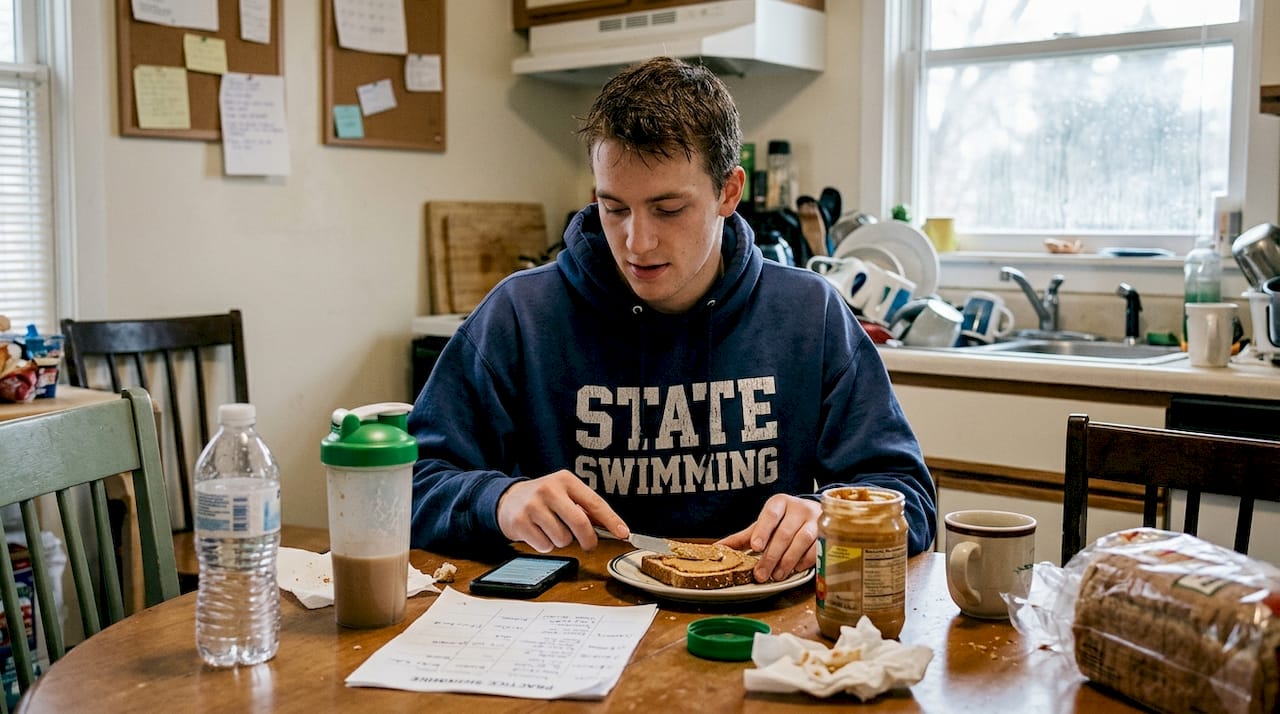
For swimmers preparing for competition, swim meet nutrition deserves its own planning. Race-day eating should mirror what you practiced in training, not something new.
Pro Tip: Never experiment with new foods or timing strategies on competition day. Test your race-day nutrition routine during training so your body knows exactly what to expect when it counts.
Swimmers who are in a structured off-season swim training phase should lower total carb intake slightly while keeping protein high to support muscle maintenance and repair.
Micronutrients and unique considerations for swimmers
Macronutrients get most of the attention, but vitamins and minerals often determine whether a swimmer stays healthy through a long season. Deficiencies in key micronutrients can be subtle at first but gradually drag down energy, immunity, and hormonal health.
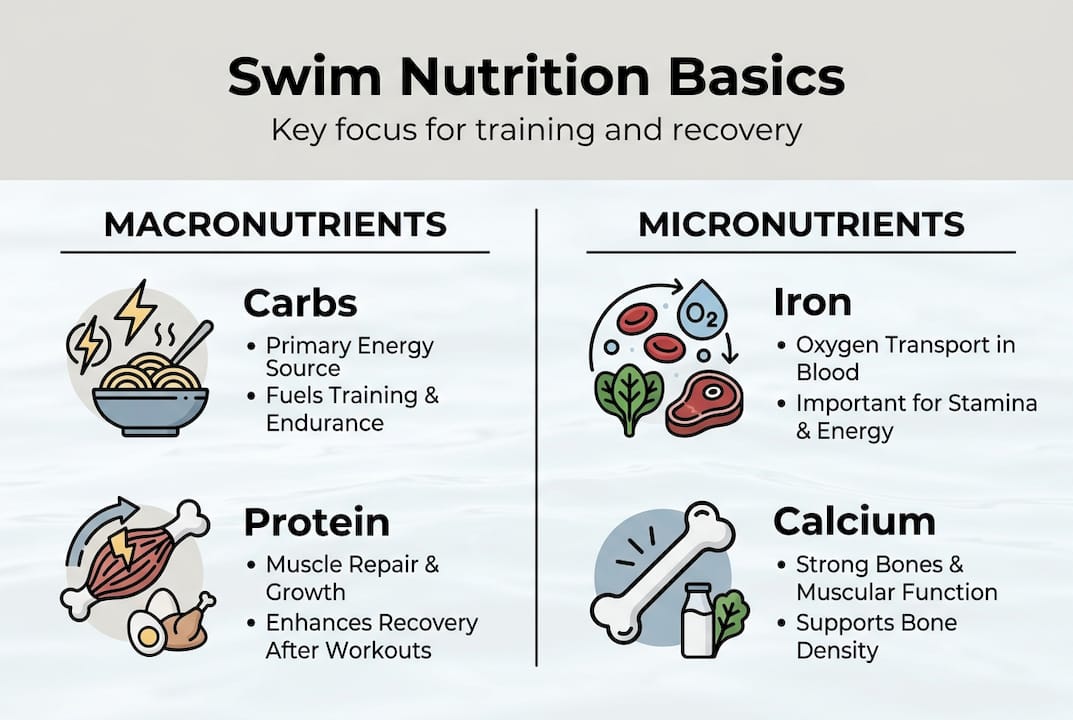
The five micronutrients swimmers should prioritize include:
- Iron: Essential for oxygen transport via red blood cells. Deficiency causes fatigue and reduced aerobic capacity, which is especially problematic during high-yardage blocks.
- Vitamin D: Supports bone health, immune function, and muscle recovery. Swimmers training indoors are particularly at risk of low levels.
- Calcium: Critical for strong bones and muscle contraction. Low intake combined with high training volume raises stress fracture risk.
- Zinc: Supports immune function and tissue repair. Often missed in calorie-restricted diets.
- Magnesium: Plays a role in energy production and muscle relaxation. Low levels can contribute to cramping and poor sleep.
Female swimmers face a steeper challenge. Micronutrient deficiencies are most common in females, particularly around calcium, iron, and zinc, and vitamin D levels need regular monitoring across all genders.
| Nutrient | Female risk | Male risk |
|---|---|---|
| Iron | High (menstrual losses) | Moderate |
| Calcium | High (bone density, undereating) | Low to moderate |
| Vitamin D | High (indoor training) | High (indoor training) |
| Zinc | Moderate to high | Low to moderate |
| Magnesium | Moderate | Moderate |
Low energy intake is the root cause of many micronutrient shortfalls. When total food intake drops too low, whether intentionally or through busy schedules, hormonal disruption, impaired bone health, and mental health challenges can follow. This connects directly to the broader conversation around self-worth in swimming and body image pressures young athletes face.
Pro Tip: Request a blood panel at least once per season to check iron, vitamin D, and ferritin levels. A varied whole-food diet addresses most gaps better than any supplement stack.
Supplements: What helps, what hurts, and when to use them
Supplements are one of the most misunderstood parts of swim nutrition. Some have solid evidence behind them. Many do not. And a few can actually hurt performance or health when used incorrectly.
Here is what the research supports for swimmers:
“Creatine improves anaerobic performance in elite swimmers; bicarbonate and beta-alanine help glycolytic events; caffeine aids sprinting.”
Let’s break each one down:
- Creatine: Supports short, explosive efforts and repeated sprint capacity. Most useful in high-intensity or sprint-focused training phases.
- Sodium bicarbonate: Buffers lactic acid buildup in the muscles, helping swimmers hold speed in events like the 200m. Timing and dose matter.
- Beta-alanine: Reduces muscle burn during glycolytic (moderate to high intensity) efforts. Tingling skin is a common, harmless side effect.
- Caffeine: Proven to improve sprint and endurance performance. Best used strategically before key sessions or races.
Supplements may be appropriate during heavy training loads, international travel, or competition periods when whole-food options are limited. However, casual daily use without clear purpose wastes money and may carry risks.
A safe, stepwise approach to supplement decisions:
- Identify a specific gap that food alone is not filling (low iron, repeated fatigue, etc.)
- Confirm the gap with bloodwork or a registered sports dietitian
- Choose products certified through NSF Certified for Sport or Informed Sport to avoid contamination risks
- Start with the lowest effective dose and monitor response
- Review and reassess every training cycle
For swimmers under 16, the priority is always food first. Young athletes are still developing, and physical conditioning for swimmers combined with a whole-food diet will outperform any pill or powder at that stage. Coaches and parents should refer to coaching strategies for youth swimmers to understand how to frame these conversations well. Supplement decisions should also connect to the athlete’s mindset, and mental training for swim performance reinforces why discipline in habits, not shortcuts, drives results.
The truth about swim nutrition: What most guides get wrong
After working with swimmers across 18 countries and more than 1,000 camps, we have seen a consistent pattern. Most guides treat nutrition like a fixed formula. Eat this, weigh that, follow this plan. And while structure is important, the biggest nutrition wins we have witnessed come from swimmers who learn to treat nutrition as a dynamic, evolving strategy, not a rulebook.
The trial and error part is real. A carb strategy that works for one swimmer may leave another feeling sluggish. Recovery foods that a teenage male thrives on may not suit a 30-year-old female masters swimmer. Personalization is not optional. It is necessary.
Periodizing nutrition to match the training cycle is something most swimmers never do. They eat the same way during a taper week as during a peak training block. That misalignment costs them. The coaches who optimize the most come from backgrounds that treat the coach training workflow as holistic, including nutrition as part of the plan, not an afterthought.
Chasing supplements before nailing the basics is the single most common mistake we see. Fix sleep, fix food quality, fix meal timing. Then, and only then, do targeted supplements make a difference.
Take your swim performance to the next level
Nutrition knowledge is only valuable when it is applied consistently and matched to your specific training demands.

At PEAK Performance Swim Camp, our coaches integrate performance nutrition guidance within a complete training environment designed to help swimmers at every level compete smarter. Whether you are looking for structured in-water coaching at our swim camps, personalized feedback through video analysis and private coaching, or flexible support through our virtual coaching program, we have resources that match your goals. Pair the right nutrition strategy with elite coaching, and the results speak for themselves.
Frequently asked questions
What is the best meal to eat before swim practice?
A high-carbohydrate, easily digested meal eaten 1 to 4 hours before training is ideal. A pre-practice carb target of 1 to 4 g/kg body weight gives you the glycogen your muscles need without digestive discomfort during the session.
Do young swimmers need supplements to perform well?
Most swimmers under 16 do not need supplements, and a balanced whole-food diet covers their needs well. Research supports a food-first approach for younger athletes before any supplementation is considered.
How can female swimmers address common nutrient deficiencies?
Female swimmers should pay close attention to iron, calcium, and vitamin D intake throughout the season. Females are most deficient in these three nutrients, so regular blood testing and dietary variety are the most reliable tools.
What happens if a swimmer’s diet is too low in carbohydrates?
A low-carb diet significantly increases fatigue and can reduce swimming velocity during high-intensity training. Low carbohydrate intake lowers power output and makes it harder to sustain effort across a full session or meet.
How should swimmers adjust their nutrition on rest days?
On rest days, reduce total carbohydrate intake to reflect the lower energy demand while keeping protein and micronutrient intake consistent. Carb intake should match the training load to maintain optimal recovery and energy balance throughout the week.
Recommended
- Swimming Nutrition – Peak Performance Swim Camp
- Master swimming conditioning: step-by-step guide to peak performance – Peak Performance Swim Camp
- Physical conditioning for swimmers: unlock peak performance – Peak Performance Swim Camp
- Swim Meet Nutrition – Peak Performance Swim Camp
- Récupération musculaire : guide complet pour sportifs amateurs