
TL;DR:
- Swim event specialization is a gradual process influenced by age, physiological development, and technical proficiency, essential for long-term performance.
- Competing across multiple strokes and distances during youth builds transferable skills, physical balance, and pacing intelligence, delaying the need for early focus.
- Long-term success relies on collecting multiple performance data points, periodizing training appropriately, and maintaining broad development until consistent specialization emerges.
Swim event specialization is the strategic focus a swimmer places on specific strokes and race distances to optimize training and competitive performance. In competitive swimming, this process of explaining swim event specializations goes far beyond picking a favorite stroke. It involves understanding physiology, developmental timing, and the technical demands of freestyle, backstroke, breaststroke, butterfly, and individual medley across sprint, mid-distance, and distance race formats. For swimmers, parents, and coaches, getting this right means the difference between a swimmer who peaks at age 12 and one who thrives at 18 and beyond.
What factors influence when and how swimmers specialize in events?
Event specialization in swimming is not a single decision made at one point in time. It is a gradual process shaped by age, physical development, training history, and competitive experience.
Developmental stage matters most
Early specialization limits development by cutting off the learning that comes from competing across different strokes and events. This means a 10-year-old who only trains freestyle is missing the technical and physical foundations that backstroke, breaststroke, and butterfly would build. Most youth coaches and national governing bodies agree that swimmers under 14 should compete broadly across all strokes and distances before narrowing their focus.
Physiological readiness is the other major factor. During adolescence, rapid growth combined with high training loads raises the risk of microtrauma in developing muscles and joints. Periodized training programs balance developmental needs with performance demands to prevent injury and burnout, which is why training load must be managed carefully during growth spurts. Pushing a 13-year-old into heavy sprint-specific or distance-specific training before their body is ready creates injury risk without a proportional performance return.
Here are the key factors coaches and parents should track when assessing specialization readiness:
- Age and growth stage: Swimmers in peak growth phases need varied, lower-intensity training across strokes.
- Technical proficiency: A swimmer should demonstrate solid technique in all four strokes before narrowing focus.
- Competitive results over time: One standout race does not define a specialty. Patterns across multiple meets matter more.
- Enjoyment and motivation: Swimmers who enjoy multiple events stay in the sport longer and develop more fully.
- Training response: How a swimmer’s body responds to sprint work versus endurance sets reveals physiological tendencies.
Pro Tip: Track your swimmer’s times across all strokes and distances for at least two full seasons before drawing any conclusions about where their specialty lies. Single-meet results are noise. Trends are signal.
How do strokes and race distances define event specialization?
The four competitive strokes, freestyle, backstroke, breaststroke, and butterfly, each demand distinct physical attributes and technical skills. Combined with race distance, they create a matrix of specialization categories that coaches use to guide training decisions.
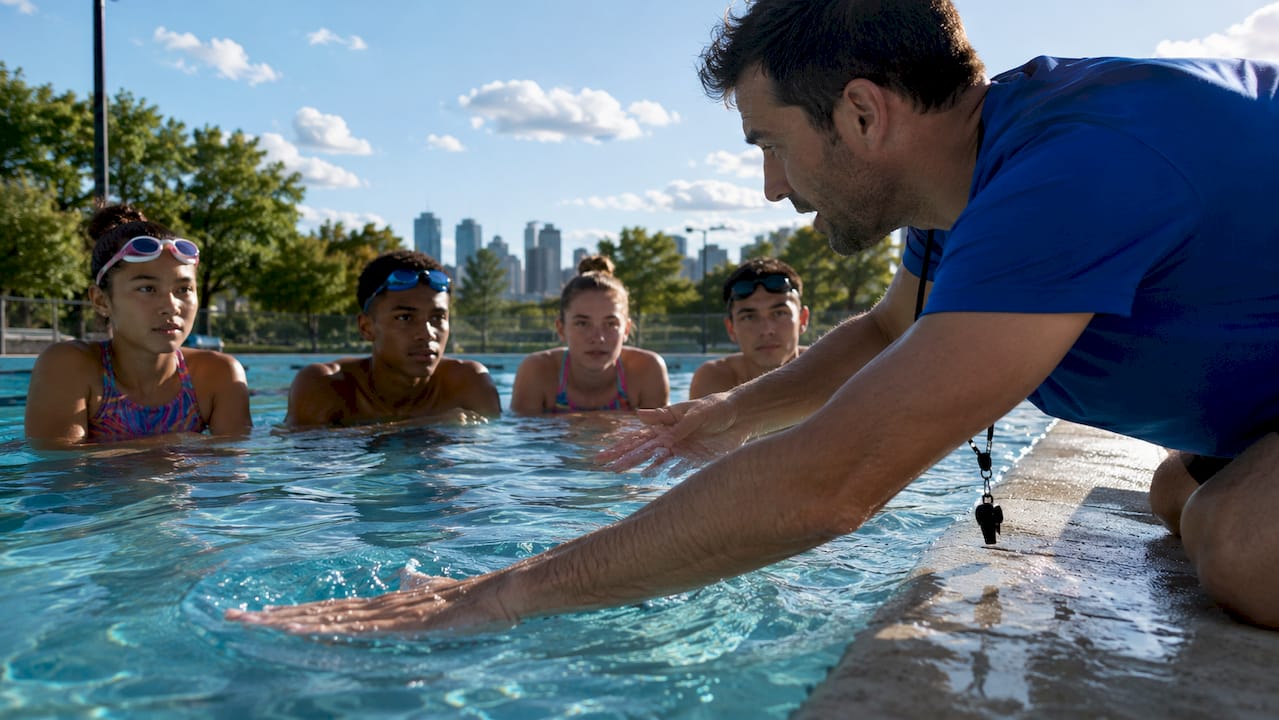
Stroke characteristics and specialization patterns
Freestyle is the most versatile stroke and appears in more race distances than any other, from the 50-meter sprint to the 1500-meter distance event. Backstroke rewards swimmers with strong hip rotation, shoulder flexibility, and a powerful kick. Breaststroke is the most technically demanding stroke, requiring precise timing between the pull, kick, and glide phases. Butterfly demands exceptional upper body strength and a rhythmic two-beat dolphin kick, making it physically taxing at distances beyond 200 meters.
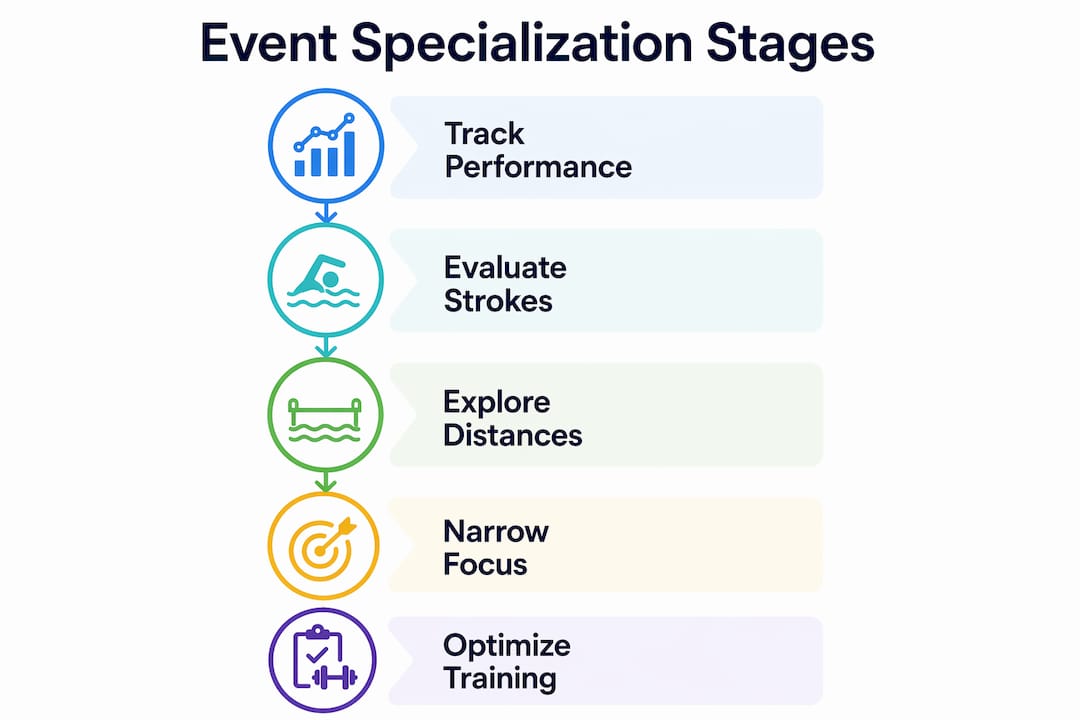
The individual medley (IM) combines all four strokes in one race, making it the most technically demanding event category. IM racing builds multi-stroke management, transitions, and pacing skills that benefit swimmers across all specializations. A strong IM swimmer typically has no major technical weaknesses, which is why coaches often use IM performance as a diagnostic tool.
Race distance creates three broad specialization buckets:
- Sprint events (50m and 100m): Demand explosive power, fast-twitch muscle recruitment, and a strong start and turn.
- Mid-distance events (200m, 400m, 500m): Require a blend of speed and aerobic capacity with precise pacing.
- Distance events (1000m and above): Favor swimmers with high aerobic capacity, efficient stroke mechanics, and mental endurance.
| Stroke | Primary physical demand | Typical distance specialty | Key technical focus |
|---|---|---|---|
| Freestyle | Aerobic capacity and turnover rate | All distances | Hip rotation, catch mechanics |
| Backstroke | Shoulder flexibility and kick power | Sprint to mid-distance | Body position, rotation timing |
| Breaststroke | Timing and hip flexibility | Sprint to mid-distance | Pull-kick coordination, glide |
| Butterfly | Upper body strength and rhythm | Sprint to 200m | Dolphin kick, breathing pattern |
| Individual medley | All-around technical skill | 200m and 400m | Stroke transitions, pacing |
Tools like SwimStandards Specialty (v2) use a weighted scoring system, applying a 1.0 weight to a swimmer’s top result, 0.75 to their second-best, and 0.5 to their third-best across each stroke and distance bucket. This approach produces a stable specialty profile that reflects consistent performance rather than a single outlier swim.
Why is varied event experience beneficial before specialization?
Competing across multiple strokes and distances during youth swimming builds a physical and technical foundation that single-event training simply cannot replicate. Multistroke competition fosters technical, physical, and psychological development, producing swimmers who are more adaptable and confident under pressure.
Here is why broad event exposure during the early years pays off long-term:
- Technical transfer: Skills developed in one stroke carry over to others. The hip rotation learned in backstroke improves freestyle efficiency. The kick timing in breaststroke sharpens body awareness for butterfly.
- Physical balance: Training multiple strokes develops muscle groups that single-stroke training neglects, reducing overuse injury risk.
- Pacing intelligence: Racing different distances teaches swimmers how to read their own effort levels, a skill that translates directly to race-day execution.
- Resilience and confidence: Competing in unfamiliar events builds mental toughness and reduces performance anxiety in primary events.
- Delayed peak timing: Swimmers who specialize too early often plateau before reaching their physical prime. Broad development extends the performance curve.
“Labeling very young athletes as stroke specialists is premature; their strengths shift with growth and training.” Coaching experts advise against calling kids under 14 specialists to avoid limiting their development.
The swimmer who looks like a natural backstroker at age 11 may develop into an elite butterflyer by age 16 as their shoulder strength and body proportions change. Locking in a specialty too early closes doors that physiology would have opened naturally. Parents and coaches who understand age group swimming development are better positioned to make patient, informed decisions.
Pro Tip: Enter young swimmers in the individual medley at every meet possible. It is the single best diagnostic event for identifying technical weaknesses and building the all-around competence that supports long-term specialization.
How do coaches and parents apply specialization principles in training?
Translating event specialization theory into practical training and meet entry decisions requires a structured approach. Data matters, but so does knowing when to trust what you see in the water.
Specialization decisions are more effective when based on multiple performance data points rather than isolated results. A swimmer who goes a personal best in the 100 butterfly at one meet has not necessarily found their specialty. That same swimmer needs consistent results across multiple competitions before butterfly training should dominate their schedule.
Practical guidelines for coaches and parents include:
- Build specialty profiles gradually: Use weighted multi-meet results across strokes and distances to identify genuine strengths, not single-race highlights.
- Adjust training as physiology changes: A swimmer’s aerobic capacity, muscle fiber composition, and body proportions shift significantly between ages 12 and 17. Specialty focus should shift with them.
- Communicate realistic expectations: Young swimmers need to understand that their current best event is not necessarily their long-term specialty. Frame development as a process, not a verdict.
- Use periodization intentionally: Long-term periodization includes general capacity-building phases followed by race-specific preparation. Specialty training belongs in the later phases of a season, not year-round.
- Monitor training response: Track how swimmers respond to sprint sets versus aerobic sets. Physiological response to training is one of the most reliable indicators of long-term event fit.
The physical conditioning demands of sprint events differ fundamentally from distance events, and training programs must reflect that distinction. A 100 butterfly specialist needs explosive power work and race-pace sets. A 1500 freestyle swimmer needs aerobic volume and threshold training. Applying the wrong training emphasis to the wrong event specialty is one of the most common errors in youth swimming development.
Key takeaways
Effective swim event specialization requires patience, data, and a commitment to broad development before narrowing focus.
| Point | Details |
|---|---|
| Avoid early specialization | Swimmers under 14 benefit more from competing across all strokes and distances than from single-event focus. |
| Use weighted performance data | Tools like SwimStandards Specialty (v2) reduce noise by weighting top-3 results per stroke and distance bucket. |
| Physiology drives timing | Rapid growth phases increase injury risk, so training load and specialty focus must align with developmental stage. |
| IM builds all-around strength | Individual medley racing develops multi-stroke competence and pacing intelligence that supports long-term specialization. |
| Periodize specialty training | Race-specific preparation belongs in the later phases of a training season, not as a year-round default. |
What 30 years of watching swimmers specialize has taught me
The biggest mistake I see coaches and parents make is treating event specialization as a label rather than a direction. A swimmer who goes fast in the 50 free at age 10 gets called a sprinter, and suddenly every training decision gets filtered through that identity. Two years later, their aerobic engine develops, their stroke rate drops, and they are actually a 200 freestyler. But the label stuck, and the training never adjusted.
The swimmers who develop most consistently are the ones whose coaches stay curious. They keep entering them in the IM. They watch how the swimmer responds to different training stimuli. They resist the urge to declare a specialty until the data across multiple seasons makes it obvious.
I have also seen the opposite problem: coaches who refuse to acknowledge any specialty at all, even when a 16-year-old clearly has the physical profile and competitive results of a distance swimmer. At some point, specificity in training is what drives performance. The art is knowing when broad development has done its job and when it is time to sharpen the focus.
The best framework I know is simple. Compete broadly, train broadly, and let the data accumulate. When a swimmer’s weighted results across two or three seasons consistently point toward one stroke and one distance range, that is your signal. Until then, keep the doors open. The coaching strategies that work for long-term development are almost always the ones that prioritize patience over premature conclusions.
— James
How Swimcamp helps swimmers find their best events

PEAK Performance Swim Camp, founded by Olympic coach Nick Baker, gives swimmers the structured environment to explore every stroke and distance with expert guidance. Across more than 1,000 camps in 18 countries, Swimcamp uses a holistic approach combining technique work, physical conditioning, and mental preparation to help swimmers identify and develop their genuine specializations. Rather than labeling swimmers early, the program builds the all-around competence that makes specialization meaningful when the time is right. Explore upcoming swim camps to find the right program for your swimmer’s development stage, or learn more about personalized coaching options tailored to individual event goals.
FAQ
What is event specialization in swimming?
Event specialization in swimming is the process of focusing training and competition on specific strokes and race distances that align with a swimmer’s physical strengths and developmental stage. It is a gradual process, not a single decision, and should evolve as the swimmer grows.
When should a swimmer start specializing in events?
Most coaching experts recommend that swimmers avoid single-event specialization before age 14, as labeling young athletes as specialists is premature because their strengths shift significantly with growth and training.
What are the main swimming event types by distance?
Competitive swimming events divide into three distance categories: sprint events (50m and 100m), mid-distance events (200m, 400m, and 500m), and distance events (1000m and above). Each category demands a different balance of speed, aerobic capacity, and race strategy.
How do coaches identify a swimmer’s best event specialty?
The most reliable method uses weighted results across multiple meets and strokes. Avoiding a single race as the basis for specialty decisions reduces noise and produces a stable profile that reflects genuine, consistent strengths.
Why is the individual medley important for young swimmers?
The individual medley trains all four strokes, transitions, and pacing in a single race, making it the most effective diagnostic event for identifying technical weaknesses. Multistroke competition builds the technical and psychological foundation that supports strong long-term specialization.
Recommended
- Individualized swim plans: unlock elite performance – Peak Performance Swim Camp
- What Is Swim Set Design: a Coach’s Guide – Peak Performance Swim Camp
- Why swimming fundamentals unlock competitive success – Peak Performance Swim Camp
- Optimize your swim coach training workflow: 4 key phases – Peak Performance Swim Camp