
TL;DR:
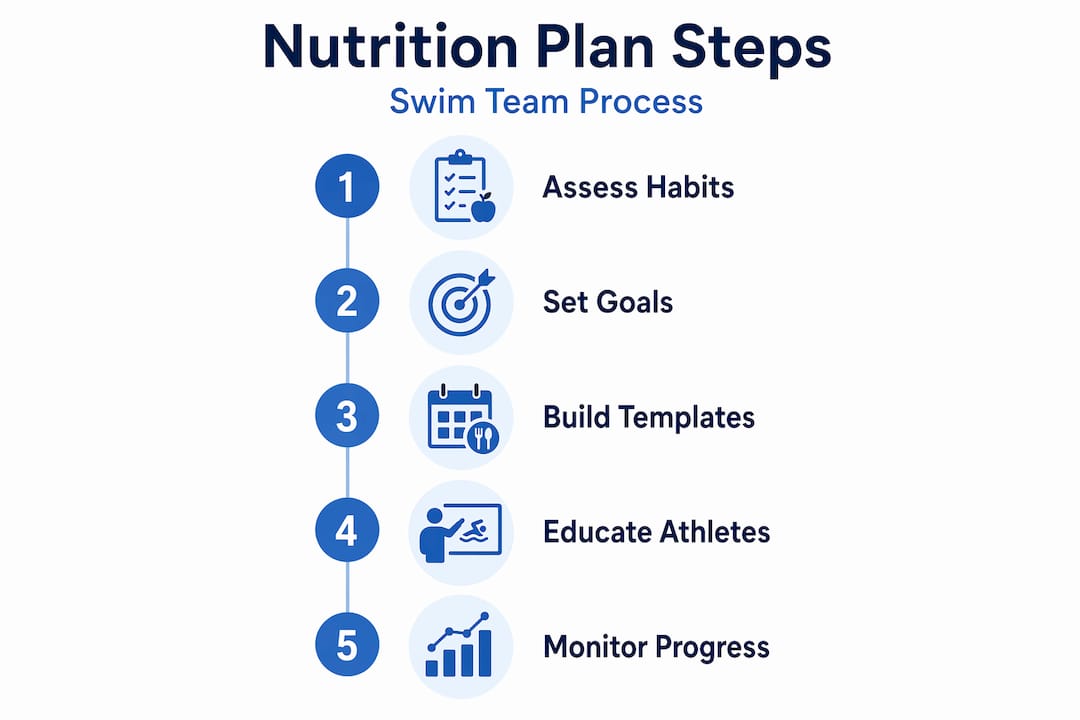
- A structured team nutrition plan transforms inconsistent fueling habits into a reliable system that enhances performance. Coaches should start with baseline assessments, standardize meal templates, and rehearse nutrition strategies during training to ensure consistency and effectiveness. Regular monitoring and adjustments are essential for continuous improvement and optimal athletic results.
Swim teams deal with a nutrition problem that rarely gets discussed openly: individual athletes show up to meets with wildly different fueling habits, hydration levels, and recovery strategies. Some swimmers eat a heavy breakfast two hours before their first race. Others skip the meal entirely. The result is inconsistent performance across the board, and coaches are left wondering why training gains don’t translate to competition. A structured, step by step team nutrition plan changes that. It turns scattered habits into a coordinated system that every swimmer on the roster can follow, trust, and repeat.
Table of Contents
- Key Takeaways
- Step by Step Team Nutrition Plan: Start with Assessment
- Meet-Day and Training Fueling: the Detailed Steps
- Organizing team-wide implementation
- Monitoring, troubleshooting, and refining the plan
- My take on why most team nutrition plans fail
- Take your team’s nutrition further with Swimcamp
- FAQ
Key Takeaways
| Point | Details |
|---|---|
| Start with a baseline assessment | Evaluate current dietary habits, hydration practices, and nutrition knowledge before building any plan. |
| Use evidence-based fueling timing | Pre-race meals should come 3 to 4 hours before events, with a light carbohydrate snack 60 to 90 minutes out. |
| Standardize three food tiers | Pre-meet carbs, between-event snacks, and recovery meals reduce decision fatigue and GI distress on race day. |
| Rehearse the plan during training | Practice meet-day nutrition during taper sessions to confirm tolerability and eliminate surprises at competition. |
| Track, adjust, and stay consistent | Collect nutrition logs and athlete feedback regularly to refine portions, timing, and food choices over time. |
Step by Step Team Nutrition Plan: Start with Assessment
Before you write a single meal template, you need to know where your team actually stands. Skipping this step is the most common mistake coaches make. You cannot fix what you have not measured.
Start by collecting a short dietary recall from each athlete. Ask swimmers to log everything they eat and drink for three days, including a practice day, a rest day, and a meet day if possible. Look for patterns: who skips breakfast, who relies on energy drinks, who has no post-practice recovery meal at all. Hydration status is worth checking too. Urine color charts distributed at practice are a simple, non-invasive starting point.
From there, set clear and measurable goals for the team. These goals should be specific enough to track:
- At least 90% of athletes eat a structured pre-practice meal within two hours of training
- Every swimmer carries a water bottle and meets a minimum daily fluid target
- Recovery nutrition (carbohydrates and protein) is consumed within 60 minutes of every practice
- Meal compliance is logged weekly and reviewed monthly
Finally, map out your resources before moving forward. Who on your staff will lead nutrition education? Do you have budget for team snacks at meets? Are there athletes with dietary restrictions that require substitutions? Answering these questions early prevents logistical problems later.
Pro Tip: Assign a team nutrition captain, ideally an older athlete who already has good habits. Peer modeling drives compliance far more effectively than coach-only instruction.
Meet-Day and Training Fueling: the Detailed Steps
This is where the plan gets specific. Fueling for swim meets follows a predictable structure, and once you standardize it, athletes stop guessing and start performing.
Here is the step by step sequence for meet-day nutrition:
-
24 to 36 hours before competition: Begin carbohydrate loading. Athletes should target 6 to 10 g/kg body mass per day. Focus on pasta, rice, oatmeal, bread, and fruit. Keep fat and fiber low to reduce GI risk.
-
3 to 4 hours before the first event: Serve the main pre-race meal. It should contain 1 to 3 g/kg carbohydrate and 10 to 20 g of moderate protein. Good options include oatmeal with banana and eggs, or rice with grilled chicken and fruit. Keep it low in fat and fiber.
-
60 to 90 minutes before the first race: Offer a light top-off snack with 0.5 to 1 g/kg carbohydrate. Think a banana, a small bagel with honey, or a sports gel. Nothing heavy, nothing new.
-
Hydration before warm-up: Athletes should drink 5 to 7 mL/kg fluid two to four hours before warm-up. During warm-up, small sips of 4 to 8 oz every 15 minutes keep levels steady without causing discomfort.
-
Between events: Drink 8 to 12 oz of fluid between races and consume 30 to 60 g of carbohydrates per hour during multi-event competition. Portable options like sports drinks, gels, bananas, and rice cakes work well at the pool deck.
-
Post-meet recovery: Within 30 to 60 minutes of the final event, athletes need carbohydrates and protein. Target 20 to 40 g of protein and 0.5 to 1.2 g/kg carbohydrate. Chocolate milk, a turkey sandwich, or a recovery shake all fit this window.
The table below gives coaches a quick reference for meet-day fueling:
| Timing | Food focus | Fluid target |
|---|---|---|
| 24 to 36 hours before | High-carb meals, low fat/fiber | Normal daily hydration |
| 3 to 4 hours before | Carbs + moderate protein | 5 to 7 mL/kg body weight |
| 60 to 90 minutes before | Light carb snack | 4 to 8 oz small sips |
| Between events | Quick carbs, electrolytes | 8 to 12 oz per event gap |
| Within 60 min after | Carbs + protein recovery meal | Rehydrate to thirst |
Pro Tip: Add 200 to 300 mg of sodium per liter of fluid in warm conditions or when athletes sweat heavily. Plain water alone will not restore electrolyte balance after a long meet day.
One caution that coaches frequently overlook: stop aggressive drinking 30 to 60 minutes before each race. Too much fluid right before a race causes bathroom urgency and GI discomfort that disrupts performance. Scheduled, smaller intakes between events are far more effective than drinking large amounts all at once.
Organizing team-wide implementation
A plan on paper means nothing if your athletes do not follow it. Implementation is where most team nutrition strategies fall apart, and it comes down to three things: education, logistics, and culture.
Start with a dedicated nutrition education session at the beginning of the season. Keep it practical, not academic. Show athletes what a pre-race meal looks like on a plate. Demonstrate how to read a sports drink label. Explain why hydration is a planning problem, not just a response to thirst, especially in cold pool environments where swimmers rarely feel thirsty even when they are dehydrated.
For logistics, standardize your food tiers across the team. USDA Team Nutrition provides menu-planning resources and recipe standardization guides that coaches can adapt for swim teams. Build three repeatable templates: one for pre-meet meals, one for between-event snacks, and one for recovery. Standardization reduces decision fatigue and keeps every athlete on the same page regardless of venue.
Scheduling is just as important as food selection. Regular meals every 3 to 4 hours and protein spread across three to four meals daily keeps athletes fueled and focused throughout a long meet day. Build hydration breaks into the warm-up routine, between events, and after the final race. Make it a scheduled team behavior, not an individual choice.
“Treating nutrition like a part of training, with deliberate scheduling, portioning, and habit-building, is what separates teams that perform consistently from those that fade late in competition.”
Address GI distress and bathroom logistics directly with your athletes. These are real concerns that swimmers hesitate to raise on their own. Reviewing low-fiber, low-fat food choices close to race time and planning bathroom stops into the event schedule removes a significant source of race-day anxiety.
Use a simple group chat or shared document to track compliance. Coaches who check in weekly on nutrition habits see better adherence than those who only address it at meets. You can also explore individualized swim plans for athletes who need extra support beyond the team framework.
Monitoring, troubleshooting, and refining the plan
A nutrition plan is not a one-time document. It is a living system that improves with every meet and every training block. Here is how to keep it evolving:
-
Collect weekly nutrition logs. Ask athletes to track meals, snacks, and fluid intake on training days. Even a simple photo log sent to a coach or team dietitian creates accountability and surfaces problems early.
-
Watch for signs of under-fueling. Fatigue that does not resolve with rest, poor split times late in a race, irritability, and frequent illness are all red flags. These symptoms often point to inadequate carbohydrate intake or chronic dehydration rather than fitness issues.
-
Review hydration data after meets. Body weight before and after a long meet day is a practical field measure. A loss of more than 2% of body weight signals meaningful dehydration that needs to be addressed in the hydration schedule.
-
Adjust portions and timing based on feedback. If athletes report nausea from the pre-race meal, shift it earlier or reduce the portion size. If energy crashes happen between events, increase the carbohydrate content of between-event snacks.
-
Rehearse the plan during training. Teams that practice meet-week nutrition during taper or final hard sessions confirm tolerability and build confidence before competition. This is one of the highest-leverage habits a coach can build into the training calendar.
Pro Tip: Run a full meet-day nutrition rehearsal at least two weeks before a major competition. Use the exact same foods, timing, and hydration schedule you plan to use on race day. Surprises in nutrition are almost always avoidable.
The goal of monitoring is not perfection. It is progress. Small, consistent adjustments over a season produce athletes who arrive at championship meets with a fueling system they trust completely.
My take on why most team nutrition plans fail
I have worked with swim teams at every level, and the pattern I see most often is this: coaches invest heavily in technique and yardage, then treat nutrition as an afterthought. They hand athletes a one-page handout before the season and assume the problem is solved. It never is.
What I have learned is that the biggest gains come not from finding the perfect meal, but from building a repeatable system that athletes actually use under pressure. The swimmer who eats the same pre-race breakfast at every meet, who drinks on schedule rather than when thirsty, who has a recovery meal ready within an hour of finishing, will consistently outperform a more talented athlete who wings it.
The hydration piece is where I see the most costly mistakes. Cold pool water masks thirst. Swimmers genuinely do not feel dehydrated until they are already underperforming. I have watched athletes drop time in training all week, then swim flat at a meet, and the culprit was two to three hours of inadequate fluid intake that morning. A planned hydration routine is not optional. It is as important as the warm-up.
My advice to every coach reading this: champion nutrition culture the same way you champion stroke mechanics. Make it part of practice, part of team meetings, and part of how you talk about performance. When athletes see that you take it seriously, they will too. The swim performance nutrition guide from Swimcamp is a great place to deepen that foundation with your team.
— James
Take your team’s nutrition further with Swimcamp
Building a step by step team nutrition plan is a process that takes time, feedback, and the right support structure. At Swimcamp, PEAK Performance Swim Camp integrates nutrition education directly into the training experience, so swimmers and coaches do not have to figure it out alone.
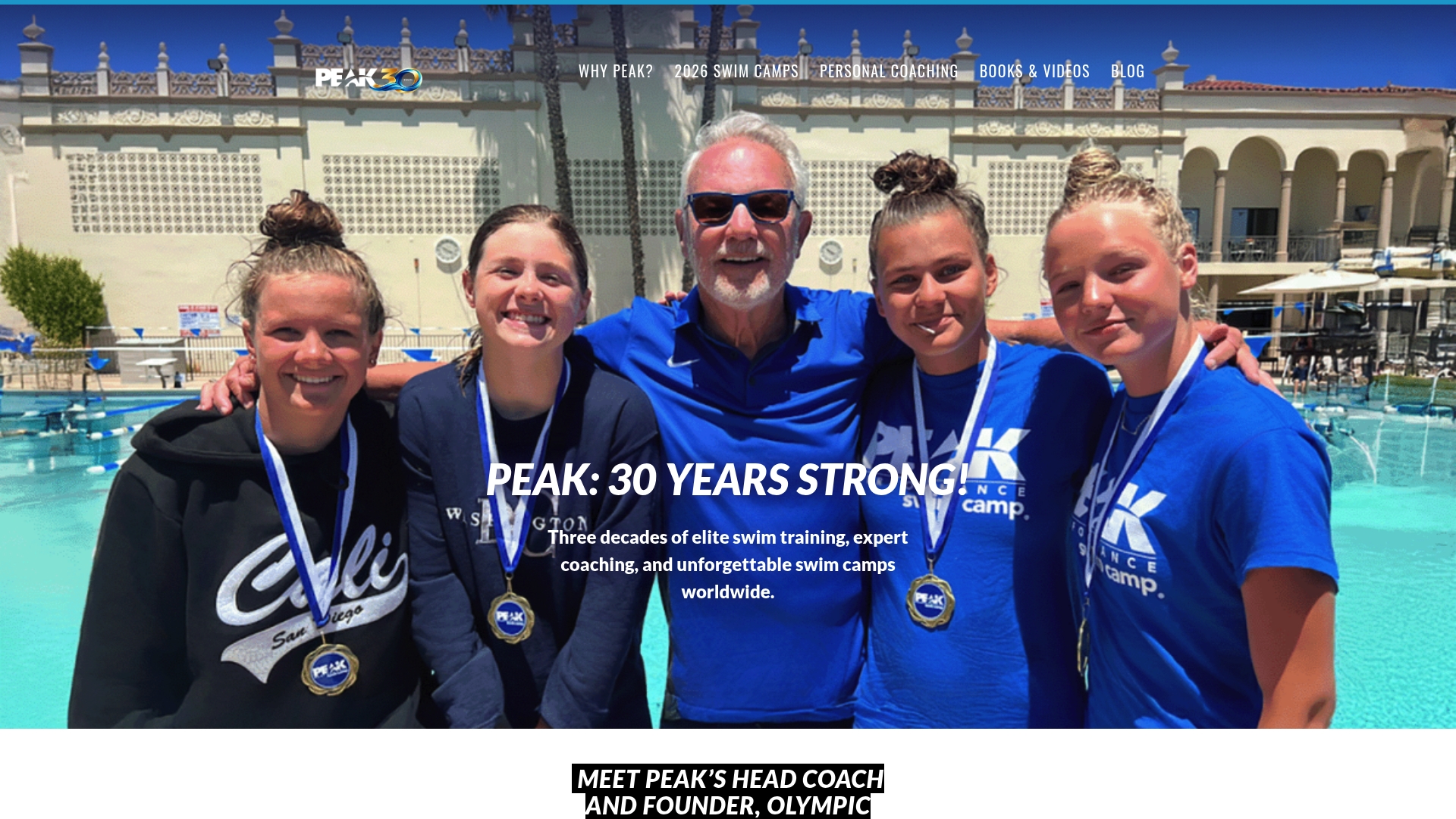
Founded by Olympic coach Nick Baker with over 50 years of coaching experience, Swimcamp’s programs address the full picture of performance: technique, mental preparation, physical conditioning, and fueling. Coaches who bring their teams to camp leave with practical nutrition frameworks they can implement immediately back home. Whether you are building your first team diet plan or refining an existing one, exploring Swimcamp’s swim camps is a concrete next step toward a stronger, better-fueled team.
FAQ
What should swimmers eat the morning of a meet?
The main pre-race meal should come 3 to 4 hours before the first event and include 1 to 3 g/kg of carbohydrates with moderate protein, such as oatmeal with eggs and fruit. Keep fat and fiber low to reduce GI distress.
How much fluid should a swimmer drink before competition?
Swimmers should consume 5 to 7 mL/kg of fluid two to four hours before warm-up, then take small sips of 4 to 8 oz during warm-up. Stop aggressive drinking 30 to 60 minutes before each race to avoid discomfort.
How do you create a nutrition plan for a swim team?
Start with a baseline assessment of current dietary habits, set measurable team goals, then build standardized templates for pre-meet meals, between-event snacks, and recovery fueling. Rehearse the plan during training before using it at competition.
What is the best recovery food after a swim meet?
Within 30 to 60 minutes of finishing, athletes should consume 20 to 40 g of protein alongside 0.5 to 1.2 g/kg of carbohydrates. Chocolate milk, a turkey sandwich, or a protein shake with fruit all meet this requirement effectively.
How often should a team nutrition plan be updated?
Review the plan after every major meet using nutrition logs, hydration data, and athlete feedback. Small adjustments to timing, portions, and food choices each month will produce consistent improvement across the season.
Recommended
- Individualized swim plans: unlock elite performance – Peak Performance Swim Camp
- Optimize your swim coach training workflow: 4 key phases – Peak Performance Swim Camp
- How to recover after swim practice: proven steps – Peak Performance Swim Camp
- Swim performance and nutrition: the essential guide – Peak Performance Swim Camp