
TL;DR:
- Open water swim training emphasizes navigation, sighting, and adapting to unpredictable conditions, unlike pool training focused on speed and technique. Developing skills like sighting, pacing, drafting, and race starts is crucial for race success and safety. Expert coaching and structured practice sessions significantly improve your ability to perform confidently in open water environments.
GPS data tells a striking story about open water racing: age group swimmers often swim 3 to 12% farther than the official course distance because of navigation errors alone. That means in a 1.5-kilometer race, some athletes are swimming nearly 200 extra meters without realizing it. Open water swim training is the targeted approach that closes this gap, building the specific skills that pool laps simply cannot replicate. This guide breaks down what open water training actually involves, which techniques matter most, and how to structure sessions that sharpen your navigation, pacing, and race-day confidence.
Table of Contents
- What is open water swim training?
- Core techniques for open water success
- Structuring your open water training sessions
- Safety, conditioning, and mental game
- The truth about mastering open water swim training
- Take your open water skills further with professional support
- Frequently asked questions
Key Takeaways
| Point | Details |
|---|---|
| Navigation is crucial | Even skilled swimmers can add significant distance in races due to poor sighting and navigation. |
| Skills beyond fitness | Open water success relies on learning special techniques like sighting, drafting, and adapting to changing environments. |
| Train for real conditions | Practicing in open water with structured drills and mental preparation builds confidence and performance. |
| Safety first | Never underestimate open water risks; use approved safety practices and train with partners whenever possible. |
What is open water swim training?
Understanding the hidden cost of swimming extra distance sets the stage for a clear definition of open water swim training. At its core, open water swim training prepares you to perform in real-world aquatic environments: lakes, rivers, oceans, and reservoirs. Unlike pool training, where lane lines keep you straight and the water is calm and predictable, open water demands constant adaptation. You navigate by landmarks and buoys, manage currents and chop, and compete in close proximity to other swimmers.
The objectives are fundamentally different. Pool training builds speed, technique, and aerobic capacity within a controlled, repeatable setting. Open water training adds navigation, sighting, environmental awareness, and psychological resilience to that foundation. You need both, but swimmers who only train in the pool often arrive at their first open water race feeling completely unprepared, even if their pool times are excellent.
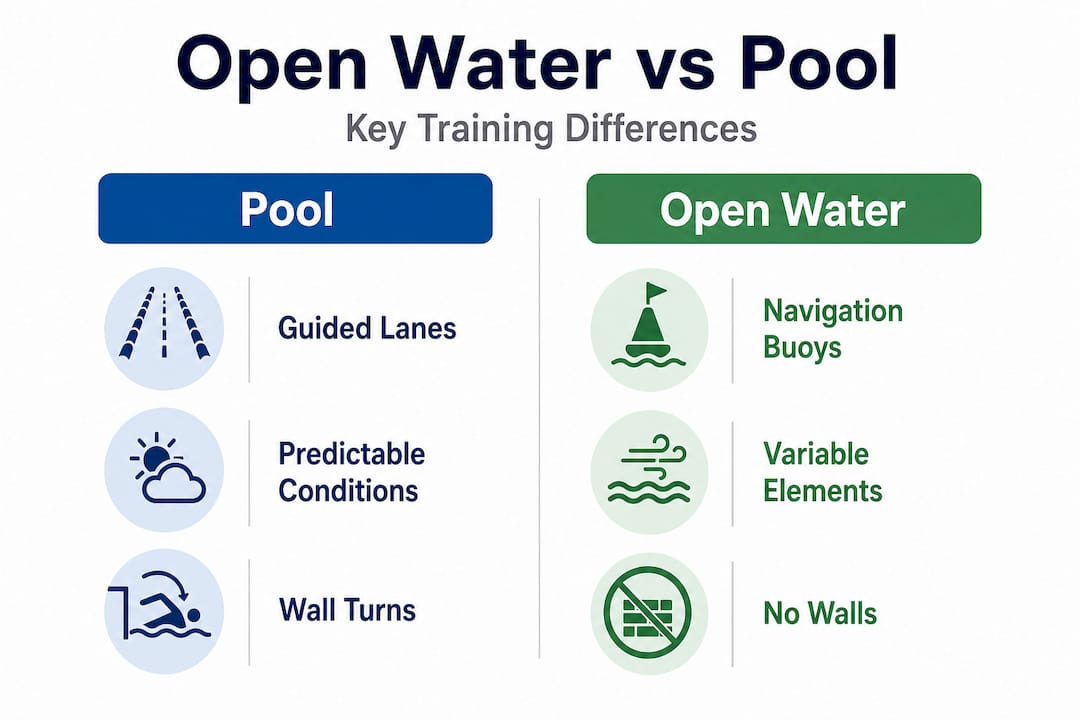
| Factor | Pool training | Open water training |
|---|---|---|
| Navigation | Lane lines guide you | Buoys and landmarks require active sighting |
| Environment | Controlled, calm | Variable currents, chop, and temperature |
| Mental demands | Routine and predictable | Constant situational awareness |
| Pacing | Clock-driven with walls | Effort-based, no reference points |
| Contact | Rare | Regular, especially in race starts |
A common misconception is that fitness alone transfers directly to open water races. Many swimmers assume if they can swim a strong 1,500 meters in the pool, open water will feel similar. It rarely does. Navigation skill directly impacts race outcomes, and swimming off course adds real distance and time. The mental load of managing sighting, pacing without walls, and dealing with other athletes adds fatigue that pure aerobic training doesn’t prepare you for.
Here are the main gaps pool-only training leaves unaddressed:
- Sighting and navigation under race conditions
- Bilateral breathing in choppy water
- Managing anxiety and disorientation in open environments
- Racing starts in mass heats with physical contact
- Wetsuit adaptation and buoyancy differences
Pro Tip: Before your first open water race, spend at least four to six sessions swimming in a similar body of water. Even calm lake swimming feels dramatically different from pool training, and your nervous system needs time to adjust.
For swimmers ready to sharpen their stroke before heading outdoors, reviewing technique tips for open water can help bridge the gap between pool form and open water efficiency. Understanding how to adapt your stroke for unpredictable environments is also a key part of transitioning from pool to open water training successfully.
Core techniques for open water success
Knowing why open water training is different, let’s get into the specialized techniques every open water swimmer needs to practice consistently.
1. Sighting
Sighting is the act of lifting your eyes above the water to spot a buoy or landmark, then returning to your stroke. Done poorly, it disrupts your body position and slows you down. Done well, it becomes almost seamless. The goal is to sight every six to ten strokes in choppy water, or every twelve to fifteen strokes in calm conditions. The key is the “crocodile eye” technique: lift just enough to see forward without lifting your chin, which causes your hips to sink. Train this in every open water session, not just as a drill but as a habit integrated into your normal swimming.
The sighting and navigation errors that cause 3 to 12% swim distance increases in races are almost entirely preventable with consistent sighting practice. That’s a massive performance gain available to any swimmer willing to work on it.
2. Pacing
Without walls and without a pace clock, pacing in open water is entirely effort-based. Many swimmers go out too hard in the first 200 meters because of race excitement, then struggle badly in the back half. Practice negative splitting, meaning you swim the second half of a workout slightly faster than the first. Train yourself to recognize effort levels by feel, not by looking at a clock.
3. Drafting
Drafting means swimming directly behind another swimmer to reduce drag and conserve energy. Studies in triathlon research suggest drafting can save 20 to 38% of your energy expenditure at the same speed. In open water races, this is entirely legal and tactically smart. Practice swimming in close proximity to training partners, finding the ideal drafting pocket just behind and slightly to one side of the lead swimmer’s feet.
4. Water entry and race starts
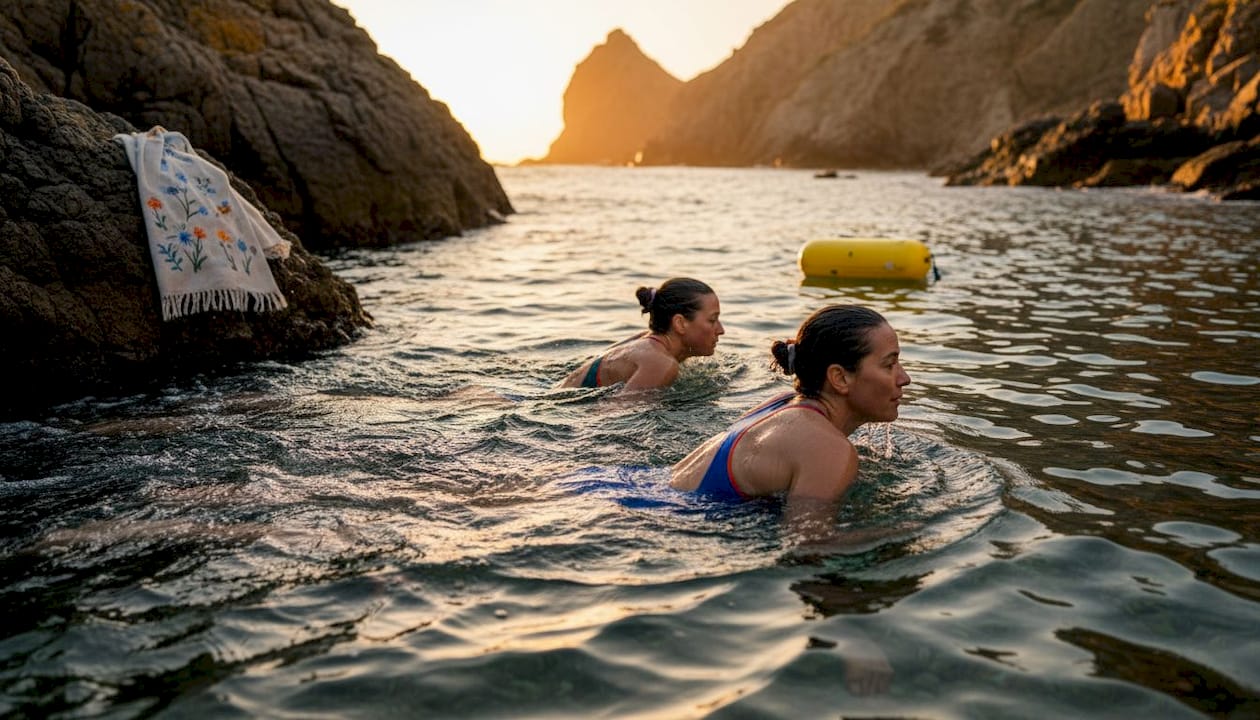
Mass starts are chaotic. Swimmers punch, kick, and crowd each other in the first 100 meters. Train specifically for this by practicing beach starts, deep water starts, and swimming in tight groups. Knowing how to position yourself at the start, either seeding aggressively at the front or starting wide to avoid contact, can save enormous energy.
5. Technique modifications
Your pool stroke may need adjusting for open water. A slightly higher stroke rate helps in choppy conditions. Breathing to both sides helps you sight different landmarks and manage waves. A more horizontal body position reduces wave resistance. Practice techniques for navigating waves to prepare for variable surface conditions.
“Open water swimming isn’t just about who’s fittest. It’s about who makes the smartest decisions over the full race distance.” This insight from experienced open water coaches captures exactly why technique and strategy often matter more than raw speed.
For swimmers who want visual guidance, technique videos for open water offer clear demonstrations of sighting, drafting position, and stroke modifications. Building your mental game is equally important, and resources on mental training for races can strengthen your ability to stay focused and calm when the water gets rough.
Pro Tip: Film yourself sighting in practice using an underwater camera or have a coach watch from the pool deck. Most swimmers are surprised by how much their hips drop during sighting, and seeing it clearly makes it much easier to correct.
Structuring your open water training sessions
With core techniques in mind, the next step is organizing your training for the most effective improvement over time.
A well-structured open water training plan balances technique work, stamina building, and race-specific practice. Here’s a sample biweekly structure for intermediate swimmers targeting a 1.5 to 3-kilometer race:
| Session | Focus | Distance/Duration |
|---|---|---|
| Monday (pool) | Stroke technique and sighting drills | 2,500 to 3,000 meters |
| Wednesday (open water) | Navigation and pacing practice | 45 to 60 minutes |
| Friday (pool) | Threshold intervals and endurance | 3,000 to 3,500 meters |
| Saturday (open water) | Race simulation with drafting | 60 to 90 minutes |
This structure gives you pool sessions to refine technique in a controlled environment while open water sessions build the real-world skills races demand. Swimmers who improve their navigation can avoid swimming unnecessary extra distance and see direct time improvements without getting any fitter in the traditional sense.
Here’s how to build a productive open water session step by step:
- Warm-up with ten minutes of easy swimming, focusing on relaxed sighting every eight strokes.
- Navigation drill: Pick two buoys or landmarks 200 to 400 meters apart and swim between them, counting how straight your line is by checking your GPS after.
- Pace sets: Swim three to five efforts of 400 to 800 meters at race effort, with two minutes of easy swimming between each.
- Drafting practice: Swim in a group of three to four, rotating who leads every 200 meters.
- Race starts: Practice five to eight sprint starts from the beach or from treading water.
- Cool-down with ten minutes of easy backstroke and breathing practice.
Common training mistakes to avoid include always swimming the same body of water, which limits your ability to adapt. Skipping starts because they feel uncomfortable is another frequent error. Neglecting to check GPS data after sessions means you miss valuable feedback on how straight you’re actually swimming. And training alone too often removes the drafting and contact experience you’ll face in races.
For swimmers who want structured progressions tailored to their current level, exploring customized open water plans is a smart move. Combining open water sessions with a year-round training approach ensures your skills don’t erode between race seasons.
Safety, conditioning, and mental game
No training plan is complete without attention to safety, body conditioning, and the mental side of performance.
Open water presents risks that don’t exist in a pool. Currents can push you off course faster than you realize. Water temperature can cause cold shock, especially in lakes below 60 degrees Fahrenheit. Reduced visibility makes it harder for boats and other watercraft to see you. Swimming more than the intended distance due to navigation errors or poor preparation is extremely common and adds to fatigue and risk in already challenging conditions.
Open water safety essentials every swimmer should follow:
- Always swim with a buddy or within sight of a safety kayaker
- Use a brightly colored inflatable safety buoy attached to your waist
- Check weather forecasts and water temperature before every session
- Know the exit points before you enter the water
- Tell someone on shore your planned route and expected return time
Physical conditioning for open water goes beyond swim fitness. Core stability helps maintain a strong body position in choppy water. Shoulder flexibility reduces injury risk during longer race efforts. General cardiovascular conditioning through dryland work supports the sustained effort that open water races demand. Visit open water safety tips for detailed guidance on injury prevention, and use physical conditioning strategies to build the full-body resilience open water racing requires.
Mental training is often the most neglected part of open water preparation. The feeling of open space, murky water, and no lane lines can trigger real anxiety in even experienced swimmers. Build your mental game through:
- Pre-race routines: Consistent warm-up rituals reduce anxiety by giving your mind something familiar to anchor to.
- Visualization: Spend five minutes before each session mentally swimming a clean, well-navigated race.
- Controlled exposure: Gradually increase your comfort by swimming in progressively challenging conditions.
- Breathing control: Practice calm, rhythmic breathing whenever you feel discomfort in the water.
Pro Tip: Plan for variable conditions by training in at least two different bodies of water and in different weather. Swimmers who only train in calm, clear water are often rattled when race day brings chop or low visibility. Normalize discomfort in practice, and race day feels manageable.
The truth about mastering open water swim training
After covering all the practical elements, there’s an honest truth worth saying clearly: pool perfection does not guarantee open water success. We’ve seen technically immaculate pool swimmers fall apart in their first open water race because the environment itself is disorienting. Speed is only one variable in a very complex equation.
What actually determines open water success is adaptability. The ability to stay calm when you lose sight of a buoy, to adjust your pace when current slows you unexpectedly, to find a drafting partner mid-race rather than swimming alone. These are learnable skills, but they only develop through real exposure to open water, not through imagining it from the pool deck.
Navigational training should be treated as an ongoing practice, not a box to check before race season. Conditions change constantly. A lake you know well in May looks completely different in September with lower water levels and changed light angles. Elite athletes know this, and they continue practicing navigation at every level of their career. Even elite training strategies used at the Olympic level include open water navigation work as a regular, non-negotiable component.
The real opportunity here is to reframe every open water session. Instead of thinking of it as “just a swim,” treat it as skill-building. Your GPS track after each session is feedback. Your perceived effort at different race paces is data. Your comfort level in rougher water is a metric. Swimmers who approach open water with this mindset improve far faster than those who simply log yardage and hope race day goes well.
Take your open water skills further with professional support
If you’re ready to move beyond self-guided training and want expert feedback, professional support can dramatically accelerate your learning curve. Working with experienced coaches who specialize in open water and triathlon swimming gives you access to real-time technique corrections, structured progressions, and race-specific preparation that’s very hard to replicate on your own.
At PEAK Performance Swim Camp, our expert-led open water swim camps are designed to build every skill covered in this guide, from sighting and drafting to mental preparation and race starts. With over 30 years of coaching experience and camps held in 18 countries, we understand what it takes to perform across all open water conditions. If you prefer individualized attention, our personal coaching for swimmers offers customized guidance tailored to your specific goals, current skill level, and race calendar. Join a community of swimmers who take their open water performance seriously.
Frequently asked questions
How does open water swim training differ from pool training?
Open water swim training focuses on navigation, sighting, and adapting to unpredictable conditions, unlike pool training which emphasizes speed and technique within controlled lanes. Navigation skill directly impacts race outcomes, making open water training a fundamentally different discipline.
What is the most common mistake swimmers make in open water races?
The most common mistake is poor navigation, which leads to swimming extra distance and increased fatigue over the course. Age group swimmers swim 3 to 12% farther than the official course due to navigation errors alone.
How can I improve my open water navigation skills?
Practice sighting consistently during every open water session, train in different bodies of water, and review your GPS track after each swim to measure how straight your line actually was. Swimming off course adds a meaningful percentage to your total race distance, so even small navigation improvements have a real impact.
Are there safety risks unique to open water swim training?
Yes, open water presents risks including currents, sudden weather changes, cold water shock, and limited visibility that don’t exist in pool environments. Training with a partner, using a safety buoy, and knowing your exit points before entering the water are essential precautions every swimmer should follow.
Recommended
- Master Race Strategy in Swimming for Peak Results – Peak Performance Swim Camp
- Advanced swimming technique tips for peak performance – Peak Performance Swim Camp
- Year-round swim training: benefits, methods & success – Peak Performance Swim Camp
- Why swimming fundamentals unlock competitive success – Peak Performance Swim Camp