
TL;DR:
- Mental conditioning enhances race performance through visualization, self-talk, goal-setting, and emotional regulation.
- Consistent mental training builds resilience, focus, and reduces mental fatigue that can impair performance.
- Coaches play a vital role in developing swimmers’ mental toughness through ongoing support and psychological skill development.
Physical strength and technical skill will take you far in the pool, but they won’t always take you to the finish line first. At PEAK Performance Swim Camp, after more than 50 years of coaching competitive swimmers across 18 countries, we’ve seen one pattern repeat itself: the athlete who wins isn’t always the fastest in warm-up. They’re the one who shows up mentally ready to race. Mental conditioning is the skill set that separates good swimmers from great ones, and this article breaks down exactly what it is, how it works, and how you can start using it today.
Table of Contents
- Defining mental conditioning for swimmers
- Core techniques: Tools for competitive swim success
- Mental toughness in swimming: Myths and realities
- Avoiding mental fatigue: The hidden threat to swim performance
- Our take: What most swimmers miss about mental conditioning
- Next steps: Supercharge your swim performance with expert support
- Frequently asked questions
Key Takeaways
| Point | Details |
|---|---|
| Mental conditioning defined | It means building skills like focus, motivation, and emotional control to boost swim performance. |
| Proven techniques work | Visualization and goal-setting can lead to measurable gains in speed and race results. |
| Toughness is multifaceted | Mental toughness is shaped by habits, relationships, and training—not just personality. |
| Fatigue isn’t just physical | Mental tiredness can limit endurance and performance even before your muscles give out. |
| Coaches accelerate progress | Feedback and psychological support from coaches help swimmers develop lasting mental skills. |
Defining mental conditioning for swimmers
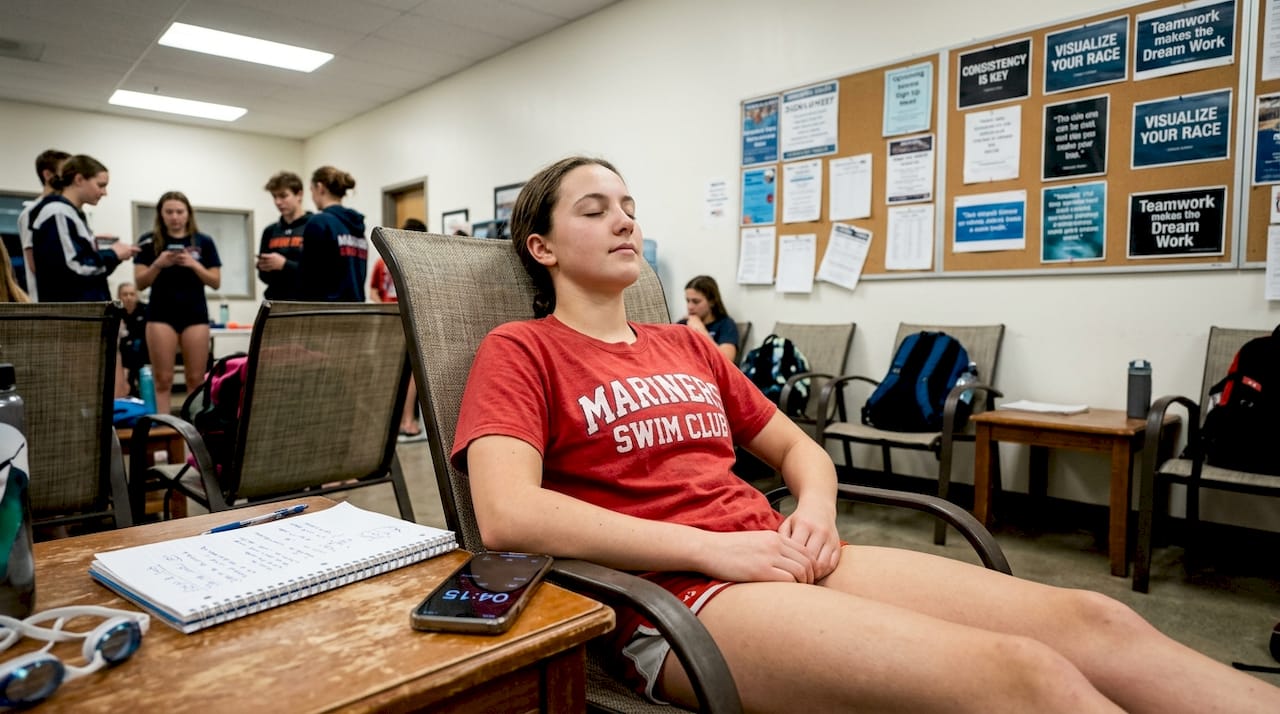
Mental conditioning isn’t a vague concept reserved for athletes who are struggling or losing confidence. It’s a structured, trainable skill set that prepares your mind to perform at its best, just like dryland training prepares your body. Think of it as the other half of your training program that most swimmers leave blank.
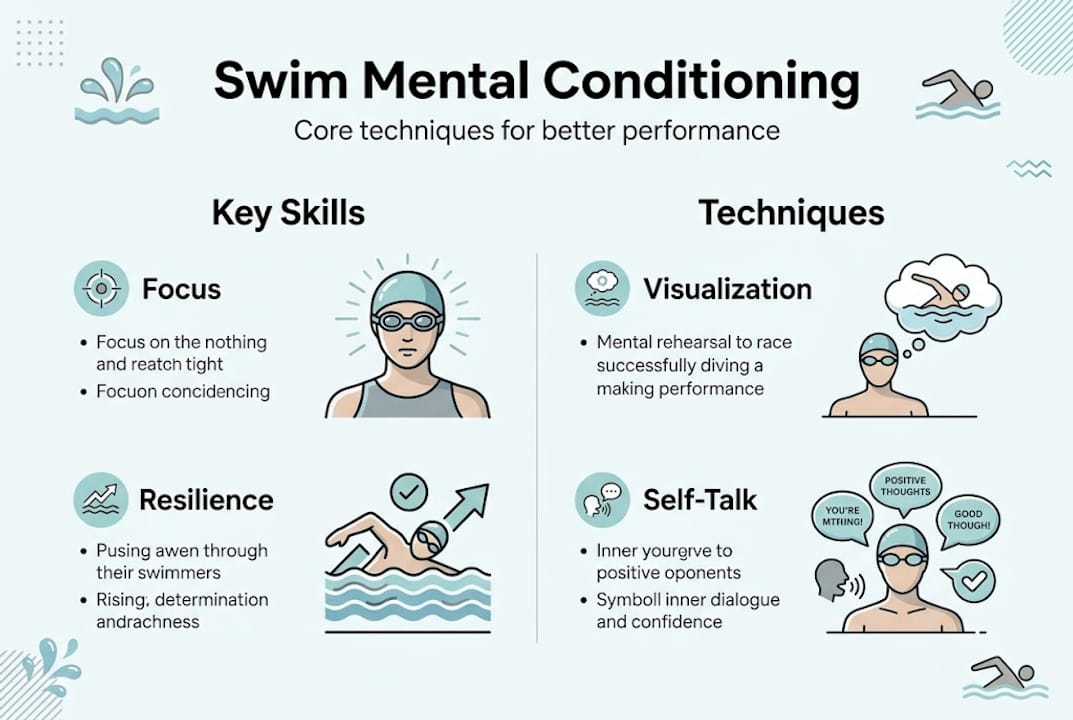
In competitive swimming, mental conditioning refers to the deliberate practice of psychological skills that help you perform consistently under pressure. It includes four core components:
- Visualization: mentally rehearsing your race, stroke by stroke, before you ever hit the water
- Self-talk: using intentional internal language to control focus and manage nerves
- Goal-setting: creating specific, realistic targets that drive motivation and direction in training
- Emotional regulation: managing anxiety, frustration, and competitive stress so they don’t derail your performance
One of the biggest misconceptions we hear from swimmers is that mental training is only for athletes who are struggling. That couldn’t be further from the truth. Elite swimmers use these tools precisely because they work. Visualization improves performance by up to 20%, which is a margin that can mean the difference between a podium finish and going home empty-handed.
Mental conditioning doesn’t replace physical training. It amplifies it. A swimmer with refined technique who also trains their mind will consistently outperform a swimmer of equal physical ability who doesn’t. You can explore mental training tips and a full conditioning guide to see how these components fit together.
Pro Tip: Start with just five minutes of visualization before every practice session. Picture your turns, your breakouts, your stroke rhythm. Consistency here builds the mental muscle you’ll rely on in competition.
Mental conditioning also helps swimmers develop mental focus in swimming, which is the ability to stay present and process-oriented even when a race gets tough. Building these habits in practice means they’ll be automatic when it counts most.
Core techniques: Tools for competitive swim success
Once you know what mental conditioning involves, the next step is learning how to build these skills using proven methods. Let’s break down the three most impactful techniques and how to apply them in real training.
Visualization means mentally simulating your race in vivid, sensory detail before it happens. You’re not daydreaming. You’re training your neural pathways to execute the same way they would in the water. Swimmers who use daily visualization saw 2.3% faster 100m freestyle times, which is significant at the elite level.
Self-talk is the internal dialogue you use before and during a race. Negative self-talk like “I’m not ready” or “the other swimmer is faster” actively hurts performance. Replacing it with process-focused cues like “strong catch, fast turn” keeps attention exactly where it needs to be.
Goal-setting structures your training purpose and keeps motivation high through long seasons. Goal-setting boosts performance 16-25%, and the most effective goals are specific and tied to technique or time splits rather than just race outcomes.
Here’s a quick comparison of how each technique is applied:
| Technique | When to use it | What it targets |
|---|---|---|
| Visualization | Before practice and races | Race execution, confidence |
| Self-talk | During warm-up and racing | Focus, anxiety control |
| Goal-setting | Weekly and monthly | Motivation, progress tracking |
To build these skills consistently, follow this sequence:
- Set one process goal for each practice before you arrive at the pool
- Spend five minutes visualizing your target event before warm-up
- Identify two or three self-talk cues specific to your event (e.g., “explode off the wall”)
- After practice, reflect briefly on whether you executed your mental plan
- Adjust your cues and goals weekly based on what you observe
Pro Tip: Write your self-talk cues on a notecard and review them the morning of a competition. It takes 60 seconds and anchors your focus before the environment gets chaotic.
For more practical swim mental tips and a deeper look at goal-setting for swimmers, both resources offer structured, actionable frameworks you can implement immediately.
Mental toughness in swimming: Myths and realities
After mastering basic techniques, understanding mental toughness, what it is and isn’t, will help make training mentally sustainable and effective.
One of the most overused and least helpful phrases in competitive swimming is “just toughen up.” It implies mental toughness is fixed, either you have it or you don’t. Research tells a different story. Elite swimmers’ perceptions of mental toughness actually vary across three distinct views: a trait-oriented view (it’s innate), a process-oriented view (it’s developed), and a relational view (it’s shaped through the coach-athlete relationship).
| View | What it means | Coaching implication |
|---|---|---|
| Trait-oriented | Mental toughness is a fixed personality trait | Limited; focus on selecting “tough” athletes |
| Process-oriented | Mental toughness is built through training and repetition | High; teachable through structured practice |
| Relational | Mental toughness grows through trust and feedback | High; coaches play a direct role |
The most effective programs treat mental toughness as both a process and a relationship. That means coaches are not just technique instructors but also partners in building psychological resilience.
“Mental toughness isn’t about never feeling nervous. It’s about knowing what to do with that feeling when it shows up on race day.”
Here’s what mental toughness actually looks like in practice:
- Staying composed after a poor split rather than panicking
- Adjusting your race plan mid-swim without losing confidence
- Returning focused to training after a disappointing competition
- Trusting your preparation when external pressure spikes
Coaches play a real role in this. Giving feedback that emphasizes learning over judgment, and building trust over time, directly shapes a swimmer’s mental toughness. Resources like motivation for swimmers and guides on building swimmer resilience offer frameworks coaches can use immediately. Pair that with strong swimming fundamentals and you have the foundation for a mentally durable athlete.
Avoiding mental fatigue: The hidden threat to swim performance
Finally, understanding the risks of mental fatigue helps protect all the gains from mental conditioning.
Most swimmers and coaches focus almost entirely on physical fatigue, which makes sense because it’s easy to see and measure. But mental fatigue is equally real and often strikes first. Mental fatigue impairs endurance performance in events like the 400m by increasing perceived effort and can precede physical failure by 15 to 30%. That means your brain gives up before your body has to.
Mental fatigue typically shows up as:
- Difficulty maintaining focus on technique during long sets
- Increased irritability or emotional sensitivity at practice
- A sense that effort feels harder than usual with no physical explanation
- Slower decision-making during races, especially turns and pacing
- Reduced motivation to push in training or competition
Pro Tip: Keep cognitive demands low in the two hours before a major race. Avoid mentally taxing tasks, screen-heavy environments, and stressful conversations. Protect that mental energy the same way you’d protect your legs before a big event.
Preventing mental fatigue starts with smart monitoring. Using feedback loops, including effective swim feedback from coaches, helps you catch early signs before performance drops. Personalized swim coaching allows for individual monitoring of both physical and mental load, which is especially valuable during high-volume training blocks.
Research also shows that coach-athlete programs that include psychosocial support enhance both athlete perceptions and overall performance outcomes. The takeaway is clear: building a system that monitors mental load is just as important as tracking yardage.
Our take: What most swimmers miss about mental conditioning
Here’s something we’ve seen firsthand across more than 1,000 camps: most swimmers treat mental conditioning like an add-on. Something they think about before big meets, not something they build every single day. That’s the core mistake.
The swimmers who see the biggest breakthroughs aren’t the ones who panic-visualize the night before a championship. They’re the ones who’ve made mental habits part of every Tuesday morning practice in January. Consistency in mental training, not intensity at the last minute, is what actually moves the needle.
We also see coaches who focus entirely on splits and stroke mechanics but rarely address how a swimmer thinks during a race. Both matter. Separating physical and mental development creates athletes who perform well in practice but freeze under pressure.
The athletes who develop resilience through consistent mental practice are the ones who bounce back from poor swims, handle pressure well, and continue improving through the full competitive season. Start early, stay consistent, and treat the mental side of training with the same seriousness you give your yardage log.
Next steps: Supercharge your swim performance with expert support
If you’re ready to take action, here’s where you can build these mental skills with coaching support.
At PEAK Performance Swim Camp, we don’t just train bodies. We train complete athletes. Our programs are built on decades of experience integrating mental conditioning into every session, not as an afterthought, but as a core training pillar.

Whether you’re a swimmer looking to sharpen your mental edge or a coach building a more resilient team, our swim camps offer structured environments where mental and physical performance develop side by side. For focused work on race-day psychology, our mental strategy camp gives you expert-guided tools you can use immediately in competition. Take the next step and start training the mind as seriously as you train the stroke.
Frequently asked questions
What are the main techniques used in mental conditioning for swimming?
The main techniques include visualization, positive self-talk, goal-setting, and emotional control to improve focus and performance. Visualization alone can improve performance by up to 20%, making it one of the highest-impact mental tools available to swimmers.
How does mental conditioning boost race-day swim performance?
It helps swimmers manage nerves, maintain focus, and execute race strategies confidently under pressure. Structured goal-setting boosts performance 16-25% by giving swimmers clear targets that drive purposeful effort on race day.
Can mental fatigue affect my swim results even if I feel physically fine?
Yes, mental fatigue can increase your sense of effort and cause slower times even without physical exhaustion. It can precede physical failure by 15-30%, meaning your performance may drop well before your muscles actually give out.
Do coaches play a role in swimmer mental conditioning?
Absolutely. Coaches support mental conditioning by providing psychological feedback and building trust, both of which directly enhance performance. Psychosocial coach-athlete programs have been shown to improve athlete perceptions and measurable performance outcomes.
Recommended
- Essential mental training tips to boost swim performance – Peak Performance Swim Camp
- Master swimming conditioning: step-by-step guide to peak performance – Peak Performance Swim Camp
- Physical conditioning for swimmers: unlock peak performance – Peak Performance Swim Camp
- Swimming Mental Focus – Peak Performance Swim Camp