
TL;DR:
- Recovery is essential for muscle repair, glycogen replenishment, and performance gains.
- Techniques like cold water immersion, proper nutrition, and mental training enhance recovery effectiveness.
- Prioritizing recovery shifts training focus from fatigue to consistent, long-term swimmer development.
Most swimmers train hard. Very few recover smart. The gap between those two approaches is exactly where races are won or lost. Research confirms that chocolate milk improves swim performance over a standard carbohydrate drink or placebo, which tells you something important: what you do after the workout matters just as much as the workout itself. This guide walks you through the science, the practical tools, and the mindset shifts that turn recovery from an afterthought into a competitive advantage. Whether you coach a team or train yourself, understanding recovery at this level changes everything.
Table of Contents
- Why recovery matters: The science of repair and adaptation
- Essential recovery techniques for swimmers
- How to tailor recovery to training intensity and competition demands
- The role of mindfulness and mental recovery
- Why most swimmers underestimate recovery—and how to break the cycle
- Take your recovery—and swimming—to the next level
- Frequently asked questions
Key Takeaways
| Point | Details |
|---|---|
| Recovery outpaces more training | Scientific evidence shows smart recovery leads to faster swims than additional hard sessions alone. |
| Blend recovery approaches | Combining nutrition, hydrotherapy, rest, and mindfulness delivers the strongest results for swimmers. |
| Personalize your plan | Adapting recovery strategies to training load and competition cycles prevents burnout and boosts gains. |
| Track symptoms—not just times | Use a mix of logbooks, symptom scores, and mindful check-ins to detect early signs of overtraining. |
| Mental recovery counts | Psychological techniques like mindfulness actively improve readiness and performance stability. |
Why recovery matters: The science of repair and adaptation
Every hard training session creates micro-tears in muscle fibers, depletes glycogen stores, and stresses the neuromuscular system. That stress is necessary. But the actual performance gains happen during recovery, not during the set itself. When you shortcut recovery, you shortcut adaptation.
The biology works like this. After a demanding swim session, your body needs to:
- Replenish glycogen (the primary fuel source stored in muscle and liver)
- Repair micro-damaged muscle tissue to build it back stronger
- Reduce acute inflammation caused by intense effort
- Restore neuromuscular coordination and reaction speed
Skip these processes consistently, and you risk overtraining syndrome, a condition that causes performance plateaus, chronic fatigue, mood disruption, and elevated injury risk. It’s not just about feeling tired. Overtraining syndrome can sideline a swimmer for weeks or months.
“Recovery is not a passive event. It is a structured, trainable process that requires just as much attention as the training block itself.”
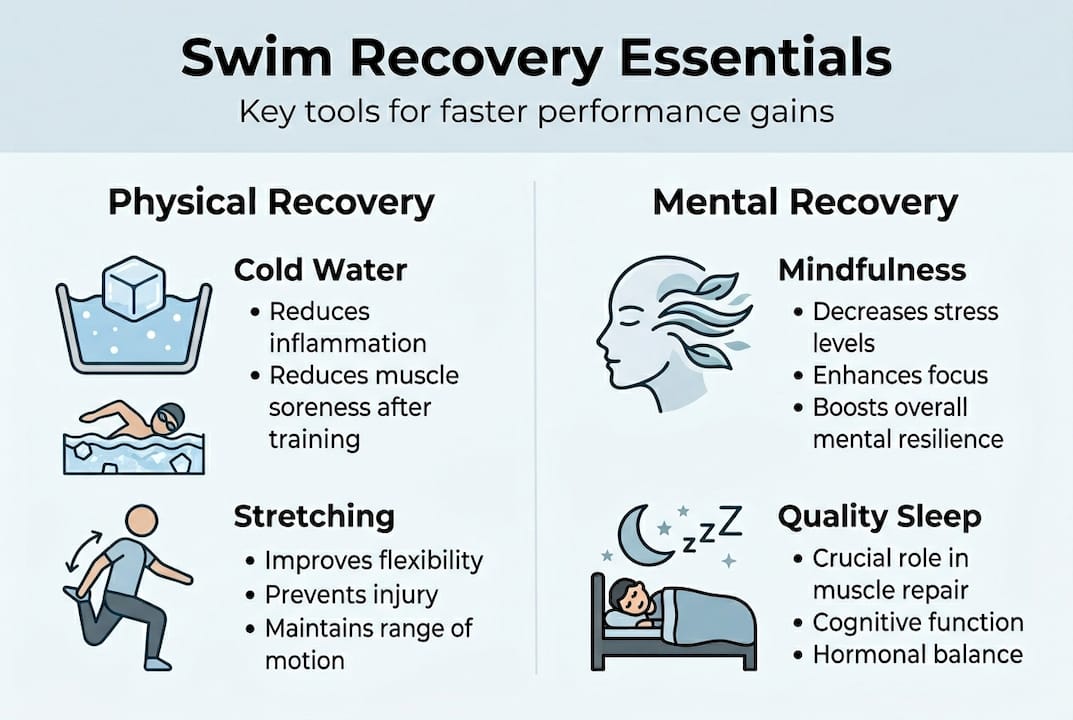
One of the most effective physical recovery tools is cold water immersion (CWI), where an athlete submerges in cold water (typically 50 to 59 degrees Fahrenheit) for 10 to 15 minutes after training. CWI reduces soreness, blood lactate, and CK levels while better preserving VO2max compared to passive rest. That means faster clearance of metabolic waste and a body that’s ready to perform again sooner.
Understanding swimming conditioning basics helps you appreciate why recovery fits into the bigger picture. The goal is not just to survive training blocks, it is to absorb them. Swimmers who approach recovery strategically show more consistent performance gains and fewer breakdowns over a full season. And if you’re already working on advanced technique tips, pairing technique work with solid recovery ensures those neuromuscular patterns actually lock in.
The bottom line: recovery is where your body cashes the check your training wrote. Make sure the account is funded.
Essential recovery techniques for swimmers
Knowing that recovery matters is one thing. Knowing exactly which tools to use, and when, is where most swimmers fall short. Here is a breakdown of the most evidence-backed methods.
1. Active vs. passive recovery
Active recovery (light swimming, walking, easy cycling) keeps blood moving and speeds lactate clearance without adding training stress. Passive recovery (complete rest) is best reserved for extreme fatigue or illness. Most post-training days benefit from low-intensity movement rather than the couch.
2. Nutritional timing
The 30-minute window after training is critical. Consuming a mix of carbohydrates and protein during this window restores glycogen and signals muscle repair. Chocolate milk as a recovery beverage improves both aerobic and anaerobic swim performance compared to alternatives. It’s affordable, accessible, and the carb-to-protein ratio is nearly ideal. For more specific fueling strategies, review our nutrition tips designed for competitive swimmers.
3. Hydrotherapy options
Cold water immersion is the most studied, but it’s not the only option. Recent research shows that hot water immersion better preserves explosive force after exercise-induced muscle damage, while CWI better supports endurance recovery and lactate clearance. Contrast therapy, alternating between hot and cold water, blends both benefits and is a practical choice during heavy training blocks.
4. Sleep, stretching, and self-massage
Deep sleep is when growth hormone peaks, which directly drives muscle repair. Targeting 8 to 10 hours for adolescent swimmers and 7 to 9 hours for adults is not optional. Static stretching post-workout reduces muscle tightness, and foam rolling improves tissue quality over time.
| Recovery method | Best for | Effort required |
|---|---|---|
| Cold water immersion | Endurance, lactate clearance | Low |
| Hot water immersion | Explosive power recovery | Low |
| Contrast therapy | General recovery in heavy blocks | Low |
| Sleep | Full systemic repair | None |
| Active recovery swim | Day-after fatigue management | Moderate |
| Nutrition timing | Glycogen and muscle repair | Moderate |
Pro Tip: Pair a structured warm-up with an equally structured cool-down. The 10 minutes you invest post-session in easy laps and stretching compound over a full season into significantly faster recovery times.
How to tailor recovery to training intensity and competition demands
Not every week looks the same, and your recovery plan shouldn’t either. Recovery needs scale with workload. A moderate practice day requires less intervention than a double-session, high-yardage training block.
During heavy training blocks, prioritize CWI, nutritional timing, and extra sleep. These are non-negotiable. During taper weeks, the volume drops but recovery quality should stay high. Many swimmers make the mistake of relaxing recovery habits during taper, which can blunt the gains they’ve built.

For competition days, the focus shifts to active warm-ups, precise fueling, and mental readiness rather than deep tissue work or intensive hydrotherapy.
One of the most practical tools you can build is a recovery dashboard, a simple daily log that tracks:
- Sleep quality and duration
- Perceived exertion (how hard the session felt)
- Muscle soreness levels (1 to 10 scale)
- Mood and motivation
- Performance markers (split times, stroke rate)
This matters because no reliable biomarker exists for overtraining syndrome. Coaches and athletes must rely on subjective tracking and performance trends to catch early warning signs. An athlete mindfulness study also confirms that monitoring internal load alongside external workload gives a more complete picture of athlete readiness.
| Warning sign | Appropriate adjustment |
|---|---|
| Persistent fatigue beyond 48 hours | Reduce yardage, add passive rest |
| Declining split times over 1+ week | Full recovery week, assess sleep and nutrition |
| Mood disruption or irritability | Reduce intensity, add mindfulness practice |
| Elevated resting heart rate | Rest day, hydration check, sleep audit |
Explore custom swim plans to learn how personalized programming integrates recovery checkpoints. And for a deeper look at how recovery fits within physical conditioning, that resource connects the dots between load management and long-term development.
Pro Tip: Review your recovery dashboard weekly, not daily. Daily fluctuations are normal. Weekly patterns reveal whether you’re absorbing training or just surviving it.
The role of mindfulness and mental recovery
Physical fatigue is visible. Mental fatigue is quieter but just as damaging to performance. Swimmers who neglect psychological recovery often report loss of motivation, reduced focus at the walls, and inconsistent race-day execution. These aren’t character flaws. They’re signs of an incomplete recovery system.
Mindfulness, the practice of focused, non-judgmental awareness, has measurable physiological effects. Mindfulness stabilizes internal load variability even when perceived exertion is higher. In practical terms, that means swimmers who practice mindfulness show more consistent physiological responses to the same workloads, which makes recovery more predictable and performance more reliable.
Here are mental recovery practices that work for competitive swimmers:
- Breathing exercises (box breathing, diaphragmatic breathing) activate the parasympathetic nervous system and reduce cortisol after high-stress sessions
- Guided visualization rehearses race scenarios and reinforces positive motor patterns without physical fatigue
- Journaling externalizes stress and helps athletes process competitive pressure more effectively
- Screen-free wind-down routines before sleep improve sleep quality and allow the brain to shift from fight-or-flight to rest-and-repair mode
- Brief meditation sessions (even 5 to 10 minutes) between doubles or before rest days reset mental focus
“Mental recovery is not a luxury. For swimmers competing at high levels, it is a competitive requirement.”
Integrating mental recovery with physical recovery creates a complete system. For more on building this foundation, our mental training tips resource offers structured approaches for swimmers at every level. And if you want to address the mindset behind performance, the swimmer mindset tips page digs into resilience-building strategies that hold up under pressure.
Mental and physical recovery are not separate channels. They feed each other. A swimmer who sleeps well, eats right, and manages psychological stress recovers faster and performs more consistently than one who only addresses the physical side.
Why most swimmers underestimate recovery—and how to break the cycle
Here’s something we’ve seen across 30 years and over 1,000 camps: the swimmers who resist recovery are often the most motivated ones. They equate rest with weakness. They believe fatigue is proof the work is paying off. That belief, left unchecked, breaks more promising careers than bad technique ever could.
Elite gains often come from strategic undertraining paired with quality recovery, not from adding more yards to an already overloaded schedule. We’ve watched swimmers drop time not by training harder, but by finally sleeping enough, fueling correctly, and tracking their fatigue honestly.
The shift we encourage is simple but powerful. Build pride around smart recovery choices, not just tough workouts. When a swimmer logs a solid cool-down, chooses chocolate milk over a sports drink, or commits to 9 hours of sleep before a big meet, that is a champion-level decision. It deserves the same recognition as a best time in practice.
Coaches, you can reinforce this. Make recovery metrics part of team culture. Celebrate the athlete who nails their conditioning versus recovery balance, not just the one who grinds through every set. That mental shift, from enduring training to mastering recovery, is what separates good swimmers from great ones.
Take your recovery—and swimming—to the next level
Understanding the science of recovery is a strong start. Applying it consistently, with expert guidance and real-time feedback, is what accelerates real results.
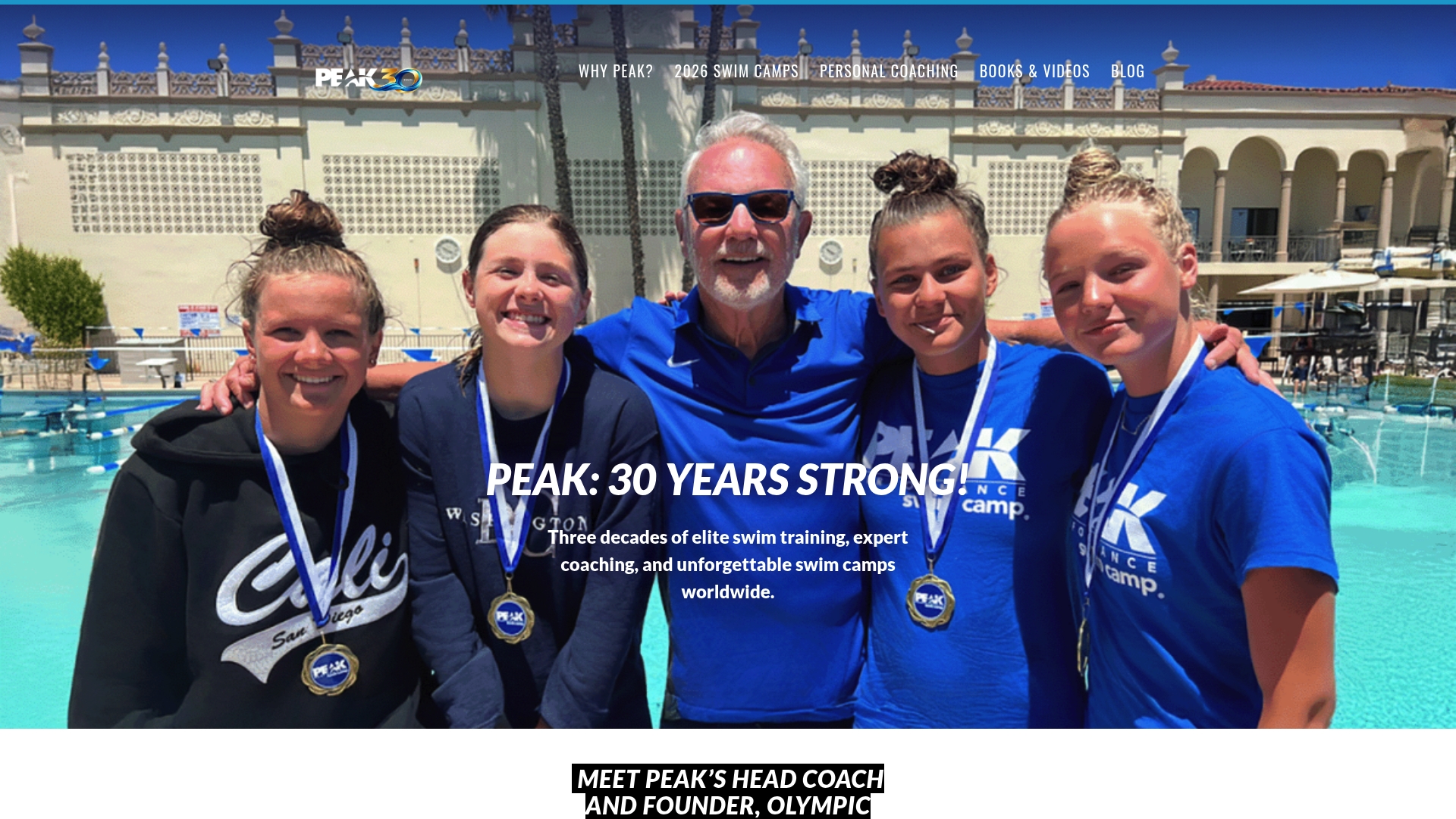
At PEAK Performance Swim Camp, recovery is built into every training block, not treated as a bonus. Our coaches integrate nutrition timing, hydrotherapy protocols, mental recovery strategies, and personalized load management into each swimmer’s program. Whether you’re preparing for a championship season or working to break through a plateau, our swim camps provide the structure and expert oversight to turn recovery knowledge into faster swims. Explore our package options or take a closer look at our physical strategy program to find the right fit for your goals.
Frequently asked questions
How soon should I start recovery after a swim workout?
Begin recovery protocols within 30 minutes of finishing training. Post-workout nutrition timing directly impacts your next session’s performance, so don’t wait until you’re home to start refueling.
Does cold water immersion work for all swimmers?
CWI benefits most swimmers after high-intensity sessions by reducing soreness and clearing lactate, but CWI offers less benefit for strength development. If explosive power recovery is the priority, hot water immersion may serve better.
How can I tell if I’m overtraining as a swimmer?
Watch for persistent fatigue, declining split times, and mood changes over multiple days. Since no reliable biomarker exists for overtraining, a consistent training log is your most reliable diagnostic tool.
Is mental recovery really as important as physical?
Absolutely. Research shows mindfulness stabilizes load variability in athletes, meaning psychological practices have measurable effects on how well your body handles and recovers from training stress.
What is the most effective recovery drink for swimmers?
Chocolate milk consistently outperforms alternatives. Chocolate milk improves aerobic and anaerobic performance in subsequent swim sessions, making it a practical, research-backed first choice after hard training.
Recommended
- Physical conditioning for swimmers: unlock peak performance – Peak Performance Swim Camp
- Individualized swim plans: unlock elite performance – Peak Performance Swim Camp
- Advanced swimming technique tips for peak performance – Peak Performance Swim Camp
- How to warm up for swimming: techniques for peak performance – Peak Performance Swim Camp