
TL;DR:
- Structured interval swim training deliberately alternates work and rest to target specific energy systems and improve performance effectively. Swimmers should manipulate variables like distance, rest, and pace based on their goals, focusing on maintaining consistency and controlling effort throughout each set. Proper rest and pace management are crucial for building endurance, speed, and technique, and guided coaching accelerates long-term progress.
Most swimmers believe that working harder and resting when they feel like it is a reliable path to improvement. It isn’t. Interval swim training alternates repeated swimming bouts with planned recovery to target specific physiological adaptations, not just to fill yardage. The difference between structured intervals and random effort is the difference between intentional adaptation and spinning your wheels. This guide covers what interval swim training is, how each variable works, and how you can build sets that consistently drive endurance and performance forward.
Table of Contents
- What is interval swim training?
- How interval swim training works: Key variables explained
- Interval design for endurance, speed, and technique
- How to set and progress your interval swim training
- A coach’s perspective: What most swimmers get wrong about interval training
- Level up your swimming with expert coaching and proven interval methods
- Frequently asked questions
Key Takeaways
| Point | Details |
|---|---|
| Structured intervals maximize results | Planned work and rest in interval swim training target endurance, speed, and technique more effectively than random sets. |
| Adapt intervals for your goals | Adjust repeat distance, rest, and pace to focus training on either endurance, speed, or skill. |
| Monitor pacing and technique | Hold consistent pacing and add rest if fatigue impacts your swim form during interval sets. |
| Progress systematically | Increase intensity or reduce rest gradually for ongoing improvement, always watching for signs of technique loss. |
What is interval swim training?
Interval swim training is not simply “swim fast, then rest.” It is a method that alternates swimming bouts with planned recovery periods specifically calibrated to stress targeted energy systems. The key word here is planned. Every second of rest is deliberate. Every repeat distance is chosen for a reason.
The contrast with continuous swimming is significant. Steady-state, continuous swimming builds aerobic base, but it doesn’t teach your body to sustain high-intensity effort repeatedly. Interval sets do exactly that. By structuring work and recovery, you can overload the anaerobic system, push lactate threshold, or build aerobic efficiency, depending on how you design the set.
Consider a simple example: 10×100 meters at your threshold pace, with 20 seconds of rest between each repeat. The structure forces you to hold consistent effort across all ten repeats. Compare that to swimming 1,000 meters straight with no clear intensity target. The interval set builds a specific capacity. The continuous swim builds general fitness. Both have value, but the interval set is precise in a way that continuous work simply cannot match.
Here’s a quick look at how interval swim training compares to continuous swimming:
| Feature | Interval swim training | Continuous swimming |
|---|---|---|
| Intensity control | High, set by design | Variable, effort-based |
| Energy system targeting | Specific and intentional | General aerobic |
| Technique monitoring | Per repeat, manageable | Harder to maintain |
| Fatigue management | Built into rest periods | Cumulative throughout |
| Performance data | Repeat splits, consistent | Single time, limited |
For swimmers wanting to build on the foundations of technique alongside structured training, exploring advanced swimming technique tips can complement interval work effectively.
Key benefits of interval swim training:
- Builds capacity to sustain race pace across multiple efforts
- Allows coaches to track consistency through split times
- Targets multiple energy systems by varying rest and intensity
- Develops mental discipline through repeated, measured efforts
- Reduces injury risk by building in structured recovery
“Interval training isn’t about surviving the set. It’s about controlling the set from start to finish.” That distinction matters more than most swimmers realize early in their development.
How interval swim training works: Key variables explained
Once you understand what interval training is, the real learning begins: how to manipulate it. Coaching methodology for interval swim training typically involves four main variables: repeat distance, recovery duration, intensity, and the number of repetitions. Adjusting any one of these changes the training effect dramatically.
Here is how each variable drives a different result:
| Variable | What it controls | How it affects training |
|---|---|---|
| Repeat distance | Aerobic vs. anaerobic demand | Longer repeats build endurance, shorter build speed |
| Recovery duration | Fatigue accumulation | Less rest increases overload, more rest allows higher quality |
| Intensity/pace | Energy system engaged | Threshold pace builds aerobic capacity, sprint pace builds power |
| Repetitions | Training volume at intensity | More reps increase adaptation stimulus |
Understanding this table is the foundation of good set design. A set of 8×50 meters at maximum effort with two minutes of rest targets pure speed and power. A set of 5×400 meters at threshold pace with 30 seconds of rest targets aerobic capacity and race-specific endurance. Same pool, same swimmer, completely different physiological outcome.
Here is a simple process for adjusting variables based on your goals:
- Identify your primary goal for the session (endurance, speed, or technique).
- Select a repeat distance that matches that goal (longer for endurance, shorter for speed).
- Set intensity based on a tested pace reference like Critical Swim Speed, not just how you feel that day.
- Choose rest that allows you to complete every repeat at your target pace with good form.
- Set the number of repetitions to accumulate meaningful volume at that intensity without collapsing form in the final repeats.
Interval pacing is an additional behavioral methodology in which swimmers aim to hold the same pace from repeat to repeat within a set. This means your first 100 and your last 100 in a 10×100 set should be very close in time. If your splits fall apart in the final repeats, the rest interval may be too short or the intensity too high for where you currently are in your training cycle.
Pro Tip: When starting a new interval set, target the middle of your planned pace range on the first two repeats. This gives you room to build into the set rather than going out too hard and fading badly at the end.
Managing rest correctly is also a skill in itself. Swimmers who rush through recovery to “prove” they are tough often do more harm than good. Thoughtful swim recovery essentials matter as much within a set as they do between sessions. Similarly, year-round swim training methods integrate interval structures throughout the season to ensure consistent physical development. The physical demands of interval work also connect directly to physical conditioning principles that support long-term athlete development.
Interval design for endurance, speed, and technique
Now that each variable is clear, the next step is applying them strategically. Interval training can be tailored toward endurance or speed by selecting the right repeat length and rest-to-work ratio. The structure of the set tells the body what to adapt to.
Here is a comparison of how the same basic framework can serve three different training goals:
| Goal | Sample set | Rest period | Intensity |
|---|---|---|---|
| Endurance | 6x400m | 30 seconds | Threshold (85-90% max) |
| Speed | 10x50m | 60-90 seconds | Race pace or above (95-100%) |
| Technique | 8x100m | 45 seconds | Moderate (75-80%) |
Endurance-focused intervals use longer repeats with shorter rest, which forces your aerobic system to work continuously while managing fatigue. Practical progression in endurance work often involves increasing the number of repeats over weeks or gradually tightening rest periods as fitness builds. The goal is to spend more total time at threshold intensity.
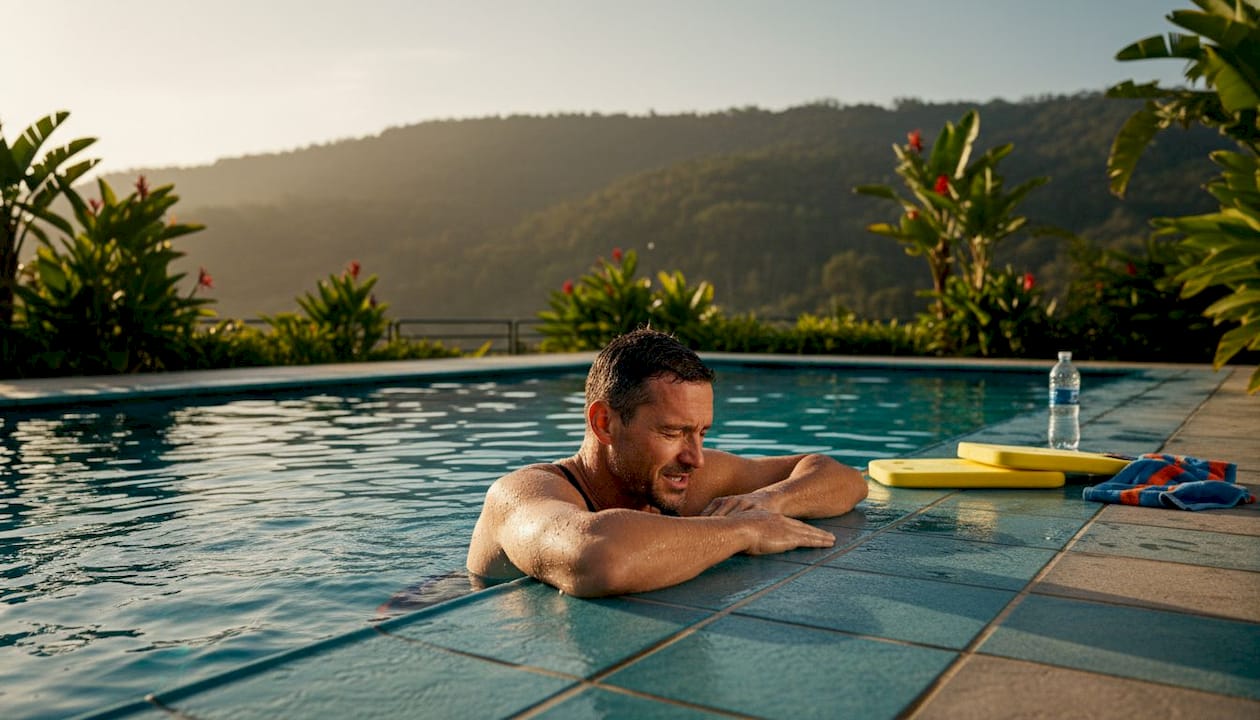
Speed-focused intervals flip the structure. Shorter repeats, longer rest, maximum effort. The extended recovery allows full or near-full restoration of energy so you can deliver a genuine sprint on every single repeat. Crushing all ten repeats of a 10×50 set at legitimate race pace builds the neuromuscular patterns and power output you need for sprint events.
Technique-focused intervals are often underused but critically important. Sessions that emphasize maintaining good technique under fatigue should include added rest the moment form breaks down. When you are too tired to hold a proper catch position or you start pulling wide, extra rest is not a reward for weakness. It is the correct response to preserve quality.
Actionable set designs for each goal:
- Endurance: 5x500m at threshold, 30 seconds rest, focusing on consistent splits from start to finish
- Speed: 12x25m all-out sprint, two minutes rest, tracking time for each repeat
- Technique: 10x75m with a drill focus on the first 25m and free swim on the last 50m, 45 seconds rest
Pro Tip: Video yourself on the last two repeats of a technique set. If your stroke looks the same as the first repeat, your rest interval is calibrated well. If it has deteriorated visibly, adjust rest before adding more volume.
Effective set design also depends on the coach’s eye. Coaching strategies for youth swimmers often use technique-focused intervals to build motor patterns before adding intensity, while personalized swim coaching adapts all three types of sets to the individual athlete’s current abilities and season goals.
How to set and progress your interval swim training
Designing a good interval set is one thing. Building a progression that keeps you improving over weeks and months is another challenge entirely.
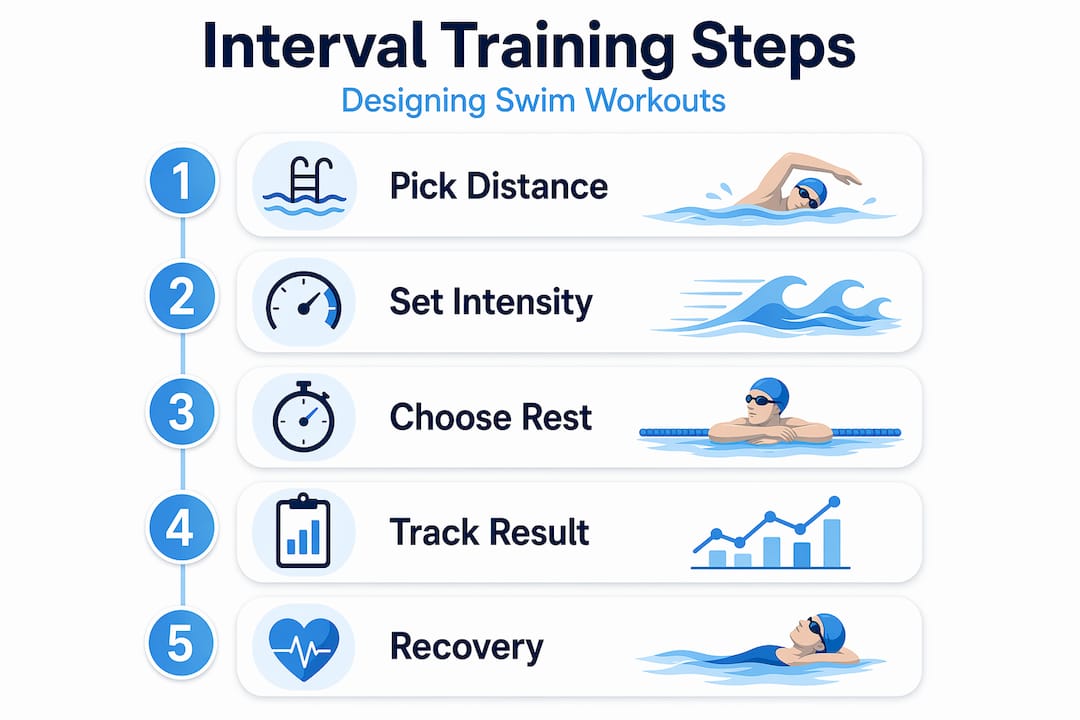
A practical step-by-step process for building your interval program:
- Conduct a swim performance test to establish your baseline pace. Critical Swim Speed, or CSS, is a widely used benchmark that gives you a reliable threshold pace. Basing interval intensity on CSS ensures your threshold and race-pace intervals match your actual current ability rather than guesswork.
- Design your first week of sets at a manageable pace within your CSS range. Do not rush into maximum intensity in week one.
- After two to three weeks of consistent performance, progress by either increasing the number of repetitions, reducing the rest interval by five to ten seconds, or increasing pace by a small increment.
- Monitor your split consistency. If your last three repeats are consistently slower than your first three, you have progressed too aggressively. Pull back before moving forward again.
- Retest your CSS every four to six weeks to update your pace targets as fitness improves.
Reducing rest increases fatigue and can compromise stroke quality. This is the most common mistake swimmers make when they try to progress too quickly. They tighten rest intervals before they can actually sustain pace at the current level, and the result is completing sets with poor technique. That practice then reinforces the wrong movement patterns.
The research on this is compelling. In a 200-meter freestyle study, performance was faster with 20 seconds of rest in a 4×50 intermittent format compared to continuous swimming of the same distance. Structured rest is not a concession to weakness. It is a performance tool.
For recovery between sessions, not just within sets, the steps outlined in swim practice recovery are directly relevant to how well you will perform in your next interval session.
Pro Tip: Keep a training log that records rest intervals and split times for every set. Over time, patterns will emerge showing exactly where your fitness is improving and where it has plateaued. That data is more valuable than any general training plan.
A coach’s perspective: What most swimmers get wrong about interval training
After decades of coaching swimmers at every level, from beginners to Olympians, the single most consistent mistake we see is treating every interval repeat as a separate competition. Swimmers come off the wall on repeat one at full sprint, struggle through the middle of the set, and limp through the final repeats. They feel like they worked hard. They did not train effectively.
Interval training is not about how hard you push on one repeat. It is about how well you control the entire set. The swimmer who finishes every repeat within one second of each other has trained far more effectively than the swimmer whose first repeat is brilliant and whose last four are survival efforts. That split consistency is a skill. It takes patience, self-awareness, and the discipline to hold back when your body wants to charge.
We also see a tendency to undervalue rest as a variable. Swimmers sometimes feel that taking less rest is always tougher and therefore better. That thinking is backward. Appropriate rest allows higher quality output on every repeat, which drives better adaptation. An athlete who completes 8×100 at genuine threshold pace with 25 seconds rest has done more useful work than the athlete who cuts rest to 10 seconds and slows down by 10 seconds per repeat to compensate.
The best interval training also builds mental resilience. When you hold pace late in a hard set, you teach yourself that maintaining quality under pressure is possible. That lesson transfers directly to racing. Olympic swim training strategies consistently emphasize this mental dimension, not just the physical load. The athletes who master interval structure are the ones who can execute a race plan under pressure, not just swim fast in practice when they feel fresh.
The mindset shift we encourage swimmers to make is simple: your goal in an interval set is not to survive it. Your goal is to control it completely.
Level up your swimming with expert coaching and proven interval methods
Understanding the science of interval training is a powerful first step. Applying it effectively with guidance from experienced coaches accelerates your progress in ways that self-directed practice simply cannot match.

At PEAK Performance Swim Camp, our coaching staff builds personalized interval programs rooted in the same principles outlined in this article, tailored to your current ability, goals, and competition schedule. Whether you are a competitive age-group swimmer or a seasoned elite athlete, structured interval work guided by expert coaching produces measurable, lasting results. Explore our swim camps to experience high-level interval training in a focused, professional environment, or discover how personalized swimming coaching can customize every set to your specific needs and performance targets. Your next breakthrough starts with the right structure.
Frequently asked questions
How is interval swim training different from regular swimming sets?
Interval swim training specifically designs work and rest periods to target endurance, speed, or technique, while regular sets may lack structured intensity or pacing. Structured intervals alternate swimming bouts and planned recovery for targeted physiological adaptations.
What is the best way to choose rest intervals in swim training?
The best rest interval allows you to maintain good technique and complete all repeats at your target pace without form breakdown. Reducing rest increases fatigue and can compromise stroke quality, so add rest if form deteriorates.
How do you determine the correct pace for interval workouts?
Base your interval pace on performance tests like Critical Swim Speed so the set intensity matches your current ability and race goals. Basing intensity on CSS ensures threshold and race-pace intervals correspond to tested ability.
Can interval training help both sprinters and distance swimmers?
Yes, by adjusting the repeat distance and rest intervals, interval training develops speed and endurance for all swimming events. Interval training can be tailored toward endurance or speed by adjusting the repeat length and rest-to-work density.
Is more rest always better for interval swim training?
No, too much rest reduces the specific overload needed for adaptation, but too little rest can harm technique. Maintaining technique under fatigue is the priority, and rest should be adjusted to preserve stroke quality without eliminating the training stimulus entirely.
Recommended
- Advanced swimming technique tips for peak performance – Peak Performance Swim Camp
- Year-round swim training: benefits, methods & success – Peak Performance Swim Camp
- Physical conditioning for swimmers: unlock peak performance – Peak Performance Swim Camp
- Off-Season Swim Training: Maximize Performance Year-Round – Peak Performance Swim Camp