
Competitive swimming rewards those who master the right skills early. With dozens of techniques, drills, and training methods available, it can feel overwhelming to know where to focus your energy. Whether you’re a swimmer stepping up to a new level or a parent trying to support your child’s development, the path forward becomes much clearer when you understand which skills truly matter. The four competitive strokes are the foundation of fundamental swimming skills, and everything else builds from there. This guide breaks down each core skill, compares how they apply across levels, and gives you a practical framework for long-term competitive success.
Table of Contents
- What makes a swim skill fundamental?
- The fundamental swim skills list: Core building blocks
- Breaking down the four competitive strokes
- Skill progression: Beginner to elite benchmarks
- Techniques for mastering fundamentals
- Advance your skills with expert guidance
- Frequently asked questions
Key Takeaways
| Point | Details |
|---|---|
| Master the basics | Focusing on fundamental skills creates a foundation for all competitive swimming success. |
| Technique before volume | Early and continual technique refinement prevents injuries and builds stronger swimmers. |
| Progress at every stage | Skill priorities shift from water comfort to elite-level precision as swimmers advance. |
| Both stroke rate and length matter | Elite swimmers balance fast stroke rates with efficient distance per stroke based on event needs. |
What makes a swim skill fundamental?
Not every drill you practice in the pool deserves equal attention. A fundamental skill is one that underpins every stroke, every stage of a race, and every level of competition. It’s not just useful; it’s essential. Without it, everything else becomes harder to execute well.
When we evaluate whether a skill qualifies as fundamental, we look at four things:
- Universality: Does it apply across all four strokes?
- Performance impact: Does it directly affect speed, efficiency, or race outcome?
- Foundation value: Does it support the development of more advanced skills?
- Injury prevention: Does mastering it reduce the risk of overuse or technique-related injuries?
As USMS skill progression guidelines confirm, expert consensus consistently emphasizes technique over volume, gradual progression, and consistency, especially for young swimmers. Rushing past fundamentals to chase faster times is one of the most common mistakes we see at PEAK.
“Core fundamental skills include body position, breathing control, kicking, arm pulls, coordination and rotation, streamline and underwater dolphin kicks, and starts, turns, and finishes.”
For parents who are newer to the sport, reviewing parent essentials can help you understand what coaches look for at each stage. Swimmers who want to see where they stand can also explore swimming skill benchmarks to set realistic goals.
The fundamental swim skills list: Core building blocks
With clear criteria in place, let’s detail the essential skills every competitive swimmer must master. These are not optional extras. They are the non-negotiables.
- Horizontal body position: A flat, streamlined body reduces drag. Even small improvements here translate directly to faster times.
- Breathing control: Timing your breath and exhaling fully underwater keeps your stroke rhythm intact and prevents oxygen debt during races.
- Kicking mechanics: Flutter kick for freestyle and backstroke, whip kick for breaststroke, and dolphin kick for butterfly each require specific technique and consistent power.
- Arm pull and catch: The high-elbow catch in freestyle is one of the most studied mechanics in swimming. Each stroke has its own adapted version, but the principle of early engagement is universal.
- Body rotation and coordination: Rotation generates power and reduces resistance. Without it, your arm pull loses efficiency.
- Streamline and underwater skills: Your streamline off every wall is essentially free speed. Underwater dolphin kicks after starts and turns can make or break a race.
- Starts, turns, and race finishes: These race skills are often undertrained but account for a significant portion of total race time.
Pro Tip: Film your swimmer from the side and from underwater if possible. You’ll spot body position and catch issues in seconds that are invisible from the pool deck.
For a deeper look at how these mechanics connect, the stroke technique breakdown at PEAK covers each element in detail. You can also reference basic swim skills for a visual breakdown of freestyle mechanics.
Breaking down the four competitive strokes
Each skill takes on unique importance in the context of the four competitive strokes. The four competitive strokes are the foundation of fundamental swimming skills, and understanding how each one applies the same core principles differently is what separates good swimmers from great ones.
| Stroke | Body position priority | Breathing pattern | Key propulsion source |
|---|---|---|---|
| Freestyle | High hips, flat rotation | Every 2-3 strokes | High-elbow catch, hip rotation |
| Backstroke | Flat back, steady rotation | Continuous | Shoulder rotation, early catch |
| Breaststroke | Undulating, streamlined glide | Every stroke cycle | Whip kick, simultaneous pull |
| Butterfly | Undulating wave motion | Every 1-2 strokes | Dolphin kick, simultaneous pull |
Freestyle and backstroke share a rotational foundation, while breaststroke and butterfly rely more on timing and wave-like body movement. The breathing demands also differ significantly. Butterfly swimmers must manage breath frequency carefully to avoid disrupting their stroke rhythm.
- Freestyle: Prioritize hip rotation and a consistent kick tempo
- Backstroke: Focus on shoulder roll and a steady head position
- Breaststroke: Nail the timing between the pull, kick, and glide
- Butterfly: Build dolphin kick strength before worrying about arm timing
“Understanding the core similarities and unique demands of each stroke helps swimmers transfer skills efficiently across events.”
Building core strength in swimming is what allows swimmers to maintain body position across all four strokes, especially as fatigue sets in. And if you want to understand how technique connects to race speed, the relationship between stroke efficiency and speed is worth studying closely.
Skill progression: Beginner to elite benchmarks
Building from basic skills, understanding progression clarifies training priorities for each stage. Not every swimmer is working on the same things, and that’s exactly how it should be.
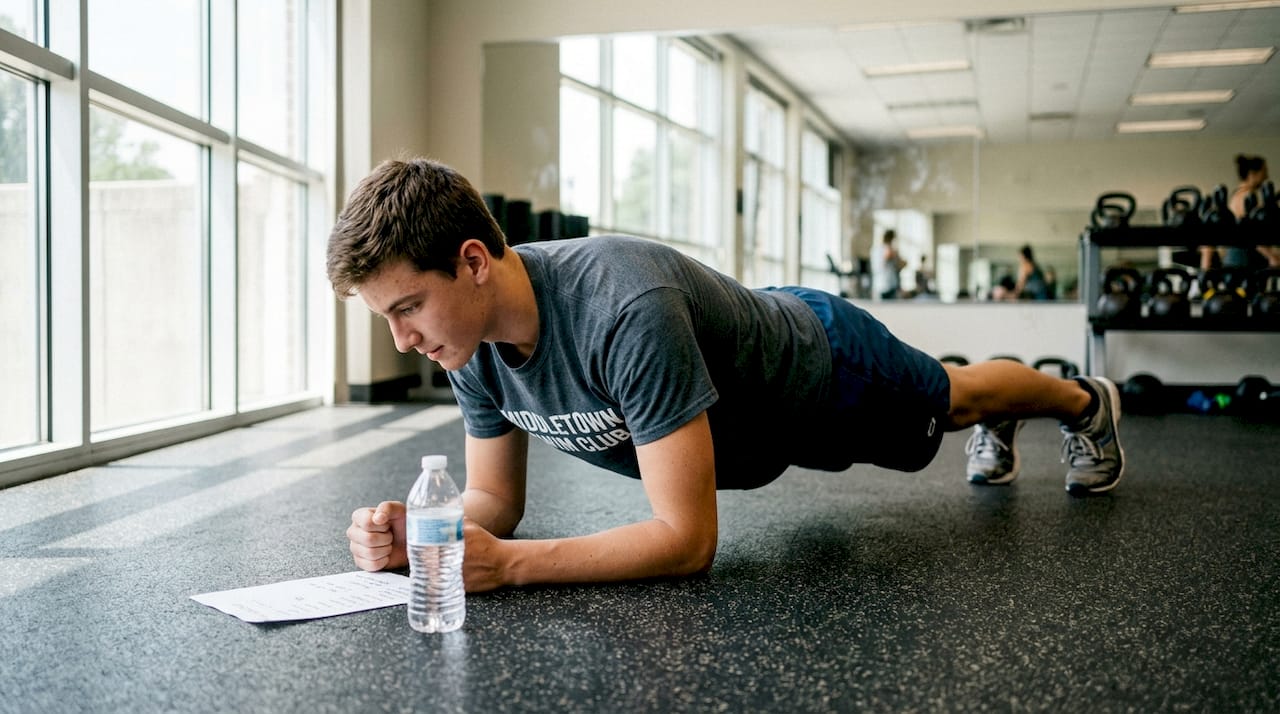
Progression emphasizes technique before speed: beginners focus on water comfort, floating, and basic skills; intermediate swimmers develop a high-elbow catch and body rotation; elite swimmers refine race pace metrics and explosive underwater phases.
| Level | Skill focus | Measurable benchmark |
|---|---|---|
| Beginner | Body position, breathing, basic kick | Floating without assistance, 25m completion |
| Intermediate | High-elbow catch, rotation, turns | Consistent stroke count per length, legal turns |
| Advanced/Elite | Race pace control, underwater distance, SR vs SL | Breakout distance over 5m, optimized stroke rate |
SR stands for stroke rate (how many strokes per minute) and SL stands for stroke length (how far you travel per stroke). Elite swimmers don’t just swim fast; they find the right balance between the two depending on their event distance.
- Start with water comfort and body position before adding speed.
- Introduce rotation and catch mechanics once basic coordination is solid.
- Add race skills like starts and turns as stroke technique stabilizes.
- At the elite level, use elite freestyle benchmarks to set event-specific targets.
Pro Tip: Plateaus are not failures. They are a normal part of swimming skill development. When a swimmer stops improving in times, it often means their technique is consolidating before the next breakthrough.
Knowing how often a swimmer should practice at each level also matters. More volume without skill readiness leads to reinforcing bad habits, not building better ones. Pair consistent practice with clear goal-setting in swimming to keep motivation high through every stage.
Techniques for mastering fundamentals
Once priorities are clear, the question becomes how to practice and reinforce these core skills efficiently. Knowing what to work on is only half the equation.
Video analysis, short drills, and mechanic focus prevent injury and build long-term technique. This is not just a coaching tool; it’s one of the most effective feedback loops available to any swimmer at any level.
- Use purposeful drills: Each drill should isolate one specific skill. Catch-up drill for timing, fingertip drag for elbow position, and single-arm freestyle for rotation awareness.
- Track process metrics: Track stroke count and body position over times. A swimmer who drops two strokes per length is improving, even if the clock doesn’t show it yet.
- Seek regular coach feedback: Technique errors compound over time. Catching them early saves months of retraining later.
- Build resilience through plateaus: Incremental growth is still growth. Celebrate small wins in execution, not just race results.
Pro Tip: Consistency beats intensity every time. A swimmer who practices fundamentals correctly three times a week will outpace one who trains hard six days a week with poor mechanics.
Parents play a huge role in this process. Understanding what to look for and how to support your swimmer without adding pressure is a skill in itself. The guidance for swim parents resource covers this well. And if you’re evaluating coaching options, knowing what to look for in a swim coach will help you find someone who prioritizes skill development over short-term results.
Advance your skills with expert guidance
For swimmers and families ready to take skill development seriously, structured training under expert coaches makes a measurable difference. At PEAK Performance Swim Camp, every session is built around the fundamentals covered in this guide, with hands-on feedback, video analysis, and individualized coaching from coaches who have trained swimmers at the highest levels.
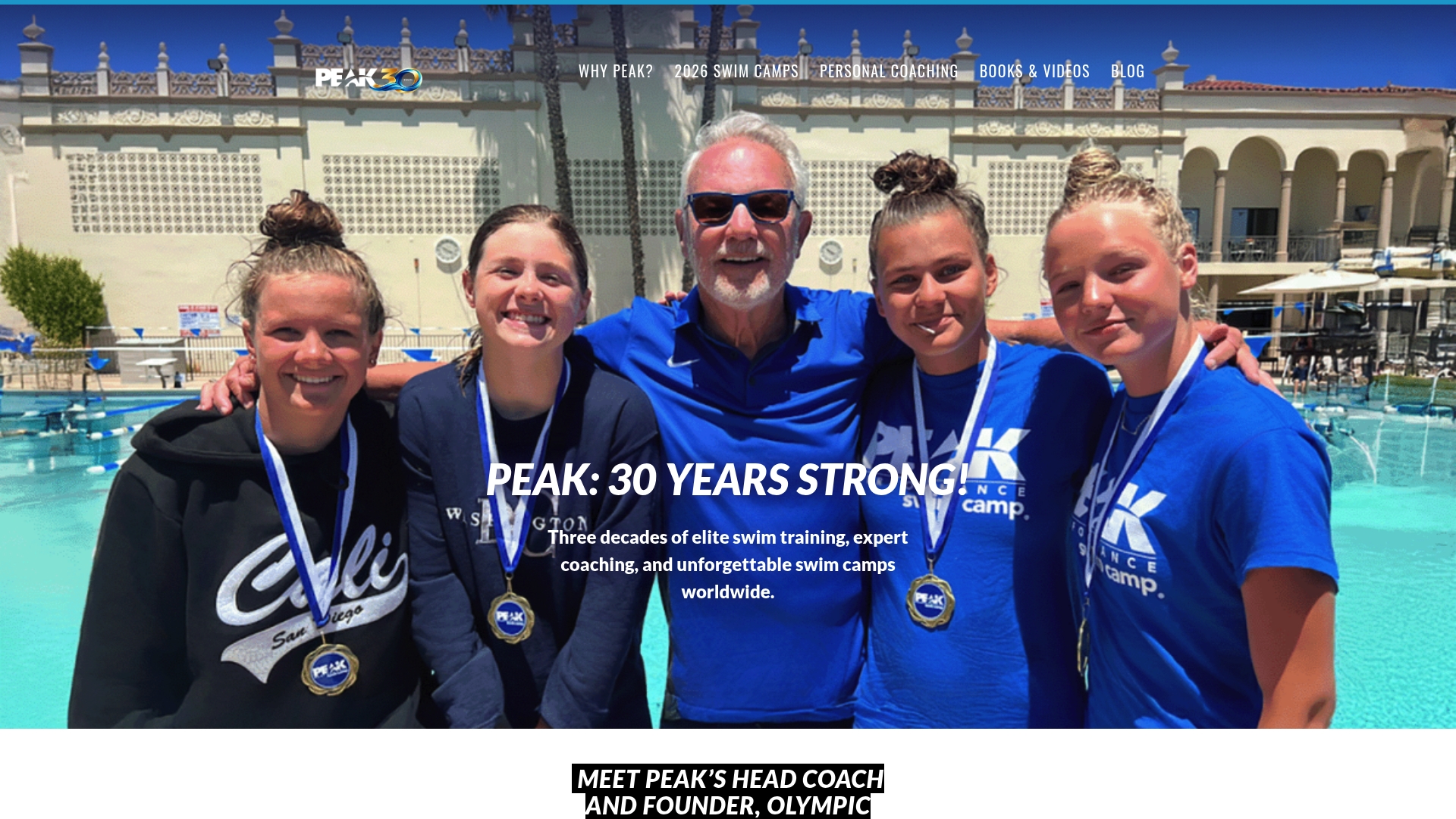
Whether your swimmer is just building their foundation or pushing toward elite performance, our swim camps offer a focused environment where fundamentals are taught with precision and purpose. If you’re looking for a shorter commitment or a specific skill focus, explore our clinic options to find the right fit. The skills covered in this article are exactly what our coaches work on every day, and the results speak for themselves across 30 years and more than 1000 camps worldwide.
Frequently asked questions
What are the most important fundamental swim skills for beginners?
Body position, breathing control, and basic kicking and arm movement form the core skills every beginner should prioritize before adding speed or distance.
How do you measure progress in fundamental swimming skills?
Progress shows up in stroke count consistency, cleaner technique under fatigue, and smoother transitions between levels. Track stroke count and body position rather than focusing only on race times.
Does stroke rate or stroke length matter more for elite swimmers?
Both are essential. Elites balance stroke rate and stroke length based on event distance, with sprinters favoring higher rate and distance swimmers optimizing length.
How important are starts and turns for young competitive swimmers?
Very important. Starts, turns, and finishes are counted among core swimming fundamentals and can account for a significant portion of total race time as swimmers advance.
Is focusing on technique more important than doing more laps?
Absolutely. Mastering mechanics early prevents bad habits from forming and creates a stronger foundation for performance gains over the long term.