
TL;DR:
- Choosing the right swim camp extends beyond popularity and cost; it requires evaluating coach experience, program structure, and individual attention. Top camps focus on skill development, appropriate training intensity, and personalized feedback to improve competitive performance. Matching your child’s goals and skill level to the specific camp type is essential for meaningful growth and peak results.
Choosing a swim camp for your child should feel exciting, but for most families it quickly becomes overwhelming. There are dozens of options, bold promises on every website, and no clear way to know which program will actually move the needle on your swimmer’s times and technique. The right local camp does far more than keep kids busy in the water. It builds confidence, sharpens stroke mechanics, and teaches young athletes how to compete at a higher level. This guide walks you through exactly what to look for, which camp types deliver results, and how to match your swimmer’s specific goals to the ideal program.
Table of Contents
- How to evaluate local swim camps for youth performance
- Top local swim camps delivering elite experiences
- Local camp comparison table: Which is best for your swimmer?
- Matching your swimmer’s needs to the right local camp
- The biggest myths about local swim camps for serious youth swimmers
- Find the ideal camp for your swimmer’s next breakthrough
- Frequently asked questions
Key Takeaways
| Point | Details |
|---|---|
| Prioritize focused coaching | Camp success depends more on coaching approach and matching session intensity to skill level than on big facilities or flashy promises. |
| Compare local camp options | Use structured comparisons to identify which local camps align best with your swimmer’s goals and learning style. |
| Ask about individualization | Seek camps that tailor training and feedback for each swimmer, not just one-size-fits-all instruction. |
| Look beyond price and prestige | Prestigious or expensive camps are not always a better fit; factor in coaching, philosophy, and your swimmer’s needs. |
How to evaluate local swim camps for youth performance
Not every camp that markets itself as “elite” deserves that label. The real question is whether a camp is built around meaningful skill development or simply around keeping swimmers entertained for a week. When families start choosing the best swim camp, the most important step is building a clear evaluation framework before even looking at brochures.
Start with these core criteria:
- Coach experience and credentials. Look for coaches who have competed at a high level or trained athletes who have. Certification matters, but real-world competitive experience matters more.
- Student-to-coach ratio. A ratio higher than 10:1 makes individualized feedback nearly impossible. Aim for camps that keep it at 8:1 or lower.
- Daily structure and session design. Does the schedule include skill-focused blocks, race-pace sets, and scheduled recovery? Or is it just continuous laps with occasional technique reminders?
- Feedback methods. Underwater video analysis, stroke count tracking, and written feedback sheets are signs a camp takes development seriously.
- Flexibility for skill levels. The best camps group swimmers by ability, not just age, and adjust training cues accordingly.
One often overlooked factor is how coaches manage training intensity. Coaching guidance should match session intention to physiological load, preventing aerobic sets from becoming improperly anaerobic. In plain terms, a recovery session that accidentally turns into a race is counterproductive. Well-designed camps make sure coaches know the purpose of every set and communicate that clearly to swimmers.
“The best camps teach swimmers why they are doing a set, not just what they are doing. That understanding is what carries over into competition.”
Understanding youth coaching strategies is equally important here. Coaches who use clear, positive language and explain the goal behind each drill produce swimmers who adapt faster and retain technique under race pressure.
Pro Tip: During your camp search, ask each program to walk you through a typical training day. If the answer is vague or focused only on yardage totals, that is a warning sign. Look for specifics about feedback timing, rest intervals, and how coaches adjust for swimmers who are struggling.
Top local swim camps delivering elite experiences
Once you have your evaluation criteria sorted, the next step is reviewing camps that consistently deliver on those standards. Great local camps tend to share a few things in common: experienced staff, a structured but adaptable daily program, and a clear philosophy around athlete development.
Here is what to look for across top-tier local options:
Technique-focused day camps
- Prioritize stroke mechanics over race volume
- Typically run 5 to 7 days with morning and afternoon sessions
- Best for swimmers aged 8 to 14 building foundational skills
- Often include dryland work, mental focus training, and video review
High-performance competitive camps
- Target swimmers already competing at club or regional level
- Emphasize race-pace training, starts, turns, and competitive strategy
- Coaching staff often includes former collegiate or national-level athletes
- Sessions are split between technical work and simulated race environments
Specialty camps (IM, sprint, distance)
- Narrow focus allows deeper development in one area
- Great for swimmers who have identified a primary event
- Look for stroke-specific drill libraries and event analysis tools
Residential vs. day camp formats
- Residential camps add team culture, mental resilience, and independence benefits
- Day camps are easier logistically and often more affordable for repeated attendance
Research consistently shows that technique mechanics alone may not translate to performance without matching training intensity and coaching cues. A camp that drills perfect technique but never applies it at race pace is leaving competitive gains on the table.
Exploring top youth swim camps in your region is worth the time because local options often provide the same quality as nationally marketed programs without the added travel cost. In many cases, regional camps run by experienced coaches have lower ratios and more personalized environments than large national programs.
Pro Tip: Ask camps about their coach-to-swimmer ratio and specifically how they address individual skill needs. A camp with 80 swimmers and 5 coaches cannot give your child meaningful feedback. A camp with 40 swimmers and 8 coaches can.
For a realistic look at what a high-quality day actually looks like, reading about a day at swim camp can help set expectations for both you and your swimmer before arrival.
Local camp comparison table: Which is best for your swimmer?
With so many options, side-by-side comparisons are one of the fastest ways to narrow your list. Below is a general comparison framework you can use when evaluating camps in your area.
| Feature | Beginner-focused camp | Competitive skills camp | High-performance camp | Specialty/event camp |
|---|---|---|---|---|
| Age range | 7 to 12 | 10 to 16 | 13 to 18 | 11 to 18 |
| Coach credentials | Certified swim instructors | Club coaches, some collegiate | Former collegiate or elite athletes | Event specialists |
| Primary focus | Fundamentals, water confidence | Stroke technique, race skills | Race-pace training, periodization | Sprint, IM, or distance depth |
| Group size | 6 to 10 per coach | 8 to 10 per coach | 6 to 8 per coach | 6 to 8 per coach |
| Session length | 2 to 3 hours | 3 to 4 hours | 4 to 5 hours | 3 to 5 hours |
| Typical price range | $200 to $500 per week | $400 to $800 per week | $700 to $1,500 per week | $500 to $1,200 per week |
| Best for | New and nervous swimmers | Developing competitors | Aspiring elite athletes | Event-specific gains |
One key statistic worth highlighting: matching training session intention with coaching cues is vital for optimal physiological adaptations for young swimmers. This is not just a coaching theory. It affects how quickly swimmers develop aerobic capacity, how they handle race-day stress, and whether they leave camp faster and more confident or simply tired.
Before committing, it also helps to honestly ask is swim camp right for your child. Not every young swimmer is ready for a high-performance environment. Some thrive with a technique-first approach before stepping into competitive camp settings.
Matching your swimmer’s needs to the right local camp
Every swimmer is different, and the best camp for one athlete may be the wrong fit for another. Matching your child’s current level, goals, and personality to the right camp style will determine how much they grow.
Here are three common swimmer profiles and the camp types that fit each one best:
Profile 1: The beginner or anxious swimmer. This swimmer is still building water confidence and learning basic stroke patterns. A technique-focused day camp with a calm, supportive environment and a low ratio will deliver the most growth. High-volume or competition-heavy programs can actually set back a swimmer at this stage by creating negative associations with training.
Profile 2: The improving competitor. This swimmer is competing at the club level, finishing races, but wants to break through to the next tier. A competitive skills camp is the ideal fit. Look for programs that include race simulation, video feedback, and specific attention to starts and turns. These swimmers benefit from Olympic swim coaching principles applied at a developmentally appropriate level.
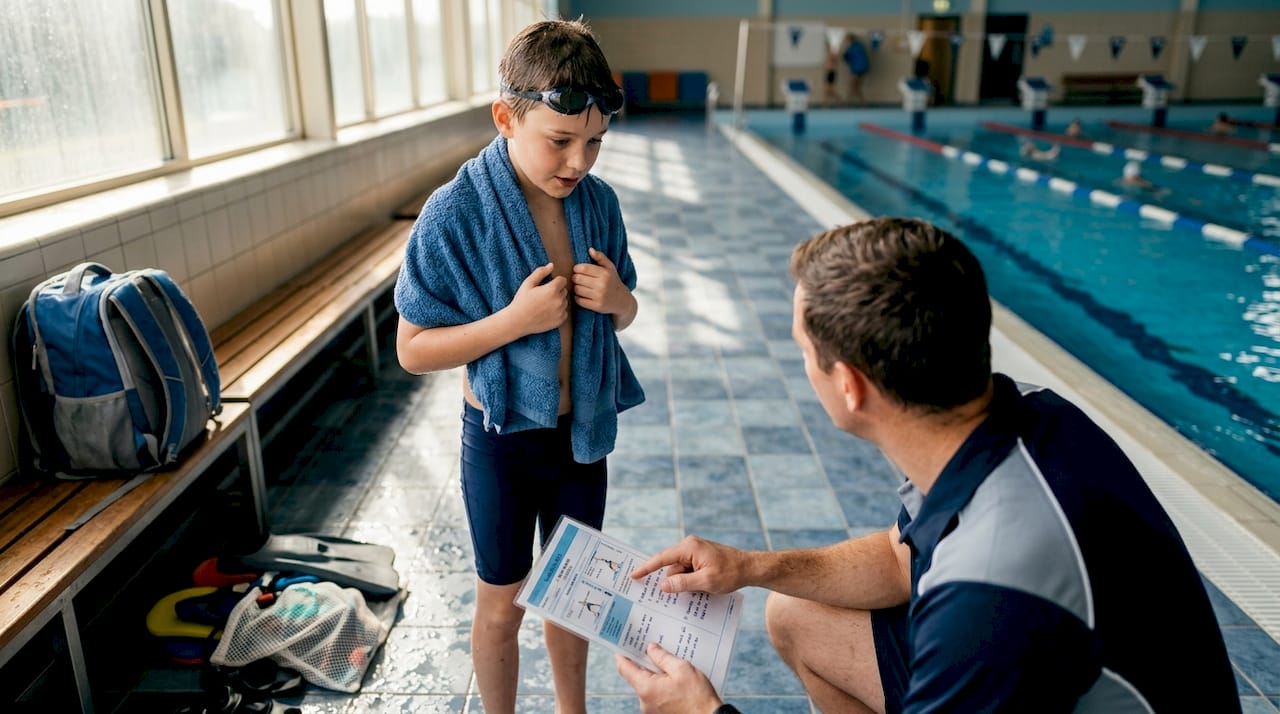
Profile 3: The elite aspirant. This swimmer is already placing at regional or national junior meets and wants to train at the highest local level available. A high-performance camp with certified elite coaches, periodized training, and mental performance components is the right match. At this level, knowing what to look for in a swim coach becomes critical because the quality of coaching directly determines whether the swimmer peaks at camp or just gets tired.
Here are three practical steps for matching camp to swimmer:
- Write down your swimmer’s three biggest performance goals. Be specific. “Swim faster” is not a goal. “Drop two seconds in the 100 freestyle by September” is a goal that camps can be evaluated against.
- Match those goals to the camp’s advertised strengths. If your swimmer needs better turns, find a camp that includes dedicated turn work in their curriculum. If they need race confidence, find one that runs internal time trials or mock meets.
- Talk to your current coach before choosing. Your club coach knows your swimmer’s development phase and can point you toward camp styles that complement their current training plan.
Research supports this individualized approach. The role of coaching language and individualized training is critical in youth athlete development. Swimmers who receive coaching cues that match their current stage and ability retain technique improvements far better than those put through generic group instruction.
The biggest myths about local swim camps for serious youth swimmers
After more than 30 years of working with youth swimmers across 18 countries, we have seen the same misconceptions show up in parent conversations over and over again. The most damaging one is this: the most expensive or famous camp is automatically the best choice for your child.
Prestige and price are not reliable indicators of quality. We have seen swimmers return from nationally marketed, high-cost programs with ingrained bad habits because the camp ran too many athletes through the same cookie-cutter drills. We have also seen swimmers transform at a regional program run by a brilliant but less-known coach who understood that specific, personalized feedback beats volume every time.
Here is the uncomfortable truth about some “elite” camps. If the coaching staff does not adjust their language and cues to match what a specific swimmer needs in that moment, the training will not stick. Technique without the correct intensity and coaching guidance at camp often fails to drive real competitive gains. A swimmer can drill a perfect catch for five days and come home with no improvement in race times simply because the intensity of those drills was too low to transfer to competition.
The camps that actually transform swimmers are not always the ones with the fanciest facilities. They are the ones that teach athletes how to manage effort, recognize fatigue, and adapt their stroke under pressure. Mental readiness is as important as mechanics. Understanding the impact of great coaching means recognizing that the best coaches are educators first. They build a swimmer’s awareness, not just their fitness.
Our advice to every family is to spend less time comparing camp logos and more time asking coaches hard questions about how they individualize their instruction. That conversation will tell you more than any marketing brochure ever will.
Find the ideal camp for your swimmer’s next breakthrough
Your swimmer has goals worth taking seriously. The right local camp can be the experience that changes their trajectory, and PEAK Performance Swim Camp was built exactly for that purpose.

PEAK is ranked #1 among competitive swim programs, with over 1,000 camps completed across 18 countries under the guidance of Olympic coach Nick Baker. Whether your swimmer is chasing their first best time or preparing for a national qualifier, PEAK has a program designed around their level and goals. Browse all local swim camp options to find a session near you, or explore high-performance camp packages that combine elite coaching, technique clinics, and race preparation in one focused program. Ready to get started? Our team is available to help you find the right fit.
Frequently asked questions
What should I look for in a local swim camp for my child?
Look for camps with experienced coaches, individualized training plans, a low coach-to-swimmer ratio, and a focus on matching training intensity to your child’s skill level. Daily structure, feedback methods, and session design quality are equally important indicators.
How do elite local camps improve competitive swimming performance?
Elite camps blend expert feedback with purposeful training intensity and specific coaching cues that help swimmers transfer technique into better race results. The key is that pairing technique with intensity and purposeful coaching cues drives real competitive improvement.
Do local swim camps provide value for beginners or only advanced swimmers?
High-quality local camps cater to all levels by adapting training and progression to each swimmer’s development stage. The best camps flex around a swimmer’s skill and development needs, making them valuable whether your child is brand new to competitive swimming or already placing at regional meets.
How important is the coach-to-swimmer ratio at local swim camps?
A low coach-to-swimmer ratio ensures each athlete receives personalized instruction and timely feedback, which is what drives real skill gains. Individualized coaching makes camp training far more effective than large-group instruction where each swimmer gets only a few minutes of direct attention per session.
Recommended
- Top youth swim camps for competitive skill building – Peak Performance Swim Camp
- Choosing the Best Swim Camp – Peak Performance Swim Camp
- Parents: Does Your Child Need Peak Performance Swim Camp? – Peak Performance Swim Camp
- Top 5 ucsandiegoswimmingcamps.com Alternatives 2026 – Peak Performance Swim Camp