
TL;DR:
- Mental skills training is essential and trainable like physical techniques for swimmers.
- Clear, process-oriented goals and visualization techniques boost focus and reduce anxiety.
- Consistent daily mental routines improve performance and confidence across all skill levels.
Mental edge separates good swimmers from great ones. You can have perfect technique, elite conditioning, and a packed training schedule, yet still underperform on race day if your mind isn’t ready. Nerves, self-doubt, and poor focus can undo months of physical preparation in seconds. The encouraging news is that mental skills are trainable, just like a flip turn or a butterfly stroke. This article covers practical, science-backed mental training tips for swimmers at every level, and gives parents and coaches clear ways to support the process from the pool deck.
Table of Contents
- The foundations of psychological skills training
- Goal-setting: Clarify your path to success
- Visualization and mental rehearsal for swimming
- Mindfulness, focus, and the art of letting go
- Building a personalized mental training routine
- What most swimmers get wrong about mental training
- Take your mental training further
- Frequently asked questions
Key Takeaways
| Point | Details |
|---|---|
| Start with PST basics | Learning the foundations of Psychological Skills Training sets swimmers up for long-term success. |
| Combine mental techniques | Goal-setting, visualization, and mindfulness work best when practiced together regularly. |
| Customize for best results | Tailoring mental routines to individual needs and practice makes progress faster and more sustainable. |
| Consistency is key | Practicing mental training often—even in small ways—delivers powerful performance improvements. |
The foundations of psychological skills training
With mental training established as essential, let’s start by understanding the foundation every swimmer should know. Psychological Skills Training, or PST, is a structured approach to building mental skills that directly support athletic performance. Think of it as a training plan for your brain, running alongside your physical workouts.
PST programs follow three phases: education, acquisition, and practice. In the education phase, swimmers learn what mental skills are and why they matter. The acquisition phase is where they actually learn specific techniques like visualization or self-talk. The practice phase is where those skills get reinforced through repetition until they become automatic under pressure.
What makes PST especially effective is that it works best when it’s tailored to the individual. A 12-year-old swimmer dealing with pre-race nerves needs different tools than a college athlete managing performance slumps. Needs-led programs, ones built around what a specific swimmer actually struggles with, produce better outcomes than one-size-fits-all approaches.
Here’s how the three phases look in practice:
- Education phase: Learn about mental skills and how they affect performance. Read, listen to coaches, and discuss mental challenges openly.
- Acquisition phase: Practice one or two specific skills, such as breathing exercises or goal-setting, in low-pressure settings.
- Practice phase: Apply those skills consistently in training and competition until they feel natural.
Parents and coaches play a real role here. Asking swimmers how they felt during a race, not just how fast they went, opens the door to mental skill development. Normalizing mental training as part of the sport removes stigma and encourages consistent effort.
“Mental training isn’t a shortcut. It’s a skill set that takes time to build, just like endurance or stroke mechanics.”
Understanding why goal-setting matters is a natural first step in any PST program, since clear goals give the other mental skills something concrete to anchor to.
Pro Tip: Schedule five minutes of mental training at the end of each practice, not before bed when you’re tired. Consistency in a low-stakes environment builds the habit faster.
Goal-setting: Clarify your path to success
Now that the foundation is in place, one of the most practical first steps is learning to set the right goals. Not all goals are created equal in sport. Swimmers who only chase outcome goals, like winning a race or hitting a qualifying time, often experience more anxiety and less motivation when results don’t come immediately.
A balanced goal-setting approach uses three types:
- Outcome goals: Winning, placing, or qualifying. These matter, but they’re partly outside your control.
- Performance goals: Hitting a personal best time or improving your turn efficiency. These measure your own progress.
- Process goals: Focusing on a strong first stroke off the wall or maintaining stroke rate in the final 25 meters. These are fully within your control.
Process and performance goals are the most powerful for daily motivation and anxiety management. A 4-week psychological intervention combining goal-setting, visualization, mindfulness, and team cohesion significantly improved intrinsic motivation and reduced anxiety in athletes. That’s real, measurable change in less than a month.
For swimmers just getting started with goal-setting, here’s a simple template:
- Write down one outcome goal for the season.
- Break it into two or three performance goals for the next month.
- Choose one process goal to focus on in this week’s practice.
Review and adjust those goals every few weeks. Goals that never change stop being motivating. Understanding goal-setting basics helps swimmers build this habit early, and exploring goal setting strategies gives more advanced tools as they progress.
“The swimmer who knows exactly what they’re working on today is always more focused than the one just trying to go fast.”
Parents can support this by asking their swimmer what their process goal is before a meet, not just what place they hope to finish. That small shift in conversation builds a process-oriented mindset over time.
Pro Tip: Write goals down on paper and keep them somewhere visible, like a training bag or a notebook. Swimmers who write goals down are far more likely to follow through on them.
Visualization and mental rehearsal for swimming
Besides setting clear goals, another powerful tool for swimmers is visualization and rehearsal technique. Visualization, also called mental rehearsal, means creating a vivid mental image of yourself performing a skill or race correctly. It sounds simple, but the science behind it is striking.
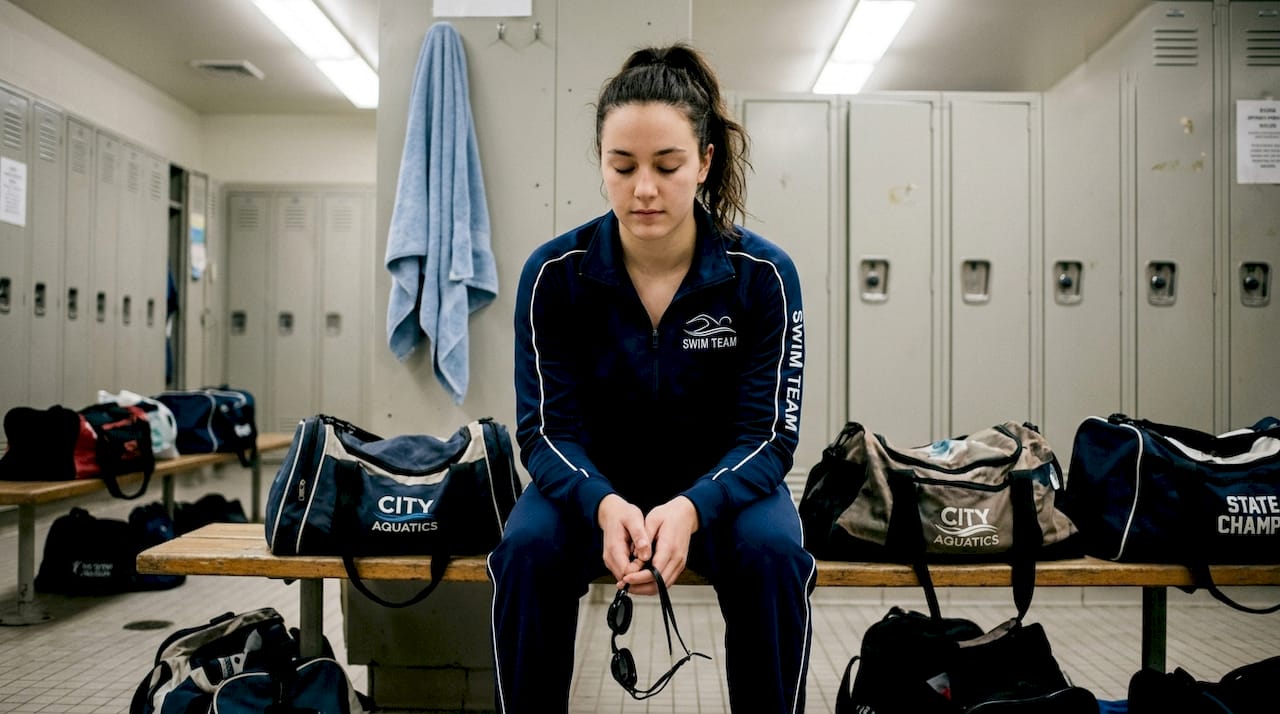
Visualization activates the motor cortex similarly to physical practice. Your brain rehearses the movement patterns even when your body is still. When you combine visualization with relaxation techniques, the approach is called Visual Motor Behavior Rehearsal, and it’s particularly effective for controlling anxiety before competition.
Here’s a comparison of physical practice versus mental practice:
| Factor | Physical practice | Mental practice |
|---|---|---|
| Builds muscle memory | Yes | Partially |
| Reduces anxiety | Somewhat | Strongly |
| Available anywhere | No | Yes |
| Reinforces technique | Yes | Yes |
| Best used | Daily training | Pre-race and rest days |
For swimmers who want to build a visualization routine, start with these steps:
- Find a quiet space and close your eyes.
- Take three slow, deep breaths to relax your body.
- Picture yourself standing behind the block, calm and focused.
- Visualize the race from start to finish in real time, including the feel of the water, your stroke rhythm, and a strong finish.
- End the image with a successful performance and a positive feeling.
Younger swimmers can start with just the start and first 25 meters. Advanced swimmers can visualize the entire race, including how they’ll respond if something goes wrong. Learning to enhance mental focus through imagery is a skill that compounds over time. Pairing it with technique tips for peak performance creates a powerful combination of mental and physical preparation.
“See it before you swim it. The race you rehearse in your mind shapes the race you swim in the water.”
Mindfulness, focus, and the art of letting go
If visualization is about mental prep, mindfulness is the key to peak performance when it matters most. Mindfulness in sport means being fully present in the moment, aware of your thoughts and feelings without being controlled by them. For swimmers, this is especially useful on race day when nerves and distractions are at their peak.
Here’s a quick reference for common mental challenges and mindfulness responses:
| Challenge | Mindfulness response |
|---|---|
| Pre-race anxiety | Box breathing (4 counts in, hold, out, hold) |
| Negative self-talk | Label the thought, then refocus on process |
| Distraction during warm-up | Body scan: feel feet, legs, arms, breath |
| Mid-race panic | Return to stroke rhythm and breathing cues |
A 4-week psychological intervention that included mindfulness training significantly improved intrinsic motivation and reduced anxiety in athletes. Mindfulness isn’t about clearing your mind completely. It’s about noticing what’s happening and choosing where to direct your attention.
Here’s a simple on-deck mindfulness routine before a race:
- Stand still for 30 seconds and focus only on your breathing.
- Notice any nervous thoughts without judging them.
- Say a short cue word to yourself, like “smooth” or “strong.”
- Shake out your arms and legs to release tension.
- Step up to the block with your attention on your first stroke.
Building mental toughness for swimmers means practicing these small routines so often that they become automatic. The goal isn’t to feel no nerves. It’s to feel them and perform anyway.
Pro Tip: Pick one cue word that represents your best swimming. Use it consistently in practice so it carries real meaning by race day.
Building a personalized mental training routine
To make these tips last, swimmers need to create their own routine using the tools above all season long. Research consistently shows that combining multiple mental skills meets individual needs better than relying on a single technique. This multimodal approach, blending goal-setting, imagery, and mindfulness, is more adaptable and more effective across different situations.
Here’s a sample weekly mental training routine:
- Monday: Set or review your process goal for the week (5 minutes).
- Wednesday: Do a 5-minute visualization session after practice.
- Friday: Practice your on-deck mindfulness routine before a hard training set.
- Pre-meet: Combine all three: review your goal, visualize your race, then use your cue word at the block.
Adjust this based on age and experience. Younger swimmers do well with shorter, simpler routines. More experienced athletes can add self-talk scripts, arousal control techniques, or journaling. The key is consistency, not complexity.
Swimmers should also reinforce mental skills during physical training, not just before meets. Practicing your pre-race breathing routine before a hard set in the pool builds the habit in a realistic environment. Pairing mental preparation with solid conditioning for swimmers creates a complete performance foundation.
Pro Tip: Keep a short mental training log alongside your physical training notes. Write one sentence about what mental skill you practiced and how it felt. Patterns emerge quickly and help you refine your routine.
What most swimmers get wrong about mental training
After decades of working with swimmers across all levels, one pattern stands out clearly: most athletes and families treat mental training as a crisis tool rather than a daily habit. They pull it out when times are dropping, confidence is low, or a big meet is coming. That’s like only stretching when you’re already injured.
Another common mistake is believing mental training is only for elite athletes or those who are struggling. Every swimmer, from beginners to national qualifiers, benefits from building focus, managing nerves, and setting clear goals. These are foundational skills, not advanced ones.
The swimmers who improve most aren’t the ones with the most talent. They’re the ones who show up for mental training the same way they show up for morning practice. Small, regular routines, five minutes of visualization here, a goal review there, pay major dividends over a full season. Coach Nick Baker’s perspective on motivation captures this well: sustained improvement comes from consistent effort in every dimension of the sport, including the mental side.
Commit to the routine before you need it, and it will be there when you do.
Take your mental training further
For swimmers and parents ready to take the next step, specialized programs can provide the powerful support needed for lasting improvements. Mental training doesn’t have to be a solo effort. Structured environments with experienced coaches accelerate the process significantly.
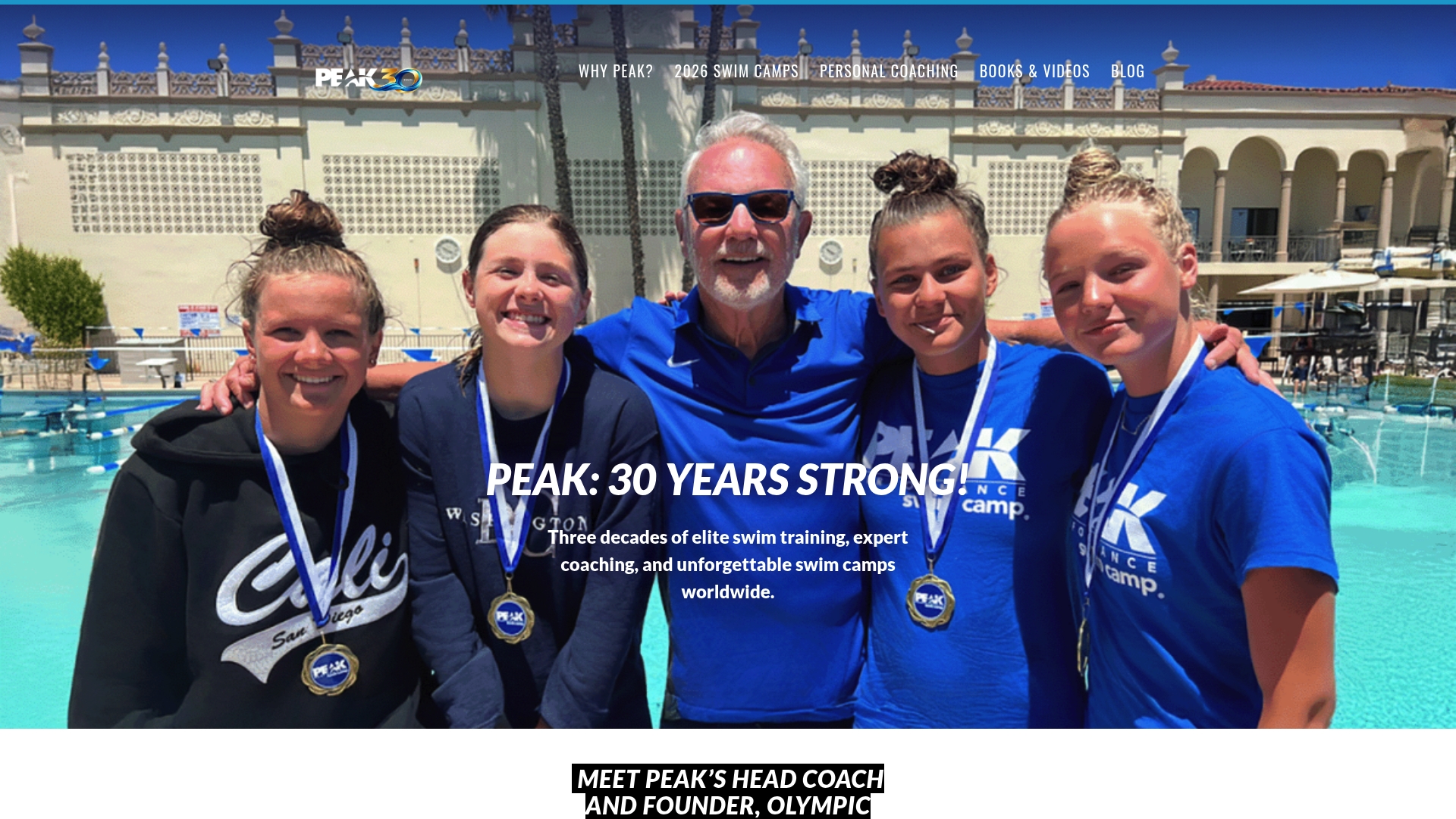
At PEAK Performance Swim Camp, mental preparation is woven into every aspect of training, not treated as an afterthought. Whether you’re exploring swim camps designed to build complete athletes, looking for focused mental training clinics, or ready to go deeper with advanced mental strategies, PEAK offers the tools and expert coaching to help swimmers reach their full potential. Founded by Olympic coach Nick Baker with over 50 years of experience, PEAK brings world-class mental and physical training to swimmers across 18 countries.
Frequently asked questions
What is the best mental training tip for nervous swimmers?
Visualization paired with deep breathing is one of the most effective tools for reducing pre-race nerves. Combining relaxation with imagery activates the motor cortex and helps the body stay calm and ready under pressure.
How often should swimmers do mental training exercises?
Swimmers benefit most when they practice mental training several times a week, ideally integrated into their existing training routines. Consistency matters far more than session length.
How can parents help with mental training?
Parents support mental training by encouraging goal-setting conversations, maintaining positive routines, and offering calm, steady support before and after competition. PST is most effective when it’s tailored and supported by the people around the athlete.
Are mental training routines useful for beginners?
Yes, mental training benefits swimmers at every level by building focus, confidence, and motivation from the very start. Multimodal training is effective at all levels when integrated into regular practice.
How long does it take to see results from mental training?
Athletes can notice improvements in focus and motivation within just a few weeks of consistent practice. A 4-week psychological intervention showed measurable gains in motivation and reduced anxiety in competitive athletes.
Recommended
- Swimming Mental Focus – Peak Performance Swim Camp
- Advanced swimming technique tips for peak performance – Peak Performance Swim Camp
- Physical conditioning for swimmers: unlock peak performance – Peak Performance Swim Camp
- Master swimming conditioning: step-by-step guide to peak performance – Peak Performance Swim Camp