
TL;DR:
- Choose videos with verified coaches, multiple angles, slow motion, and clear skill levels.
- Modern techniques emphasize high-elbow, rotational, and streamlined movements, avoiding outdated cues.
- Videos are helpful for reference but require coaching feedback for genuine improvement.
Choose the right swim technique video for faster, more efficient swimming
You search for a freestyle drill video, and suddenly you have 200 results staring back at you. Some are filmed poolside with a smartphone, others claim to teach “pro secrets” with no coach credentials in sight. The reality is that swimming the internet for reliable technique guidance is harder than swimming a fast 200 butterfly. Not all videos are created equal, and using outdated instruction can actually reinforce bad habits rather than eliminate them. This guide gives you a clear, criteria-driven approach to finding swim technique videos that genuinely move the needle, whether you are a beginner, a competitive youth athlete, or a coach refreshing your team’s methods.
Table of Contents
- How to evaluate a swim technique video: Key criteria
- Top 4 swim technique videos for mastering freestyle and butterfly
- Modern vs outdated swim technique: What do top videos teach?
- Situational recommendations: Best technique videos by swimmer type
- Why swim technique videos alone aren’t enough: Our take
- Take your swim technique further with professional feedback and camps
- Frequently asked questions
Key Takeaways
| Point | Details |
|---|---|
| Use evidence-based criteria | Evaluate swim technique videos for coaching credibility, updated methods, and visual clarity before choosing. |
| Pick videos for your level | The best video for you aligns with your stroke, experience, and training goals. |
| Modern beats outdated | Choose resources teaching current, research-backed techniques instead of old habits. |
| Customize video study | Match technique video picks to your swimming focus—beginner, sprint, distance, or coaching youth. |
| Supplement with real coaching | Video learning is most effective when paired with hands-on feedback and expert assessment. |
How to evaluate a swim technique video: Key criteria
Not every swim technique video deserves your time. Before you commit to drilling anything you see on a screen, you need a reliable way to separate the excellent from the misleading. Here is a clear checklist you can use every time you search for new content.
What to look for in a quality swim technique video:
- Instructor credentials: The coach or athlete on screen should have verifiable coaching experience, competitive background, or sports science training. Anonymous accounts with no biography are a red flag.
- Multiple camera angles: Single-angle videos miss critical details. Look for above-water, underwater, and side-view footage so you can see the full picture of body position, pull path, and kick mechanics.
- Slow-motion footage: Technique happens fast in real time. Slow-motion replays let you study hand entry, elbow position, and hip rotation frame by frame, which speeds up your understanding significantly.
- Skill-level clarity: A video built for beginners will overwhelm an advanced swimmer, and vice versa. Good videos state their target audience upfront or use progressive drill sequences that match your current stage.
- Current technique standards: Swimming science evolves. Look for advanced technique tips that reflect modern principles, such as the high-elbow catch and rotational breathing, rather than older methods that coaches have moved away from.
- Correction drills: The best videos do not just show you what to do. They give you specific drills, often with fins or paddles, to help you feel and replicate the movement in the water.
- Side-by-side comparisons: Videos that show an old method next to a corrected one are especially powerful. You can immediately see the difference and understand what you are aiming for.
Pro Tip: Prioritize videos that use side-by-side comparisons of old versus new movement patterns. Seeing a straight-arm pull next to a high-elbow catch makes the correction click faster than any verbal description ever will.
Technique instruction has shifted considerably over the past decade. Research and coaching experience have moved the field away from the old S-curve underwater pull toward a straighter, more powerful stroke path, changed head position cues, and refined body rotation timing.
Modern vs outdated freestyle is a clear example of how techniques like kick timing, breathing mechanics, body rotation, and the pull shape have all evolved away from what coaches once taught as gospel. Keeping up with the latest swimming trends ensures you are practicing methods that actually reflect how fast swimmers move through the water today. When you follow this checklist consistently, you stop wasting pool time drilling movements that science has already left behind.
Top 4 swim technique videos for mastering freestyle and butterfly
With clear selection criteria in mind, here are our top recommended videos, chosen for their coaching quality, current techniques, and practical drills that swimmers can take straight to the pool.
Freestyle picks:
-
High-elbow catch mastery for freestyle
This video zeroes in on one of the most impactful skills in all of swimming: the high-elbow catch. It shows swimmers exactly how toeliminate dead spots in the freestyle pull and maximize propulsive efficiency by keeping the elbow elevated during the catch phase. The drills are sequenced logically, starting with a fingertip drag before moving into catch-up and single-arm progressions. It suits intermediate to advanced swimmers who already have a basic freestyle but want to sharpen their propulsion. Watch it before technique-focused practice sets.
-
Full freestyle mechanics breakdown
This resource covers body line, rotation, breathing timing, and kick coordination in one place. It is ideal for competitive youth swimmers and coaches reviewing fundamentals. The underwater angles clearly show how rotation powers the pull, which is something many swimmers understand intellectually but struggle to feel without visual confirmation.
Butterfly picks:
-
Dolphin kick and recovery for butterfly
This video demonstrates how thedolphin kick raises hips, how sweeping the hands outward speeds up the recovery phase, and how breathing with the crown of the head leading protects the body line. These cues reflect how elite butterfly swimmers generate speed without burning energy on inefficient recovery. It is well-suited for intermediate swimmers transitioning from a basic butterfly to a race-ready stroke.
-
Butterfly timing and undulation
Timing is everything in butterfly, and this type of video focuses on synchronizing the kick with the arm entry. Swimmers who struggle with the “two-kick” rhythm will find the drill progressions extremely useful. Coaches can use it during video review sessions before or after practice.
Here is a summary table to help you match each video type to your training needs:
| Stroke | Focus | Ideal skill level | Main technique | Notable drill |
|---|---|---|---|---|
| Freestyle | High-elbow catch | Intermediate to advanced | Eliminating dead spots | Single-arm catch drill |
| Freestyle | Full stroke mechanics | Competitive youth to adult | Rotation and body line | Catch-up drill |
| Butterfly | Dolphin kick and recovery | Intermediate | Hip elevation and timing | Kick-only with board |
| Butterfly | Undulation and timing | Beginner to intermediate | Two-kick rhythm | Underwater butterfly drill |
Before you commit to drilling any of these, use them alongside a swim warm-up routine so your body is ready to replicate the motor patterns you are studying.
“The high-elbow catch is the single biggest stroke correction most swimmers can make. Master it and you will feel the difference in every lap.”
Modern vs outdated swim technique: What do top videos teach?
Having seen what top videos offer, it is vital to recognize how technique instruction has changed, and what outdated approaches to skip, so you do not accidentally reinforce movement patterns that slow you down.
Swimming coaching used to rely heavily on intuition and tradition. Over the past ten to fifteen years, biomechanics research and elite race analysis have reshaped the way coaches teach every major stroke. Videos made even five years ago may teach cues that coaches have since revised or abandoned entirely.
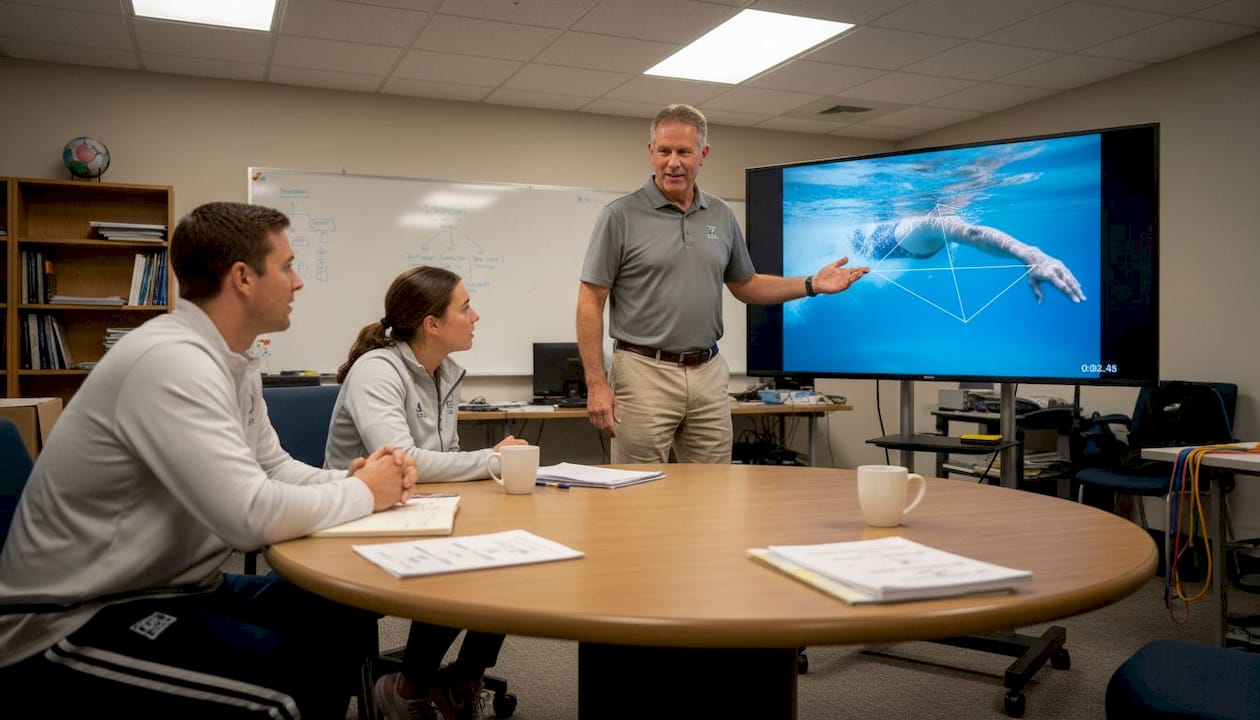
Here is a comparison of outdated versus modern technique in freestyle and butterfly:
| Technique aspect | Outdated method | Modern approach | Why it matters |
|---|---|---|---|
| Freestyle pull path | S-curve underwater pull | Straighter, high-elbow pull | More direct force application, less wasted movement |
| Freestyle breathing | Head-lift breathing | Rotational breathing with ear in water | Maintains body line and reduces drag |
| Freestyle kick | 6-beat with stiff ankles | Relaxed 6-beat with flexible ankles | Reduces energy cost, improves propulsion |
| Body rotation | Minimal or exaggerated roll | Controlled rotation driven by hips | Powers the pull without disrupting stroke rhythm |
| Butterfly breathing | Lifting chin forward | Crown of head leading, eyes forward | Keeps hips higher and stroke more fluid |
| Butterfly kick | Symmetrical double kick emphasis | First kick powers arm entry, second drives recovery | Correct timing generates maximum undulation |
The evolution of freestyle technique shows clearly how kick mechanics, breathing patterns, body rotation, and the underwater pull shape have all shifted based on evidence from elite swimmers and race analysis. Coaches who studied fundamental swim skills decades ago will recognize how much these foundations have been refined.
Pro Tip: Always check the upload date of any swim technique video before building a drill set around it. Videos older than five years may teach cue language or stroke paths that have since been revised. When in doubt, cross-reference with a current coach or a recent resource.
The practical implication for swimmers is clear. If a video tells you to pull your hand in a figure-eight path or lift your head straight up to breathe, skip it. Those cues were common in the 1980s and 1990s but contradict what current biomechanics research supports. Use modern content that reflects how champions actually move through the water today.
Situational recommendations: Best technique videos by swimmer type
With an understanding of modern technique, let us match video recommendations to every common swimming goal and background, because the right video for a ten-year-old learning freestyle is very different from the right video for an adult sprinter chasing a personal best.
Absolute beginners:
Start with videos built around the
4 B’s progression: Buoyancy, Balance, Body Line, and Breathing. These videos introduce fins early to build water confidence and allow beginners to feel the correct body position before adding arm movements. Look for content that uses simple language, avoids overloading on drills, and prioritizes water comfort above all else.
Competitive youth swimmers (ages 10 to 16):
This group benefits most from videos that cover all four competitive strokes with an emphasis on relay exchanges, turn technique, and race strategy alongside stroke mechanics. Look for age-group coaches with competitive credentials who demonstrate how stroke refinements translate directly to faster race times. Check out coaching strategies for youth swimmers for complementary guidance on structuring training around video learning.
Parents supporting young swimmers:
Parents do not need the most technical content. They need videos that explain why certain corrections matter so they can have supportive, informed conversations with their child’s coach. Simple explainer videos with clear visual cues are ideal, and they help parents reinforce technique reminders at home without overstepping the coaching relationship.
Sprint specialists (50m to 100m events):
Sprint swimmers benefit from videos that discuss stroke rate and stroke length as performance metrics. Research confirms that in sprint events, favoring high stroke rate while maintaining stroke length is the key to maximizing speed. Look for content that covers underwater dolphin kicks off walls, powerful starts, and maintaining stroke length under fatigue.
Distance swimmers (400m to 1500m events):
Distance events show a different pattern, where stroke rate increases and stroke length decreases somewhat, particularly in women, as race distance grows. Videos that teach efficient pacing, oxygen management through rotational breathing, and relaxed high-elbow catch technique serve distance swimmers well.
Coaches updating team technique:
Coaches should prioritize videos that include drill progressions, measurable benchmarks, and side-by-side comparisons they can screen during team meetings. Videos that reference current research on swimming fundamentals give coaches a strong framework for explaining corrections to athletes of all levels.
Pro Tip: Advanced swimmers and coaches should look for videos that reference stroke rate and stroke length metrics specifically. Elite sprint data shows that maintaining stroke length at high rates is the single biggest predictor of top-end speed. Videos that teach how to hold more water during the pull are addressing exactly that.
Why swim technique videos alone aren’t enough: Our take
Here is a truth that most video-focused content will never tell you: watching does not equal improving. You can spend three hours studying the perfect freestyle catch and still show up to the pool the next morning doing the exact same thing you have always done. The brain absorbs information visually, but the body needs repetition, feedback, and correction to build new movement patterns.
At PEAK Performance Swim Camp, we see this constantly. Swimmers arrive having watched dozens of videos and can describe exactly what a high-elbow catch looks like. But without someone in the water watching them, pointing out that their elbow is still dropping on the left side, they simply cannot feel the error themselves. That is where real conditioning for peak swimming and expert feedback separate good swimmers from great ones.
Videos are genuinely useful as reference tools, pre-practice primers, and mental rehearsal aids. But they are not a substitute for deliberate, coached practice. The swimmers who improve fastest are those who watch a video, take one or two specific cues into the water, and get feedback on those cues from a qualified coach or training partner. Group sessions, clinics, and video analysis tools that let you compare your stroke to the model all amplify what you take from video study enormously. Use videos as the starting point, not the whole plan.
Take your swim technique further with professional feedback and camps
Your biggest breakthrough rarely comes from watching one more video. It comes from an expert coach watching you, identifying what your stroke actually needs, and giving you the precise feedback to change it.

At Peak Performance swim camps, swimmers of all levels experience hands-on coaching, slow-motion underwater video analysis, and structured drills that bring technique corrections to life in a way no screen can replicate. Whether you want to sharpen a single stroke, overhaul your turns, or build the mental toughness to race at your best, PEAK has a program for you. Explore package options for clinics to find the right fit for your schedule and goals. Let this article be your starting point and let a PEAK camp be where your real gains begin.
Frequently asked questions
What makes a swim technique video effective for beginners?
Effective videos for beginners build on the 4 B’s foundation: Buoyancy, Balance, Body Line, and Breathing, using fins and simple visual cues to build water confidence before introducing complex stroke mechanics.
How often should swimmers review technique videos?
Swimmers should review technique videos weekly and after every skill correction session to reinforce proper movement patterns and keep new cues fresh in muscle memory.
How do I know if a swim video shows outdated technique?
Outdated videos feature straight-arm pulls and head-lift breathing without body rotation. Check the upload date and look for modern cues like S-curve elimination, rotational breathing, and high-elbow catch language.
Are there technique videos specifically for sprint or distance swimmers?
Yes. Sprint-focused videos teach stroke length and high rate maintenance, while distance videos address pacing, relaxed mechanics, and breathing efficiency across longer efforts.
Recommended
- Advanced swimming technique tips for peak performance – Peak Performance Swim Camp
- Top coaching strategies for youth swimmers: skill & performance gains – Peak Performance Swim Camp
- Why swimming fundamentals unlock competitive success – Peak Performance Swim Camp
- Top swimming trends to know in 2026: new methods – Peak Performance Swim Camp